
Reviewed · CAPPADOCIA TOURS FROM ISTANBUL
8 Day Istanbul – Cappadocia – Ephesus – Pamukkale Discover Tour
Turkey packs several very different worlds into this eight-day small-group tour. You move from Istanbul’s imperial mosques and Bosphorus views to Cappadocia’s mushroom-shaped rocks, then on to the marble streets of Ephesus and the white terraces of Pamukkale. It is a lot of ground, but the route makes good use of domestic flights.
I especially like the maximum group size of 10 and the practical mix of included flights, hotels, transfers, entry tickets, and most breakfasts. The cave hotel in Cappadocia and thermal hotel near Pamukkale add character without asking you to plan every connection yourself.
The trade-off is time. Istanbul receives two touring days, while the trip also includes several airport transfers and one long drive from Ephesus to Pamukkale. You will see Turkey’s headline sights, but you should add extra Istanbul nights if you want time for neighborhoods, museums, or a slower Bosphorus afternoon.
Key points to know before booking
- Four major destinations in one route: Istanbul, Cappadocia, Ephesus, and Pamukkale all appear in eight days.
- A group of no more than 10: You get a more personal setup than on a large coach tour.
- Domestic flights are included: The flights connect Istanbul, Cappadocia, Izmir, Denizli, and Istanbul, with baggage limits of 15 kilograms checked and 8 kilograms in the cabin.
- Cappadocia includes a cave hotel: The overnight stay adds a memorable local touch to the route.
- Guiding is built into the price: Licensed guides lead the sightseeing, with prepaid entry tickets intended to reduce waiting.
- The pace is active: Expect walking on uneven stone, underground passages, early transfers, and several full touring days.
Istanbul begins with emperors, mosques, and markets
Your first day is mainly arrival day. A representative meets you at either Istanbul Airport or Sabiha Gokcen Airport with a name sign, then takes you by private transfer to your hotel. That simple pickup matters after an international flight, especially because Istanbul has two airports on opposite sides of the city.
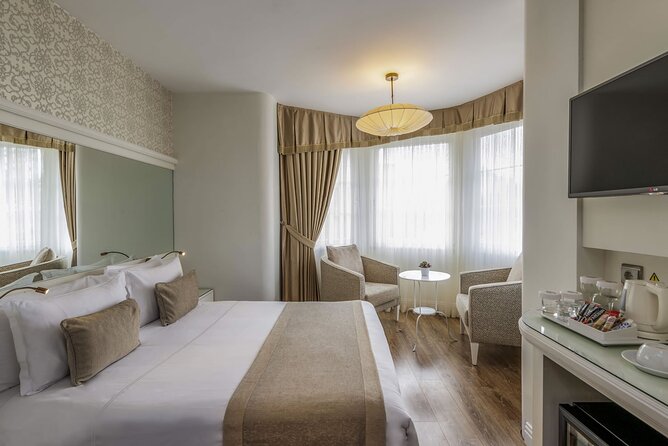
The included Istanbul hotels are listed as Yasmak Sultan, Dosso Dossi Old City, or similar properties. The location is intended to keep you near the historic center, which makes the next two days practical. You receive bed and breakfast for all seven nights, though exact hotel assignments can vary.
Day two starts at Hippodrome Square, once the setting for chariot races and public unrest during the Roman and Byzantine periods. It is a brief stop, but it gives you a useful sense of how the old city was organized around public spectacle, religion, and imperial power.
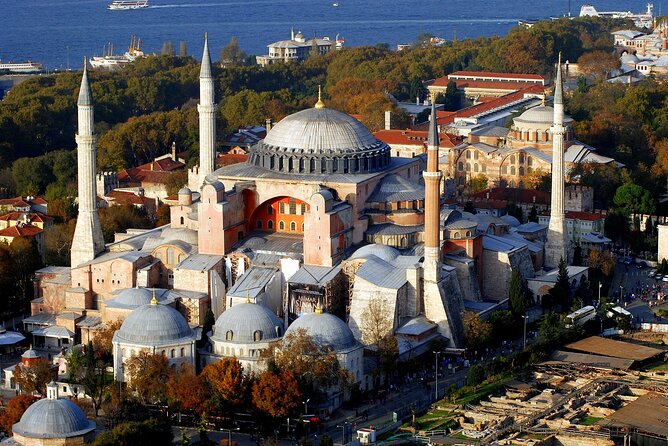
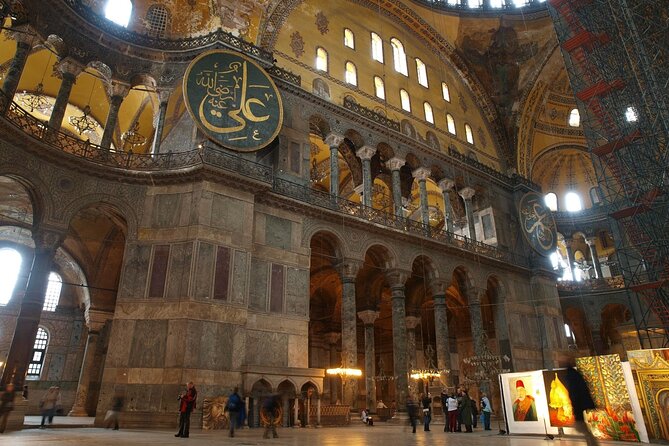
Hagia Sophia follows. The building dates to the sixth century and has served major religious and political roles over time. There is an important guiding change here: live guiding inside is not allowed under the current arrangement. You need a smartphone and headphones for the audio system, or you can buy headphones at the entrance for about $3.50. If you do not have a smartphone, you follow the signs and written information.
The Blue Mosque is another highlight, known for its blue Iznik tiles. Dress smart-casually, and remember that it remains a working place of worship. On Fridays, access is listed as limited to the 2:30 to 4:30 p.m. period, so the order of the day may change.
Topkapi Palace receives about two hours, including the weapons section. This was not simply a royal residence. It also served as the Ottoman government’s administrative and educational center. The grounds and collections help connect the palace to the larger story of Ottoman rule, rather than treating it as just another ornate building.
The day ends at the Grand Bazaar, one of the world’s oldest covered markets. Its maze of streets and shops is best approached with curiosity and a little restraint. You can browse jewelry, pottery, spices, carpets, and other goods, but nobody needs to buy something just because a shopkeeper offers tea.
The bazaar is not always available. It is replaced by the Spice Market on Sundays, by the Underground Cistern on Tuesdays when Topkapi is closed, and by Arasta Bazaar on several listed holiday dates. Check the schedule before you travel if one particular sight matters most.
More Cappadocia Trips from Istanbul:
- From Istanbul: 2-Day All-Inclusive Cappadocia Guided Trip
★ 4.9 · 380 reviews - Istanbul: 2-Day Cappadocia Trip with Flights and Cave Hotel
★ 4.7 · 318 reviews - 2 Days Cappadocia from Istanbul with Cave Hotel+Optional Balloon
★ 5.0 · 260 reviews
A Bosphorus boat and an underground cistern
The second Istanbul touring day opens at the Spice Market, also called the Egyptian Bazaar. The stop is shorter than a full market morning, but the scents of cinnamon, saffron, mint, thyme, and other spices make it a pleasant introduction to everyday Turkish shopping.
Next comes a roughly two-hour boat trip on the Bosphorus. I like this part because it changes your view of Istanbul completely. From the water, you see the city’s European and Asian sides together, along with old wooden houses, marble palaces, fortifications, and smaller waterfront communities.
The Basilica Cistern is a different kind of sight. This vast Byzantine water reservoir sits below the old city, with rows of marble columns rising from the dim interior. The visit is atmospheric and relatively easy compared with the outdoor walking days, though the tour still requires standing and moving through a historic structure.
At the end of the day, you return to your Istanbul hotel. The schedule is efficient, but two days cannot cover every side of this enormous city. I would strongly consider adding two nights if your international flights allow it.
Cappadocia trades city streets for fairy chimneys
Day four begins with a hotel pickup and airport transfer. You fly to Kayseri or Nevsehir, then continue for about 50 minutes to the Cappadocia region. After arrival, your guide meets you with a name sign and the sightseeing begins.
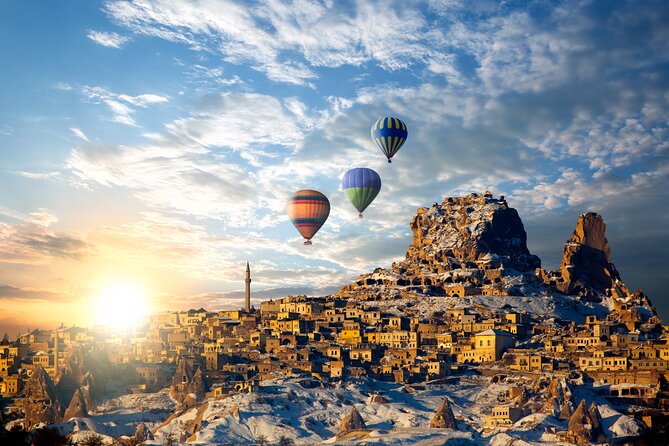
The Three Sisters Fairy Chimneys near Urgup offer a first look at Cappadocia’s famous volcanic rock formations. These tall pillars appear in countless photographs, and the stop gives you an immediate sense of why the area feels unlike anywhere in Istanbul.
At Pigeon Valley, you see small carved openings once used as pigeon houses. Pigeons were important to local communities, and the rock-cut structures show how people adapted the soft volcanic stone for practical needs. It is a modest detail, but it helps you look past the postcard views.
Kaymakli Underground City is the day’s most unusual stop. You descend through one of Cappadocia’s largest underground settlements, moving through passages and rooms carved below the surface. If you dislike confined spaces or have trouble with uneven footing, this is the place to take the physical demands seriously.
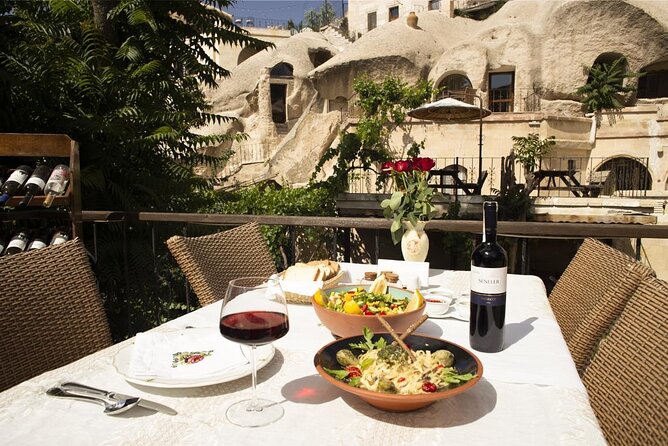
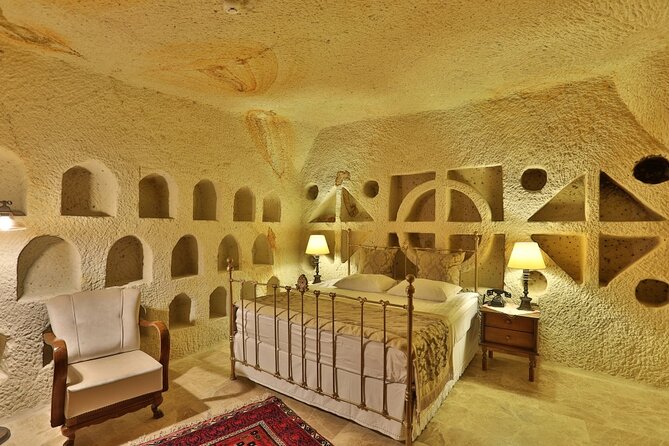
Your Cappadocia hotel is a cave property such as Yunak Evleri or Gamirasu Cave Hotel, or a similar hotel. This is one of the trip’s most distinctive lodging choices. A cave room is not just a bed for the night, it connects your stay to the region’s traditional rock-cut architecture.
Cappadocia’s best viewpoints fill the next day
The second Cappadocia day begins at Devrent Valley, where unusual rock shapes appear across a pale, lunar-looking setting. You walk among the formations rather than simply stopping for a photograph, so comfortable shoes are useful.
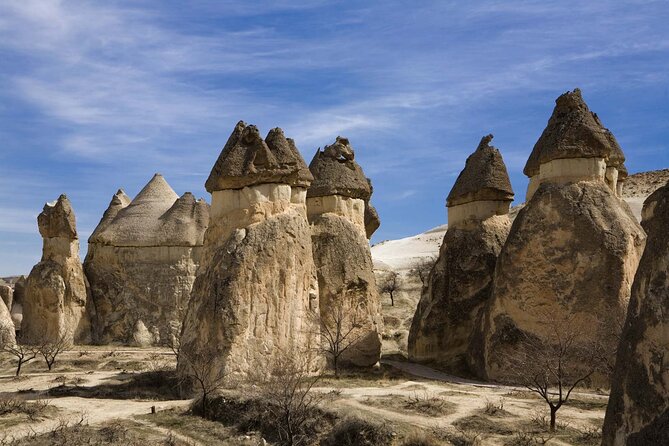
Pasabag, or Monks Valley, has some of Cappadocia’s most striking fairy chimneys. Many have twin or triple caps, giving them a mushroom-like shape. The formations are close to the paths, making this one of the more rewarding stops for seeing the geology at ground level.
Avanos provides a change of pace. The town is known for tile and pottery workshops, and the schedule includes lunch here. One lunch and one dinner are included in the overall tour, while other meals and drinks are your responsibility. Ask about meal timing if you need a regular eating schedule, since touring days are tightly arranged.
The Goreme Open-Air Museum brings the focus back to human history. Rock churches contain wall paintings and frescoes from different centuries. Your guide can help you connect the plain exteriors with the decorated interiors, which are easy to miss if you rush through the site.
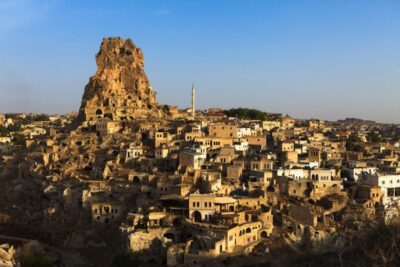
Uchisar Castle is the final major Cappadocia stop. The rock fortress rises above the surrounding area and provides a broad panorama. It is a good closing view before the evening flight process begins.
After the tour, you transfer to Kayseri or Nevsehir Airport for a flight to Izmir, possibly through Istanbul. You then continue to Kusadasi, where the arrival at the hotel can be as late as midnight depending on flight times. This is the most tiring transition of the trip, so I would not plan anything ambitious for that evening.
More Ephesus Trips from Istanbul:
- 4 Days Turkey Tour – Cappadocia, Ephesus and Pamukkale Tour
★ 5.0 · 138 reviews - 6 Days Turkey Tour Cappadocia, Pamukkale, Ephesus, Gallipoli Troy
★ 5.0 · 109 reviews - Daily Ephesus & House of Virgin Mary from Istanbul – Small Group
★ 4.0 · 95 reviews - 7 Days Best of Turkey Tour: Istanbul-Cappadocia-Ephesus-Pamukkale
★ 5.0 · 91 reviews
Ephesus turns a walking day into a history lesson
From Kusadasi, the drive to the Ephesus area takes about 25 minutes. The first stop is the Temple of Artemis, one of the Seven Wonders of the Ancient World. Only a few remains are visible today, so the value comes from understanding the temple’s former importance rather than expecting a complete monument.
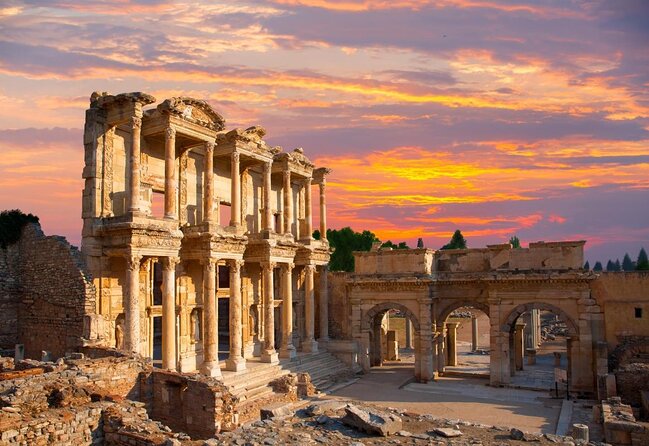
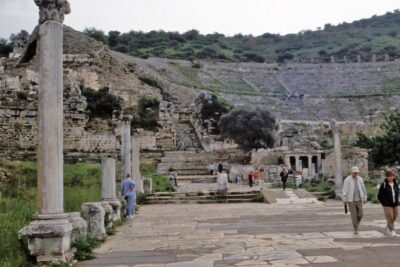
Ephesus is the main event. You walk along marble streets past the State Agora, Odeon, Temple of Domitian, fountains, baths, Hadrian’s Temple, the Latrina, the Library of Celsus, and the Great Theater. The scale becomes clear as you move through the city rather than seeing it from one viewpoint.
The Great Theater once held up to 24,000 spectators after Roman expansion. The Library of Celsus is the most familiar facade, but the wider street plan gives you a better feel for how public, commercial, and religious life worked in the ancient city.
This is a proper walking visit. Marble can be slippery, sun exposure can be strong, and the route includes uneven surfaces. I would wear shoes with good grip and bring water. The included licensed guide is particularly useful here because bare ruins can be difficult to read without explanation.
The House of the Virgin Mary sits in the Aladag Mountains, about five miles from Ephesus. It is a pilgrimage site tied to the tradition that Mary lived in the area with St. John. The stop is quieter and more reflective than the ancient city, though its importance will depend on your religious or historical interests.
After Ephesus, you face a roughly three-hour drive to Pamukkale. You check into a thermal hotel such as Pam Thermal or Colossae Thermal, with access to hotel thermal pools. This evening is less about sightseeing and more about resting after a full day.
Pamukkale and Laodicea close the circle
Day seven starts at Hierapolis and Pamukkale. Hierapolis includes a theater, the Temple of Apollo, and a large necropolis. The ancient city sits above the famous mineral terraces, so you get both Roman remains and dramatic natural scenery in one visit.
Pamukkale means cotton castle, a fitting name for the white travertine terraces formed by mineral springs. The terraces are one of the most visually striking places on the route, though access and water levels can vary. Follow the guide’s instructions and expect some walking on surfaces that may be wet or uneven.
Laodicea adds a less crowded ancient site to the day. Founded in the third century BCE, it grew at a crossroads and became one of the seven churches named in the Book of Revelation. Its commercial position helps explain why the city mattered, while the open setting gives you room to consider the ruins without the same concentration of visitors found at Ephesus.
From Denizli Cardak Airport, you fly back to Istanbul. A representative meets you at either Istanbul airport and transfers you to your hotel for the final night. On day eight, you check out after breakfast and receive a private transfer to the airport.
What the $1,769 price really covers
At $1,769 per person, the price is best judged as a package rather than a simple sightseeing fee. It includes seven nights of accommodation, domestic flights, airport transfers, sightseeing transportation in an air-conditioned minivan or minibus, entrance fees, licensed guides, seven breakfasts, one lunch, and one dinner.
The domestic flights are a major part of the value. Arranging Istanbul to Cappadocia, Cappadocia to Izmir, and Denizli to Istanbul independently would take time, and the connections are the part most likely to cause trouble on a self-planned route. The included prepaid tickets also reduce waiting at major sites.
The baggage allowance is limited to 15 kilograms checked and 8 kilograms in the cabin. Pack light, use a soft bag if possible, and check the airline details before departure. Personal purchases, drinks, international flights, and meals not listed as included are extra.
The hotels vary by availability, since the plan uses named properties or similar alternatives. The strongest lodging idea is the cave hotel in Cappadocia. The thermal hotel in Pamukkale is also useful after the Ephesus walking day. If a specific hotel matters to you, confirm the assignment before booking.
Who will enjoy this route most
I would choose this tour if you want Turkey’s major highlights but do not want to manage domestic flights, hotel changes, guides, and transfers yourself. It suits first-time visitors, couples, families with older children, and people who prefer a small group to a full-size coach.
The group format can be especially helpful for families. Guides such as Leyla, Gurkan, Tayfun, Sinan Veysi, Cankat, and others may lead different departures, and the strongest praise has centered on friendly explanations, cultural context, photography help, and local restaurant suggestions. You should not assume a particular guide will be assigned, but the format allows more conversation than a large tour.
I would hesitate if you want long, unplanned afternoons or substantial time in Istanbul. The route is active, and the Cappadocia to Kusadasi connection can produce a very late arrival. A moderate fitness level is required, with regular walking, stairs, uneven stone, and an underground visit.
Cancellation is generous only when handled early: a full refund requires cancellation at least six full days before the start. A cancellation two to six days ahead receives 50 percent, while cancellations under two days are nonrefundable.
Should you book the 8-day Turkey route?
Book it if your priority is maximum coverage with minimal planning. You get Istanbul’s great monuments, Cappadocia’s most memorable rock sites, Ephesus, Pamukkale, Laodicea, domestic flights, and small-group guiding in one organized package.
I would add extra nights in Istanbul before or after the tour if possible. That solves the main weakness without changing the useful core route. For a first visit to Turkey, this is an efficient and well-supported introduction, as long as you accept the busy schedule and pack for frequent movement.
FAQ
Are domestic flights included?
Yes. The tour includes domestic flights between Istanbul, Cappadocia, Izmir, and Denizli, with the listed route including Istanbul to Cappadocia, Cappadocia to Izmir, and Denizli to Istanbul. The baggage allowance is 15 kilograms checked and 8 kilograms in the cabin.
What is the maximum group size?
The tour has a maximum of 10 participants. Private tour options are also available for families.
What type of accommodation is included?
The package includes seven nights of bed-and-breakfast accommodation. Listed examples include Yasmak Sultan or Dosso Dossi Old City in Istanbul, Yunak Evleri or Gamirasu Cave Hotel in Cappadocia, Carina Hotel or Marina Suits in Kusadasi, and Pam Thermal or Colossae Thermal in Pamukkale, or similar properties.
Are meals included?
Seven breakfasts, one lunch, and one dinner are included. Drinks and meals not specifically listed are extra.
Can I visit inside Hagia Sophia with a live guide?
Live guiding inside Hagia Sophia is not allowed under the stated arrangement. You need a smartphone and headphones to use the audio system. Headphones can be purchased at the entrance for about $3.50, and written signs are available for people without smartphones.
What happens if a museum is closed?
An alternative sight may be used. Topkapi Palace is replaced by the Basilica Cistern on Tuesdays, and the Grand Bazaar is replaced by the Spice Market on Sundays. The Blue Mosque has limited Friday access from 2:30 to 4:30 p.m., so the schedule may be adjusted.
More Pamukkale Trips from Istanbul
- 5-Day Aegean Tour – Gallipoli, Troy, Ephesus, Kusadasi, Pamukkale
★ 4.5 · 86 reviews - Istanbul, Ephesus, Pamukkale and Cappadocia 8 Day Package
★ 5.0 · 83 reviews - Private 4 Days Turkey Tour from Istanbul to Cappadocia, Ephesus, Pamukkale
★ 5.0 · 80 reviews - 2 Days Ephesus and Pamukkale Tours from Istanbul
★ 5.0 · 65 reviews
Recently added in Istanbul
- Two (2) Days Istanbul Old City and Two Continents Walking Tour★ 5.0 · 6 reviews
- istanbul old city private tour★ 5.0 · 19 reviews
- Private Guided Tour: Discovering Istanbul★ 4.5 · 9 reviews
- Istanbul Airport (IST) To Hotels Transfer★ 5.0 · 80 reviews
- Best Of İstanbul Europe Side In One Day★ 5.0 · 10 reviews
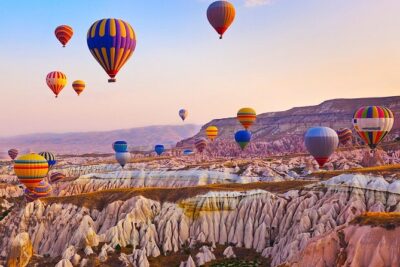
- 2 Days Cappadocia Tour from Istanbul with Optional Balloon★ 5.0 · 10 reviews
- Hagia Sophia Private Skip The Ticket line guided Tour★ 4.5 · 17 reviews
- historical peninsula walking tour★ 5.0 · 6 reviews
Cappadocia Tours from Istanbul, compared.
2-Day Cappadocia Trip with Flights and Cave Hotel
Read our review →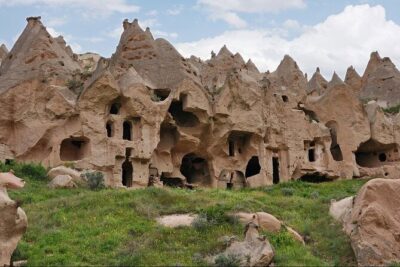
2 Days Cappadocia from Istanbul with Cave Hotel+Optional Balloon
Read our review →
Cappadocia Dream: 2-Days Tour from Istanbul & Balloon Ride Option
Read our review →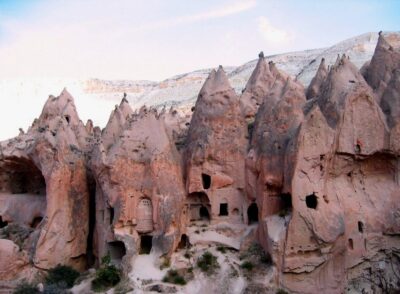
4 Days Turkey Tour – Cappadocia, Ephesus and Pamukkale Tour
Read our review →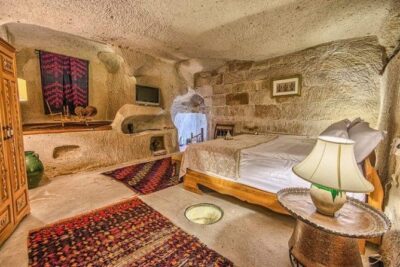
6 Days Turkey Tour Cappadocia, Pamukkale, Ephesus, Gallipoli Troy
Read our review →Browse the lists this tour appears in