
Reviewed · EPHESUS TOURS FROM ISTANBUL
3 Days Ephesus, Pamukkale, Priene, Miletus and Didyma Tour from Istanbul
This three-day route packs western Turkey’s greatest ancient sites into one well-organized trip. You move from the marble streets of Ephesus to the huge columns of Didyma, then finish barefoot on the white terraces of Pamukkale.
I like the careful transport plan, including airport pickups in Istanbul and Izmir, hotel transfers, and the flight from Denizli back to Istanbul. I also like the choice of sites: Priene, Miletus and Didyma receive far less attention than Ephesus, yet they give you a fuller picture of ancient Ionia. The drawback is the pace. You cover a lot of ground in three days, and the domestic flights, long drives and walking can leave little time for rest.
Key points to know before booking
- Ephesus begins at the Upper Gate: Walking downhill makes this large archaeological site easier than tackling it from the lower entrance.
- Priene, Miletus and Didyma add depth: These quieter ruins show Greek city planning, philosophy, theater and oracle worship beyond the better-known Roman sites.
- Pamukkale includes both ruins and natural terraces: You visit Hierapolis, its museum and theater before walking barefoot on the white thermal formations.
- The tour is limited to 15 people: That is a useful middle ground between a private trip and a large coach tour.
- Several costs remain outside the package: Domestic flights, meals, drinks, tips, the Ephesus Terrace Houses and Cleopatra Pool swimming are extra.
- Guiding is a major part of the experience: Güfte, Ogun and Yavuz are named in the tour feedback, with particular praise for clear explanations, humor, patience and flexibility.
Why this route works for history lovers
The tour connects several different chapters of western Anatolia. At Ephesus, you see a major Roman city shaped by trade, religion and public life. At Priene and Miletus, the focus shifts to Greek urban design and early philosophy. Didyma brings in the world of prophecy and sacred architecture. Pamukkale then adds Roman resort life, thermal water and a striking natural setting.
That range is the chief strength of the trip. You are not spending three days looking at similar columns. Each stop has a different character, and the route helps explain how Greek, Roman, Christian and Turkish traditions overlap in this part of Turkey.
The schedule also gives you two nights in Kusadasi. That seaside base is practical rather than purely scenic. You can rest at the hotel, walk the promenade or find a seafood dinner after the first two full days.
The stated price is $1,017.48 per person. That is a substantial cost, but it includes accommodation, private transfers, a professional English-speaking guide, site and museum admissions, and two breakfasts. The value depends heavily on how you handle flights and meals. Since domestic air tickets are not included, ask the operator to help select flights before purchasing them. That timing matters because the tour is built around flight arrival and departure windows.
More Ephesus Trips from Istanbul:
- 4 Days Turkey Tour – Cappadocia, Ephesus and Pamukkale Tour
★ 5.0 · 138 reviews - 6 Days Turkey Tour Cappadocia, Pamukkale, Ephesus, Gallipoli Troy
★ 5.0 · 109 reviews - Daily Ephesus & House of Virgin Mary from Istanbul – Small Group
★ 4.0 · 95 reviews
Day 1: A full introduction to Ephesus
The first day starts early. A private driver collects you at your Istanbul hotel at least three hours before your flight to Izmir. This takes the stress out of getting to the airport, especially if you are unfamiliar with Istanbul’s airport layout or traffic.
At Izmir, look for a driver holding a sign with your name outside the exit gate. The drive to Selcuk takes about an hour. There you meet the guide and the rest of the group before beginning the archaeological visits.
The quiet setting of Virgin Mary’s House
Your first stop is the House of the Virgin Mary on Mount Koressos. The small stone structure is associated with the belief that Mary spent her final years here. The visit is short, about 45 minutes, but the setting gives the day a calm beginning.
You have time to light a candle and leave a note on the Wishing Wall. The religious meaning is important to some visitors, while others appreciate the quiet woodland setting and the chance to begin away from the crowds.
Walking downhill through Ephesus
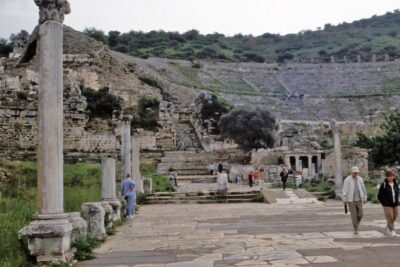
Ephesus is the main event of the first day. The tour starts at the Upper Gate and follows the ancient marble streets downhill. I like this approach because the route is more comfortable than beginning at the bottom and climbing upward through the site.
Allow about three hours here. You will pass the Temple of Hadrian, the Great Theatre and the Celsus Library, one of the most recognizable buildings in the ruins. The theater is closely linked with the preaching of St. Paul, while the library helps you picture Ephesus as a major center of learning and public life.
The scale can be difficult to grasp from photographs. Walking between the columns and along the broad streets makes the city’s size clearer. You will also see evidence of daily life, not only grand monuments. Street layouts, public buildings and residential remains help explain how the city functioned.
Wear shoes with a firm sole. The marble paving can be uneven, and you will spend much of the visit on foot. The downhill route helps, but this is still a demanding morning in the sun.
More Pamukkale Trips from Istanbul:
- 7 Days Best of Turkey Tour: Istanbul-Cappadocia-Ephesus-Pamukkale
★ 5.0 · 91 reviews - 5-Day Aegean Tour – Gallipoli, Troy, Ephesus, Kusadasi, Pamukkale
★ 4.5 · 86 reviews - Istanbul, Ephesus, Pamukkale and Cappadocia 8 Day Package
★ 5.0 · 83 reviews - Private 4 Days Turkey Tour from Istanbul to Cappadocia, Ephesus, Pamukkale
★ 5.0 · 80 reviews
The Terrace Houses cost extra
The Terrace Houses are covered archaeological remains located within Ephesus. They were private homes belonging to wealthy residents, and their mosaics, frescoes and heating systems offer a rare look at domestic Roman life.
The glass walkways let you look down into the rooms without walking directly over the remains. You should not skip this area if you care about architecture, decoration or ordinary household life among the elite.
Admission is not included, so budget for a separate ticket. There are also steps inside the structure. That makes this visit less suitable if stairs are difficult for you, although the rest of the main Ephesus route is the bigger physical commitment.
The Ephesus Experience Museum
The Ephesus Experience Museum takes about 30 minutes and uses large screens, 3D sound and sensory effects to reconstruct the ancient city. It is designed to help you imagine the temples, streets and daily activity that are now visible mainly as ruins.
I see this as a useful companion to the archaeological visit rather than a replacement for it. The ruins give you the real materials and setting. The museum helps fill in the missing color and movement. If you prefer traditional museums, this part may feel more modern than necessary, but it can be especially helpful for children or anyone who has trouble picturing ancient buildings from foundations alone.
Lunch in Selcuk and the Temple of Artemis
Lunch in Selcuk is not included. The selected restaurant serves a range of Turkish dishes, including meze, hot courses and local desserts. Since lunch is also a chance to rest, do not treat it as a quick stop. After a long morning at Ephesus, sitting down matters.
The final visit is the Temple of Artemis, once one of the Seven Wonders of the Ancient World. Only one column remains, so this is not a place to visit for intact ruins. Its value lies in the layers around it. From the site, you can frame the surviving pagan column with Isa Bey Mosque and the Basilica of St. John.
You then continue to Kusadasi for hotel check-in. The tour describes four-star accommodation here, though the included accommodation is broadly listed as local hotels. Confirm the exact hotel category and location before booking if those details matter to you.
Day 2: The quieter ancient cities of Ionia
Day two leaves the busiest archaeological route and heads toward Priene, Miletus and Didyma. These sites are less polished and less crowded than Ephesus, which is part of their appeal.
Priene and the slopes of Mount Mycale
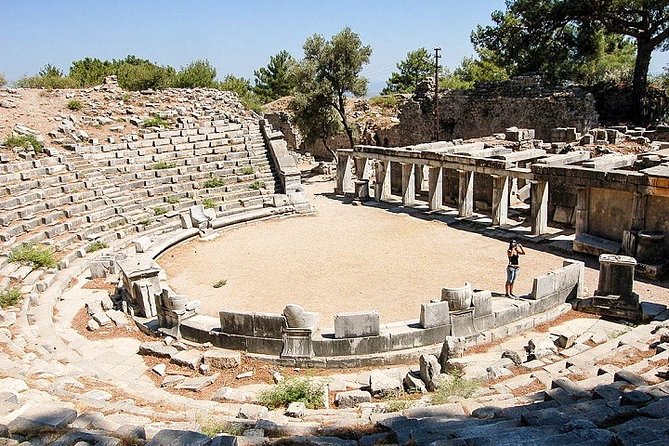
Priene sits dramatically on the lower slopes of Mount Mycale, with views across the Meander Plain. Pine trees and the hillside setting give the site a different feel from the open marble avenues of Ephesus.
You spend about 90 minutes walking its ancient grid streets. The city is often linked with planned Greek urban design, and the remains make that layout easier to see. The Bouleuterion, or council house, shows how civic life was organized. The Temple of Athena is another key stop, with its connection to funding from Alexander the Great.
Priene requires a reasonable level of fitness. The ground is uneven, and the hillside position means some walking is uphill or over rough surfaces. Bring water and shoes that can handle stone paths.
Miletus, philosophy and a massive theater
Miletus was a major maritime city and is associated with Thales, one of the earliest Greek philosophers. The site helps connect ancient ruins with ideas that shaped Western philosophy.
The Grand Theatre is the visual centerpiece. It rises above the flat plain and feels more imposing as you approach it. You also visit the Baths of Faustina, which show the Roman side of the city.
Miletus has a biblical connection as well. St. Paul is associated with a farewell speech to the elders of Ephesus here, recorded in Acts 20. That gives the site added meaning for visitors interested in early Christianity.
The visit lasts about an hour. As with Priene, the ruins are spread out, so you will get more from the stop if you are comfortable walking over uneven ground.
Lunch near the Temple of Apollo
Lunch in Didyma is another expense outside the tour price. Restaurants in the area may serve seafood, pide and kebab, with some offering views toward the Temple of Apollo.
This is a sensible pause before the afternoon’s largest monument. You have time to eat and recharge rather than rushing straight from one ruin to the next.
The enormous Temple of Apollo at Didyma
The Temple of Apollo is one of the most impressive stops on the route. Didyma was a sacred oracle center, second in importance only to Delphi according to the tour description. It was not a normal city, but a place built around worship and prophecy.
The surviving columns and foundations show the enormous scale of the project. You will walk through dark passages toward the inner sanctuary and see the Head of Medusa sculpture. The experience is less about a complete building and more about the size, ambition and unfinished feel of the remains.
This is one place where a good guide can make a major difference. Yavuz is named in the supplied feedback for detailed explanations, anecdotes and humor at Priene, Miletus and Didyma. Güfte is also praised for adapting the schedule to personal interests, while Ogun is mentioned as part of the guiding team. Your assigned guide may differ, but the operator has a clear record of using guides who add context rather than simply pointing at monuments.
After Didyma, you return to Kusadasi through cotton fields and olive groves. The late afternoon arrival gives you time to use the hotel facilities or walk along the coast.
Day 3: Hierapolis and the white terraces of Pamukkale
The final day begins with a drive of about two and a half to three hours from Kusadasi to Pamukkale. The route passes through the Meander Valley, cotton fields, fig orchards and Turkish villages.
This is a long morning in the vehicle, but it connects the coast with one of Turkey’s most unusual natural sites. Your guide provides background on the area as you approach the white terraces.
Hierapolis, city of the dead and city of theaters
Hierapolis is known as the Holy City because of its temples and religious importance. The visit begins at the Necropolis, a large ancient cemetery filled with tombs and funerary monuments.
You then walk through the Frontinus Gate and visit the theater. From the theater, you can look toward the white terraces below, bringing the ancient city and the natural site into one view.
The itinerary allows about two hours for Hierapolis. That is enough for the major sections, but not for a slow inspection of every ruin. Take care with the heat and the open setting. The day combines a long drive, extensive walking and time without much shade.
The Hierapolis Archaeology Museum
The museum occupies restored Roman baths and takes about 30 minutes. Inside are sarcophagi, statues and friezes from Hierapolis and nearby Laodicea.
The Hall of Statues includes mythological figures and gladiator reliefs. This stop gives you a closer look at the art and burial customs that can be hard to appreciate when you are standing among scattered ruins outdoors.
Admission is included. If you are mainly interested in the terraces, it is still worth keeping the museum visit because it adds detail to the Roman city you have just explored.
Cleopatra Pool and the thermal terraces
The Cleopatra Pool is optional and costs extra to enter for swimming. The pool area itself is free, but the swimming ticket is not included. Ancient marble columns lie beneath the warm mineral water, creating an unusual setting for a short swim.
The Cleopatra connection is presented as legend, so treat it as part of the story rather than a documented personal visit by the queen. Pack a swimsuit if you want the option, and check the extra cost before the day begins.
The main Pamukkale terraces are included. You remove your shoes and walk barefoot over the white calcium formations and shallow thermal water. The barefoot rule protects the surface and is part of the experience.
The terraces are photogenic, but do not expect every section to contain deep water. The formations and water flow can vary, and the walk may feel slippery. Follow the guide’s instructions and take care on the white stone.
Lunch follows in the town of Pamukkale. It is not included, and the meal gives you a needed break before the airport transfer.
Transfers, group size and the real cost
The maximum group size is 15 people. That is small enough for questions and easier movement, but it is not a private tour. The tour feedback gives a useful picture of the guiding style: Güfte is praised for personal attention and schedule changes, while Yavuz is praised for humor and detailed explanations. The company also has a woman-owned identity, which may matter to you if you prefer supporting smaller local operators.
The included vehicle transfers are air-conditioned, and private airport transfers are arranged at both ends. On the final day, you drive about an hour from Pamukkale to Denizli Cardak Airport for the flight to Istanbul. After landing, exit the terminal and meet the representative outside before the private transfer to your Istanbul hotel.
The package includes two breakfasts, but no lunches, dinners or drinks. It also excludes tips and personal expenses. Add the domestic flights, Terrace Houses, Cleopatra Pool swimming, meals and any optional shopping before deciding if the price fits your budget.
Free cancellation is available until 24 hours before the start time. A late cancellation is not refundable, and changes made within that period are not accepted. Poor weather or failure to reach the required minimum group size may lead to a different date, another experience or a full refund.
Who should book this three-day tour?
I would choose this trip if you want the major western Turkey sites but do not want to arrange several hotels, airport transfers and guides yourself. It suits people who value historical explanation and efficient planning more than a slow, unstructured holiday.
It is also a strong choice for repeat visitors to Turkey who want to go beyond Ephesus. Priene, Miletus and Didyma add a lot to the route, especially if Greek city planning, philosophy, Roman public life or ancient religion interest you.
I would hesitate if you dislike early starts, long drives or set meal stops. The itinerary is full, and there is no spare day for bad weather or fatigue. If your priority is relaxing by the Aegean, book a longer stay in Kusadasi instead.
FAQ
How long is the tour?
The experience lasts approximately three days, beginning with a transfer from your Istanbul hotel to the airport and ending with a private transfer back to your Istanbul hotel after the return flight.
Are domestic flights included?
No. Domestic flight tickets are not included. You should contact the operator before purchasing flights so the timing matches the tour schedule.
What accommodation is included?
Accommodation in local hotels is included. The Kusadasi portion is described as a four-star hotel stay, so confirm the exact properties before booking if hotel details are important to you.
Is the tour conducted in English?
Yes. The experience is offered in English with a professional tour guide.
What is the maximum group size?
The group can include up to 15 people.
Are meals included?
Two breakfasts are included. Lunch, dinner and drinks are not included, so you should budget separately for meals in Selcuk, Didyma and Pamukkale.
Are the Terrace Houses included in the Ephesus ticket?
No. Admission to the Ephesus Terrace Houses costs extra. The main Ephesus entrance and the Ephesus Experience Museum are included.
Can I swim in Cleopatra Pool?
Yes, but swimming requires an extra ticket. Entry to the pool area is free, while the swimming admission is not included.
How much walking is involved?
You need a moderate level of physical fitness. The tour includes uneven ancient streets, steps in the Terrace Houses, hillside walking at Priene and barefoot walking on the Pamukkale terraces.
Should you book it?
Book this tour if you want a carefully arranged introduction to western Turkey and prefer a guide to handle the complex connections. Its best feature is the range: Ephesus gives you Roman grandeur, Priene and Miletus add Greek civic life and philosophy, Didyma delivers massive sacred architecture, and Pamukkale finishes with nature and thermal water.
Before paying, confirm the flight times, hotel names, extra admission fees and expected walking pace. If those details suit you, the price buys more than sightseeing. It buys three busy days with the major logistics already organized, plus access to several ancient sites you would be unlikely to connect as efficiently on your own.
More 3-Day Experiences in Istanbul
- Best of Istanbul 1, 2 or 3-Day Private Guided Istanbul Tour
★ 5.0 · 8,922 reviews - Best Of Istanbul: 1, 2 or 3 Day Private Guided Tour
★ 5.0 · 435 reviews - Full Day Istanbul 1, 2 or 3-Day Private City Guided Tour
★ 4.7 · 411 reviews - Istanbul: Best of the City 1, 2 or 3-Day Private Guided Tour
★ 4.8 · 373 reviews
Recently added in Istanbul
- Two (2) Days Istanbul Old City and Two Continents Walking Tour★ 5.0 · 6 reviews
- istanbul old city private tour★ 5.0 · 19 reviews
- Private Guided Tour: Discovering Istanbul★ 4.5 · 9 reviews
- Istanbul Airport (IST) To Hotels Transfer★ 5.0 · 80 reviews
- Best Of İstanbul Europe Side In One Day★ 5.0 · 10 reviews
- 2 Days Cappadocia Tour from Istanbul with Optional Balloon★ 5.0 · 10 reviews
- Hagia Sophia Private Skip The Ticket line guided Tour★ 4.5 · 17 reviews
- historical peninsula walking tour★ 5.0 · 6 reviews
Ephesus Tours from Istanbul, compared.
4 Days Turkey Tour – Cappadocia, Ephesus and Pamukkale Tour
Read our review →
6 Days Turkey Tour Cappadocia, Pamukkale, Ephesus, Gallipoli Troy
Read our review →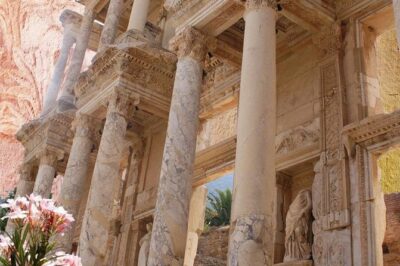
Daily Ephesus & House of Virgin Mary from Istanbul – Small Group
Read our review →
7 Days Best of Turkey Tour: Istanbul-Cappadocia-Ephesus-Pamukkale
Read our review →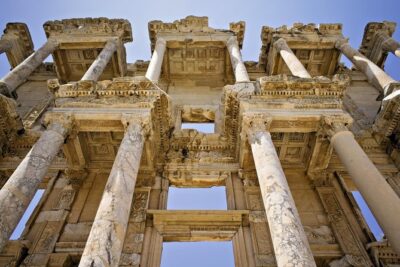
5-Day Aegean Tour – Gallipoli, Troy, Ephesus, Kusadasi, Pamukkale
Read our review →
Istanbul, Ephesus, Pamukkale and Cappadocia 8 Day Package
Read our review →
Private 4 Days Turkey Tour from Istanbul to Cappadocia, Ephesus, Pamukkale
Read our review →
Magic Carpet 10 Day Small Group Istanbul Troy Ephesus Cappadocia
Read our review →Browse the lists this tour appears in