
Reviewed · ISTANBUL
Istanbul to Seven Churches of Asia Minor 4 Nights in 4 Star Hotels
Pergamon’s hilltop ruins, Sardis’s royal road, and Ephesus’s marble streets turn Bible passages into places you can actually see. The tour also reaches Pamukkale’s white terraces and the supposed House of the Virgin Mary, so this is more than a church-site checklist. The ancient settings are the main draw, especially for anyone who wants biblical geography tied to major Greek and Roman cities.
I like the small maximum of 15 people, which should make questions and site visits easier, and I like the practical package: domestic flights, private airport transfers, hotels, entrance fees, breakfasts, and two dinners are handled for you. The main drawback is the pace. You cover a large part of western Turkey in four nights, with early starts and several long road sections.
Key points at a glance
- Six major biblical sites: Visit Pergamon, Smyrna, Thyatira, Sardis, Philadelphia, and Laodicea, with Ephesus adding another major New Testament setting.
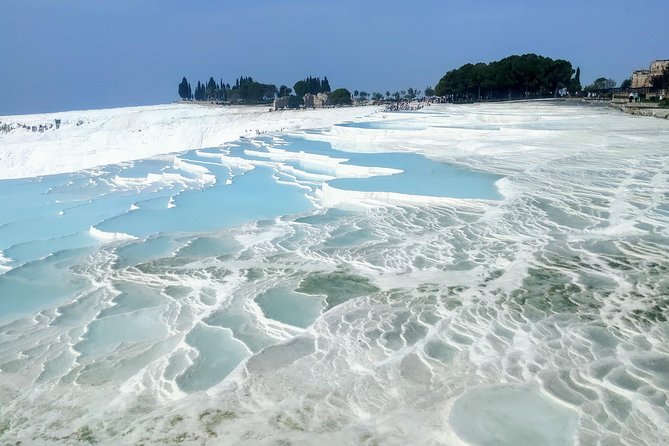
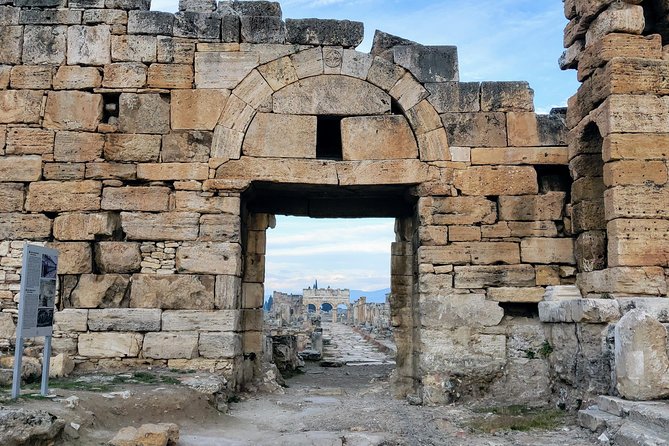
- Pamukkale and Hierapolis: See the white mineral terraces and the Martyrium of Philip in the same day.
- Bible-focused guiding: Guides such as Melih and Mustafa connect the ruins with Revelation, Acts, Colossians, and Paul’s ministry.
- Easy Istanbul connection: Flights from Istanbul to Izmir and back, plus private airport transfers, remove much of the planning work.
- Small-group format: The group is capped at 15 people, with transportation in an air-conditioned minivan or minibus.
- Important luggage limit: The domestic flights allow 15 kilograms of checked luggage and 8 kilograms in the cabin.
Why this route matters beyond the checklist
The Seven Churches of Asia Minor were communities named in the Book of Revelation: Ephesus, Smyrna, Pergamon, Thyatira, Sardis, Philadelphia, and Laodicea. The modern sites are spread across western Turkey, not arranged in a neat circle around one base.
That geography explains the value of an organized tour. You do not simply arrive at one ruin, take a photo, and move on. You travel between ancient cities while a Bible-oriented guide explains how each place fits into the early Christian story and the Roman world around it.
The route also gives you more than church remains. You see royal roads, temples, theaters, marketplaces, baths, synagogues, Roman streets, and thermal terraces. That broader setting matters because early Christianity developed inside busy commercial cities shaped by Greek culture, Roman government, local religious traditions, and long-distance trade.
Other Istanbul outings people put on the same list:
- Istanbul: Bosphorus Dinner Cruise & Show with Private Table
★ 4.8 · 44,561 reviews - Istanbul: Daytime or Sunset Sightseeing Cruise & Audio Guide
★ 4.8 · 14,430 reviews - Istanbul: Bosphorus Dinner Cruise with Turkish Night Show
★ 4.8 · 10,127 reviews
Day 1: Istanbul to Izmir without a long road transfer
Your tour begins with pickup from your Istanbul hotel, on either the European or Asian side. You then fly from Istanbul to Izmir, a flight of about one hour, followed by a private transfer of roughly 30 minutes to your Izmir hotel.
This is a sensible use of time. Driving from Istanbul into western Anatolia would consume much of a day, while the flight puts you near the first major sites. The included airport transfers also spare you the usual arrival puzzle of finding a taxi, locating the hotel, and coordinating with a group.
The Izmir accommodation is listed as DoubleTree by Hilton Alsancak, Hilton Garden Inn Bayrakli, or a similar hotel. Dinner is not included in Izmir, so budget for that meal yourself. Breakfast is included during the stay, but the exact hotel can vary, which is worth checking if a particular property matters to you.
Day 2: Pergamon, Thyatira, and a glimpse of Smyrna
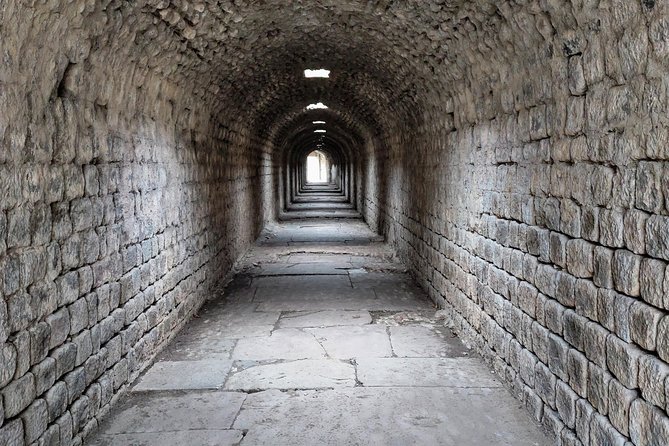
Pergamon is one of the tour’s strongest stops. It was one of the Seven Churches named in Revelation, and the visit includes the Acropolis and the Asklepieion, an ancient healing center. You also see the Altar of Zeus, connected in the tour’s biblical interpretation with the Throne of Satan mentioned in Revelation.
Allow about three hours here. Pergamon is not a quick roadside ruin. Its setting, major public buildings, and religious associations need time, and the guide’s explanation will help you connect the archaeological remains with the passages being discussed.
The tour then continues to Thyatira, now Akhisar. Only about 30 minutes is allocated to the remains, including a basilica and Roman architectural fragments. This stop is more modest than Pergamon or Ephesus, so keep your expectations in check. The biblical connection is important, but the visible remains are limited.
Thyatira was known for purple dye. The connection to Lydia, the seller of purple in Philippi, gives the site a personal link to the wider story of Acts, even though Lydia’s own ministry took place elsewhere. This is one of those details that makes the route feel connected rather than like a string of unrelated ruins.
You also receive a panoramic ride through Smyrna, another of the Seven Churches. Because this is a ride rather than a full archaeological visit, you will not get the same close look at ruins that you receive at Pergamon or Ephesus. Still, it lets you place ancient Smyrna within the modern city of Izmir.
Dinner and overnight arrangements follow. One practical point: only two dinners are included in the package, while dinners in Izmir are specifically excluded. Ask your operator which nights include dinner so you can plan your food budget.
Day 3: Sardis and Philadelphia before Pamukkale
Day three begins early and covers some of the most rewarding sites on the route. Sardis, now Sart, was the capital of the ancient Lydian kingdom and is described in Revelation as a dying church.
The remains here have unusual variety. You see the Temple of Artemis, the Temple of Cybele, a Byzantine church formed from the earlier religious setting, a restored gymnasium, and a reconstructed synagogue. You also see the final visible section of the royal Persian Road from Susa to Sardis and the Pactolus River, associated with the ancient city’s wealth.
The site receives about one hour in the schedule. That is enough for a guided overview, but not for an unhurried archaeological study. Sardis is one of the places where you may wish for extra time, especially if you enjoy ancient architecture and want to examine the gymnasium and synagogue carefully.
Lunch is taken en route and is not included. The route covers long distances, so carry water and keep a little flexibility in your day. The tour provides transportation, but the schedule remains active.
Philadelphia, now Alasehir, is next. It was the only one of the Seven Churches not censured in Revelation, and the remains include a Byzantine basilica with a high arch and some eleventh-century frescoes. The visit lasts about an hour.
The contrast with Sardis is useful. Philadelphia is not presented as a huge ruin field. Instead, the interest lies in the surviving Christian structure and its connection to a community praised in Revelation. You will get more from this stop if you listen closely to the guide’s explanation rather than expecting a large collection of intact monuments.
A different side of Istanbul on the same trip:
- Best of Istanbul 1, 2 or 3-Day Private Guided Istanbul Tour
★ 5.0 · 8,922 reviews - Istanbul: Basilica Cistern Fast-Track Entry and Audio Guide
★ 4.6 · 7,521 reviews - Istanbul: Hagia Sophia Skip-the-Line Ticket & Museum Option
★ 3.7 · 4,958 reviews - Istanbul: Hodjapasha Whirling Dervishes Show & Exhibition
★ 4.4 · 4,790 reviews
Laodicea and the white terraces of Pamukkale
Laodicea is the final church on the route. The city was founded in the third century BC by the Seleucid ruler Antiochus II and named for his wife, Laodicea. Its location near the Lycus tributary of the Meander River helped make it an important commercial and transport center.
The tour allows about one hour here. Laodicea’s meaning comes from both its biblical setting and its position at the crossroads of major roads. You are looking at a city shaped by commerce, movement, and regional power, not an isolated religious outpost.
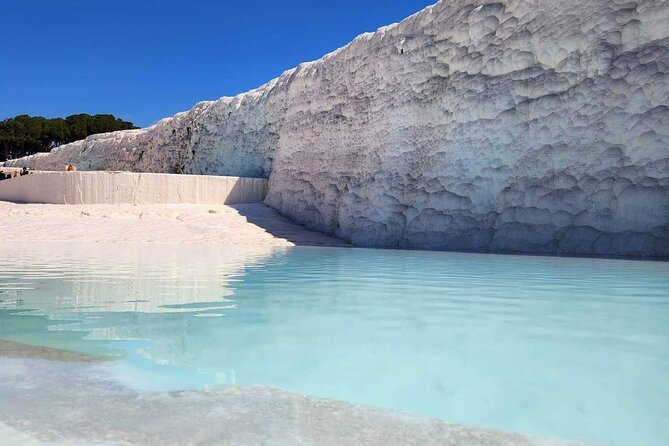
After Laodicea, you continue to Hierapolis and Pamukkale. The white mineral terraces are among Turkey’s most recognizable natural sights. Hot water rises from underground and runs over the cliffs, leaving pale deposits that create pools and channels. The name Pamukkale means cotton fortress, an apt description of the bright formations.
The ancient healing city of Hierapolis grew around these thermal waters. Here you visit the Martyrium of the Apostle Philip, identified as the place where Philip was martyred during persecutions ordered by Domitian. The combination of Roman ruins, early Christian memory, and striking mineral formations gives this day a strong visual finish.
About two hours are scheduled for Hierapolis and Pamukkale together. That is useful for a broad visit, but it may feel short if you want to explore every corner of the ancient city or spend a long time at the terraces. The overnight stay is at Colossae Thermal, Pam Thermal Hotel, or a similar property, giving you a base in the Pamukkale area.
Day 4: Ephesus brings the ancient world into focus
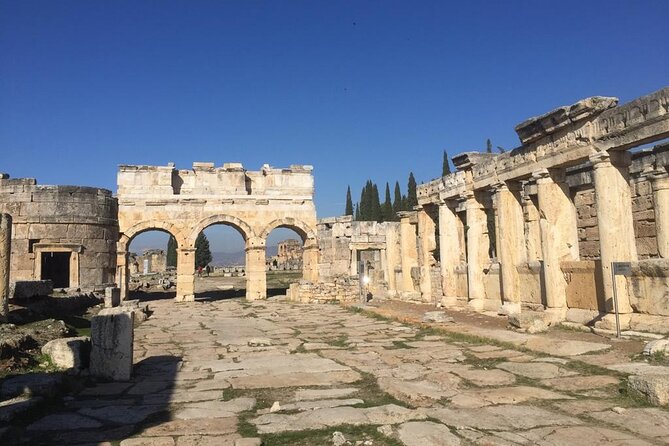
Ephesus is the largest and most familiar site on the tour, and rightly so. Paul preached here and lived in the city for three years. The city also received an epistle from him, giving the ruins a direct New Testament connection.
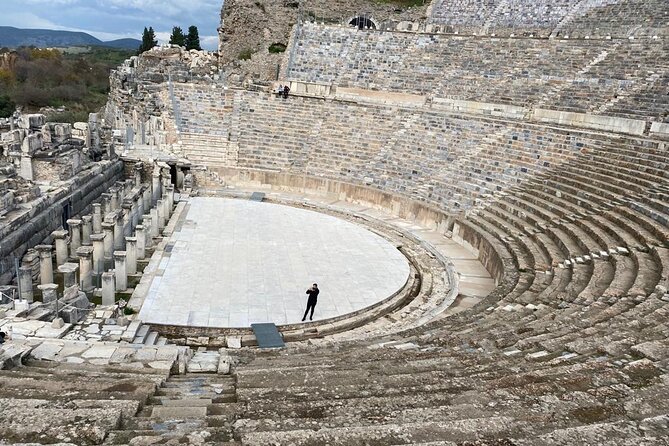
The visit includes marble streets, the Baths of Scholastica, the Library of Celsus, the Temple of Hadrian, and the theater. These are not scattered fragments with little context. Together, they show the scale and confidence of a major ancient city.
The Library of Celsus is likely to be the visual centerpiece, but do not rush past the streets and public buildings. They help you picture how people moved through Ephesus and how public life, commerce, politics, and religion occupied the same urban space.
The Temple of Artemis is also connected with Ephesus and was counted among the Seven Wonders of the ancient world. The remaining visit is brief, about 20 minutes, and the stop is free. Do not expect a complete temple. The importance is in understanding what once stood there and why the cult of Artemis mattered to the city encountered by Paul.
The Ephesus visit lasts about two hours. That is enough to see the major points with a guide, though the site can reward more time. Wear practical shoes, since the route includes ancient paving and open archaeological ground.
The House of Mary and St. John’s Basilica
After Ephesus, you drive into the Aladag Mountains to the House of the Virgin Mary, about five miles from the ancient city. Christian tradition holds that Mary came to Ephesus with St. John and lived there until her death. The place was declared a pilgrimage site by the Archbishop of Izmir in 1892, and Pope Paul VI visited in 1967.
The stop lasts about 45 minutes. It is a devotional site rather than a large archaeological complex, so your experience will depend partly on your personal interest in pilgrimage and tradition. The tour presents the historical claim and religious importance, but it should not be confused with a universally proven identification.
Next comes the Basilica of St. John, where it is believed the evangelist spent his final years and was buried on the southern slope of Ayosolug Hill. The visit lasts about 30 minutes. This is another place where a guide’s explanation helps, since the surviving structure needs context to make sense.
You then continue to the Temple of Artemis before heading to Kusadasi. The hotel is listed as Efe Boutique or similar, with dinner and overnight included. The final day is mainly a return journey, so Kusadasi functions as a convenient overnight stop rather than a major sightseeing base.
What the $1,189 price covers
At $1,189 per person, this is not a budget independent trip. It is a packaged route designed to reduce planning and combine several expensive pieces.
The price includes four nights in four- and five-star hotels, four breakfasts, two dinners, entrance fees, a professional Bible-focused guide, transportation in a new air-conditioned minivan or minibus, and domestic flights between Istanbul and Izmir. Private airport and hotel transfers in Istanbul are also included.
Entrance fees matter here because you visit many major archaeological sites. Prepaid tickets are intended to help the group avoid ticket lines, which can be valuable when the day is already tightly scheduled.
You still need money for lunches, drinks, dinners in Izmir, and personal expenses. Domestic airline luggage rules are also strict enough to affect packing: 15 kilograms for checked luggage and 8 kilograms for cabin luggage. If you normally pack for a longer trip, plan to leave excess bags in Istanbul or confirm the operator’s arrangements before departure.
The strongest value comes from the logistics. You are paying to connect widely separated sites, move between hotels, fly at both ends, and have the biblical context explained along the way. If you prefer choosing your own restaurants, lingering at ruins, or changing the route on a whim, an independent trip may suit you better.
Who will enjoy this route most
I would choose this tour if you want Christian history placed in its geographic and archaeological setting. It suits church groups, readers of the New Testament, and anyone interested in how early Christian communities lived inside major ancient cities.
It also works well if you have limited time in Turkey and want more than Istanbul and Ephesus. The included transfers and flights remove several tiring decisions, while the small group gives you a better chance to ask questions than a large coach tour.
The pace is less suitable for anyone who needs a relaxed holiday. You will have early departures, road travel, short visits at some sites, and a packed sequence of cities. The route includes long days, but the reward is breadth.
The guides named Melih and Mustafa have been praised for clear explanations, friendly group handling, and strong timing. You should still confirm the assigned guide before departure, since staffing can change. A good guide matters greatly here because many stops have modest remains but major biblical importance.
Practical details before you book
The minimum booking is two people, and the maximum group size is 15. Pickup is available from hotels on both sides of Istanbul, with the suggested time supplied after confirmation.
A vegetarian meal is available if you request it when booking. Since lunches and some dinners are not included, ask for the likely meal schedule before you leave Istanbul.
The tour is offered in English and uses mobile tickets. Confirmation is provided at booking. Most people can participate, but the itinerary involves repeated boarding, walking around ruins, and moving between sites, so you should consider your own comfort with an active schedule.
Cancellation is generous only when handled early. Cancel at least six full days before the start for a full refund. A cancellation two to six full days ahead receives a 50 percent refund, while cancellation less than two full days ahead is nonrefundable. The cut-off follows local time.
Should you book the Seven Churches tour?
Book it if the biblical connections are central to your trip and you want someone else to handle the flights, hotels, entrance fees, and regional transport. Pergamon, Sardis, Laodicea, Hierapolis, and Ephesus give you a strong mix of scripture, archaeology, and scenery.
Think twice if you want long, quiet visits at each ruin or dislike fixed meal and hotel arrangements. The tour covers a lot in five days, and some stops are brief.
For the right person, the value is not just the number of sites. It is the chance to read about the Seven Churches in the morning and then walk through the cities where those communities lived, worshipped, traded, and argued. That connection is what makes this demanding route worth considering.
FAQ
How long is the tour?
The tour lasts approximately five days and includes four nights of accommodation.
Does the tour begin and end in Istanbul?
Yes. You are picked up from your Istanbul hotel, fly to Izmir, and return by domestic flight to Istanbul, followed by a private transfer to your hotel.
Which Seven Churches are included?
The route visits Pergamon, Thyatira, Smyrna by panoramic ride, Sardis, Philadelphia, and Laodicea. Ephesus is also included as a major biblical and early Christian site.
Are domestic flights included?
Yes. Flights from Istanbul to Izmir and back are included. The luggage limit is 15 kilograms checked and 8 kilograms in the cabin.
Are hotels and meals included?
Four nights in four- and five-star hotels are included, along with four breakfasts and two dinners. Drinks, lunches, and dinners in Izmir are not included.
Is the tour conducted in English?
Yes. The tour is offered in English and includes a professional Bible-oriented guide.
Can I request vegetarian meals?
Yes. A vegetarian option is available, but you should request it when booking.
What is the group size?
A minimum of two people is required, and the tour has a maximum of 15 participants.
Recently added in Istanbul
- Two (2) Days Istanbul Old City and Two Continents Walking Tour★ 5.0 · 6 reviews
- istanbul old city private tour★ 5.0 · 19 reviews
- Private Guided Tour: Discovering Istanbul★ 4.5 · 9 reviews
- Istanbul Airport (IST) To Hotels Transfer★ 5.0 · 80 reviews
- Best Of İstanbul Europe Side In One Day★ 5.0 · 10 reviews
- 2 Days Cappadocia Tour from Istanbul with Optional Balloon★ 5.0 · 10 reviews
- Hagia Sophia Private Skip The Ticket line guided Tour★ 4.5 · 17 reviews
- historical peninsula walking tour★ 5.0 · 6 reviews