
Reviewed · ISTANBUL
Authentic Turkish Antioch Breakfast with Local Sisters
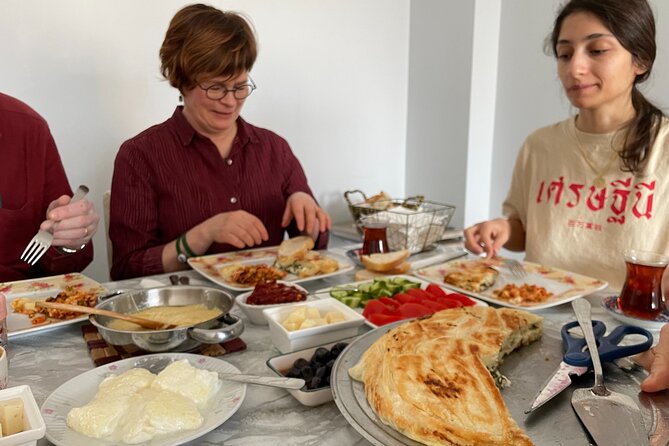
The best part of this Istanbul experience is that breakfast is not treated as a quick meal. You enter a local home in Sarıyer, meet two sisters, and spend the morning preparing the foods that make a Turkish table feel generous and social. Menemen, muhlama, sucuk, cheeses, kaymak, and honey turn a simple breakfast into the main event.
I like the small maximum of six people, which gives the sisters time to answer questions and help with the cooking. I also like the chance to talk about ordinary Turkish life over food, rather than simply eating at a restaurant and moving on.
The main drawback is the location. The meeting point is in Huzur, Sarıyer, well away from Istanbul’s main sightseeing core, so you need to allow time to reach it. At $65 per person, the value depends on how much you want the personal home setting and cooking lesson, not just a large breakfast.
Key points to know before booking
- A home breakfast in Sarıyer: You meet at Huzur, Oyak Sitesi No:21, and return to the same point after about two and a half hours.
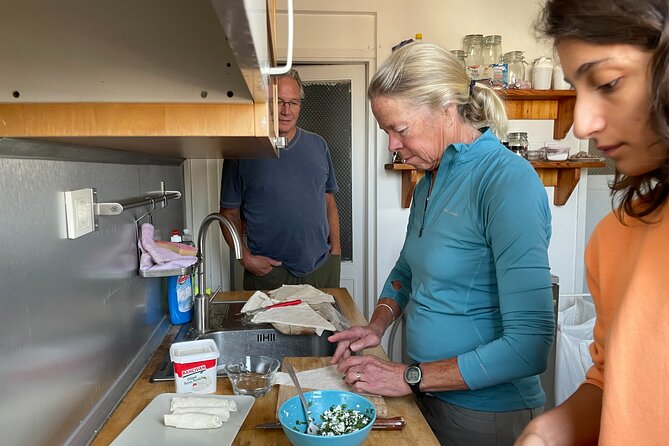
- Two local sisters host the class: The focus is on friendly conversation, hands-on preparation, and a typical Turkish morning.
- The menu covers both hot and cold staples: You can expect menemen, muhlama or kuymak, eggs with sucuk, simit, cheeses, kaymak, and honey.
- The group is capped at six people: This is a much more personal format than a large cooking school.
- Recipes are part of the experience: You learn dishes you can try again at home.
- Plan transportation carefully: Public transportation is nearby, but the precise route depends on where you stay in Istanbul.
Why Turkish breakfast deserves a whole morning
Turkish breakfast, or kahvaltı, is usually built around variety. Instead of one plated dish, you get a table filled with small tastes: salty cheese, olives, bread, vegetables, spreads, eggs, sausage, honey, jam, and cream.
That makes this class a useful introduction to Turkish food culture. You are not only learning how to cook one recipe. You are seeing how several simple items work together, with hot dishes arriving alongside cold ingredients and bread used to scoop, spread, and share.
Antioch, known in Turkey as Antakya, has its own food traditions shaped by different communities and strong home cooking. The experience is presented as an Antioch breakfast, so you can expect the hosts to connect the meal with their local food culture rather than offer a generic international cooking lesson.
I especially like the social side of this format. Breakfast is the excuse, but the real subject is how people eat at home. You cook, sit down, talk, and get a better sense of the warmth built into a Turkish morning meal.
Other Istanbul outings people put on the same list:
- Istanbul: Bosphorus Dinner Cruise & Show with Private Table
★ 4.8 · 44,561 reviews - Istanbul: Daytime or Sunset Sightseeing Cruise & Audio Guide
★ 4.8 · 14,430 reviews - Istanbul: Bosphorus Dinner Cruise with Turkish Night Show
★ 4.8 · 10,127 reviews
Arriving in Huzur, Sarıyer
The meeting point is Huzur, Oyak Sitesi No:21, 34475 Sarıyer, Istanbul. The activity starts at 10:00 a.m. and ends back at the same location after approximately two hours and thirty minutes.
Sarıyer is not the most convenient area if you are staying around Sultanahmet, Eminönü, or Taksim. That does not make the experience a poor choice, but it does make planning important. The activity is near public transportation, yet you should still check the route from your hotel and leave enough time for Istanbul’s traffic and transfers.
You receive confirmation at booking, and the ticket is mobile, so there is no need to print a voucher. The important practical detail is the address. This is a home-based activity, not a class starting beside a famous monument, so have the full meeting point ready on your phone.
The long trip can be worth it if you want a quieter, more local morning. If your schedule is packed with visits to Hagia Sophia, the Blue Mosque, Topkapı Palace, and the Grand Bazaar, you may prefer an activity closer to central Istanbul.
Meeting the sisters and settling into a local home
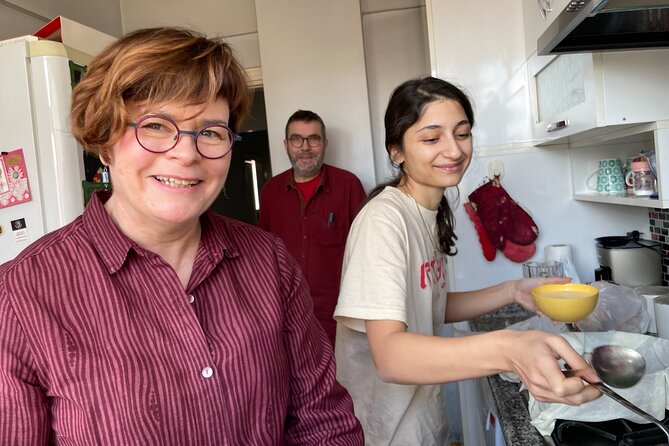
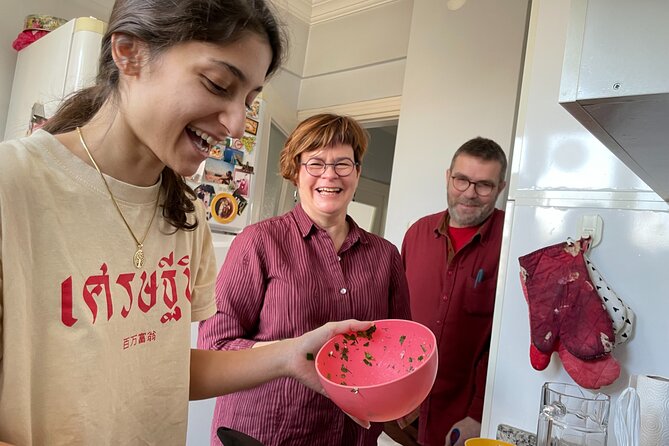
The class begins with the hosts welcoming you into their home. The sisters invite you to come as a guest and leave as a friend, and that idea shapes the whole activity.
You are not simply handed a plate and given a short explanation. The point is to take part in preparing breakfast and to talk with the people making it. The small group size matters here. With no more than six participants, you should have a reasonable chance to ask questions and receive personal attention.
The hosts also help create an easy setting for conversation. You can ask about ingredients, preparation, Turkish customs, and daily life as the meal comes together. English is the language offered for the experience.
There may also be a cat named Petra in the home. If you like animals, that can add a pleasant bit of personality to the morning. If you have allergies, keep in mind that this is a private home rather than a commercial kitchen.
Making menemen, Turkey’s easygoing egg dish
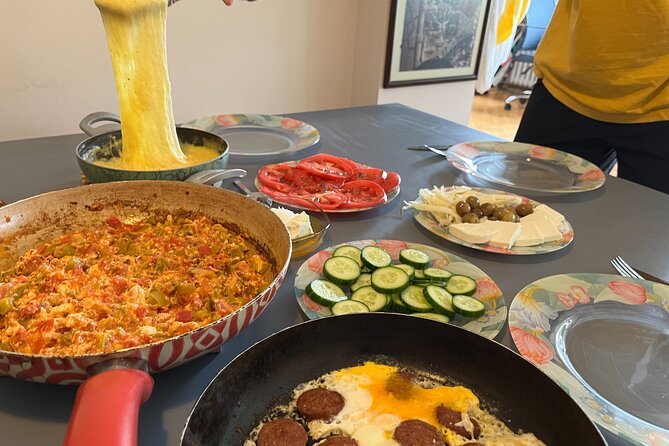
Menemen is one of the most familiar hot breakfast dishes in Turkey. It combines eggs with vegetables, usually in a soft, pan-cooked mixture that is eaten with bread.
The value of preparing it yourself is that you learn how the dish comes together, rather than receiving a finished serving with no context. You can ask about texture, seasoning, and the role of the vegetables while the sisters guide you.
Menemen is also a practical recipe to take home. The ingredients are approachable, and the dish works well for a relaxed weekend breakfast. It is less demanding than many restaurant-style dishes, which makes it a good part of the class for people who do not cook often.
Do not expect a formal chef demonstration with a long lecture. This is presented as home cooking, so the lesson is likely to feel informal and conversational. That is a strength if you want to cook alongside the hosts, though less useful if you are looking for advanced culinary instruction.
A different side of Istanbul on the same trip:
- Best of Istanbul 1, 2 or 3-Day Private Guided Istanbul Tour
★ 5.0 · 8,922 reviews - Istanbul: Basilica Cistern Fast-Track Entry and Audio Guide
★ 4.6 · 7,521 reviews - Istanbul: Hagia Sophia Skip-the-Line Ticket & Museum Option
★ 3.7 · 4,958 reviews - Istanbul: Hodjapasha Whirling Dervishes Show & Exhibition
★ 4.4 · 4,790 reviews
Stirring together muhlama, also called kuymak
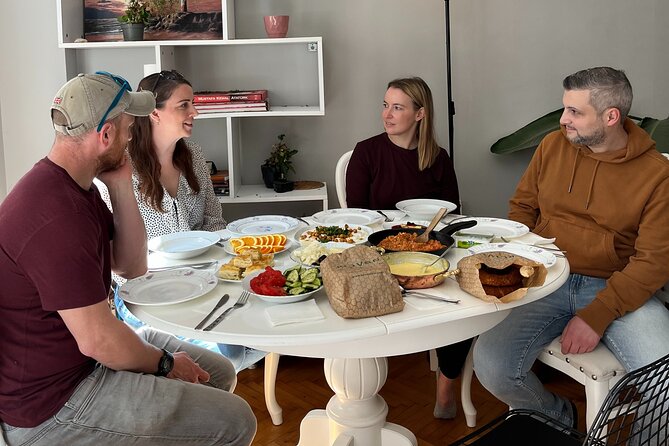
Muhlama, also called kuymak, is one of the more distinctive dishes on the menu. It brings cornmeal and cheese together in a hot, rich mixture.
This is the dish that gives the breakfast a special Antioch and Black Sea style of comfort food, even though the broader table includes familiar Turkish staples. The combination is filling and very different from the usual eggs, toast, and fruit found in many hotel breakfasts.
You may find muhlama especially appealing if you enjoy melted cheese and hearty dishes. It can also be quite rich, so you will be glad the meal includes lighter items such as vegetables, cheeses, and bread.
Because the class includes preparation, you get to see how the texture develops. That is helpful when you want to recreate it at home. The supplied information does not specify exact ingredients beyond cornmeal and cheese, so the sisters themselves are the best source for questions about the recipe and substitutions.
Adding eggs with sucuk and simit to the table
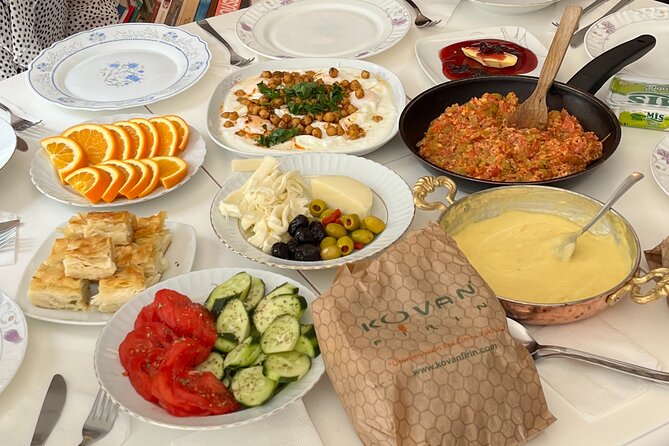
Eggs with sucuk bring a stronger, spiced flavor to the breakfast. Sucuk is a Turkish sausage often described for visitors as Turkish pepperoni. It gives the eggs a savory kick and adds another hot option beside menemen and muhlama.
Simit is the bread-like starter. This ring-shaped Turkish pastry is a familiar breakfast item and works well with cheese, honey, and kaymak. It helps tie the table together because Turkish breakfast is meant to be eaten in combinations rather than in a strict order.
The hot dishes are only part of the meal. You also receive a variety of cheeses, Turkish cream called kaymak, honey, and other typical breakfast items. The mix gives you a chance to compare salty, creamy, sweet, and spicy flavors in a single sitting.
I like that the menu shows range without becoming too complicated. You get several classic tastes, but the dishes are recognizable enough that the meal does not feel like a guessing game.
The cold foods matter just as much
A Turkish breakfast table is not built around one main plate. Cheese, spreads, vegetables, olives, honey, jams, and cream give you small bites between mouthfuls of the hot food.
That format is useful for understanding Turkish hospitality. A host shows care by offering variety and making sure the table feels full. The food is meant to be shared, and the meal gives conversation room to grow.
Kaymak with honey is one of the most appealing combinations for anyone with a sweet tooth. Kaymak is a thick Turkish cream, and its richness balances the sweetness of honey. Simit provides something to spread it on.
The description does not list every cold item served at every session, so the precise selection may vary. The core menu does include a variety of cheese, kaymak, honey, and simit, along with the hot dishes.
A cooking lesson that is also a cultural exchange
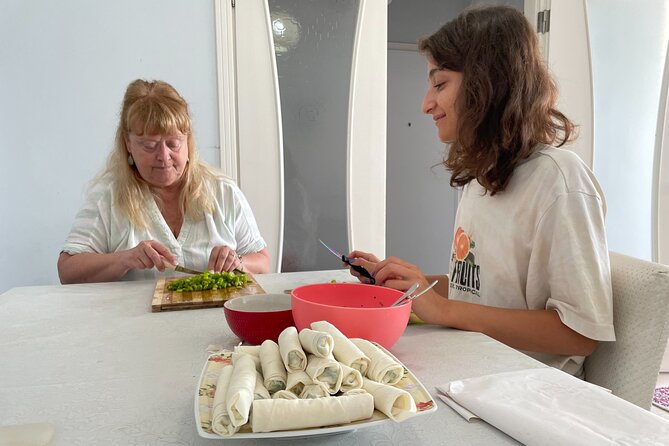
Many food tours give you a quick taste and a few facts. This one is more personal because the setting is a local home and the group is small.
The sisters use food to explain a typical Turkish morning. That gives you a better sense of why breakfast is often treated as a social meal rather than a rushed start to the day. You can ask questions as you go, and the conversation is part of the experience rather than an interruption between cooking steps.
The personal attention is particularly useful if you want recipes. You can ask what makes the dishes taste right, how they are served, and what you might change when cooking at home. The experience specifically includes recipes to try later, which gives the morning value beyond the meal itself.
It is also a good choice for solo visitors and couples who want contact with local residents. The maximum of six keeps the group from becoming anonymous, though the quality of the conversation will naturally depend on who joins you.
What the $65 price really covers
At $65 per person, this is not the cheapest way to eat breakfast in Istanbul. You can find an inexpensive local meal for far less, and even a generous restaurant breakfast may cost less than the activity price.
You are paying for more than food, though. The fee covers a two-and-a-half-hour visit, instruction, several dishes, a small group, conversation with two local hosts, and recipes you can use at home. It also gives you a private-home setting that a restaurant cannot provide.
I would call the price fair for visitors who value personal contact and participation. It is less attractive if you mainly want to sample Turkish breakfast foods quickly or if you already have access to a good local kitchen class.
The full meal also makes the price easier to justify. You are not preparing one small dish and leaving hungry. The menu includes several hot items plus cheese, kaymak, honey, and simit, so breakfast itself is a substantial part of what you receive.
Who will enjoy this experience most
This activity suits you if you like food, conversation, and small group experiences. It is especially good for:
- Couples looking for a relaxed morning together
- Solo visitors who want a friendly local setting
- Families who enjoy cooking and sharing several dishes
- People who want recipes they can use after returning home
- Anyone curious about Turkish home culture rather than only restaurant food
It may be less suitable if you want a central Istanbul activity with no transport planning. It may also disappoint you if you expect a professional culinary school, advanced techniques, or a tightly scripted lesson.
The breakfast includes eggs, dairy, cheese, and sucuk. If you have dietary restrictions, ask the hosts before booking. The supplied details do not specify vegetarian, vegan, gluten-free, or allergy-adapted options.
Timing, group size, and cancellation
The 10:00 a.m. start makes sense for breakfast. You have enough time to reach the meeting point after an early start, but you should not schedule a major timed attraction immediately afterward unless you have allowed for the return journey.
The group maximum is six people. That is one of the experience’s strongest practical features because it leaves room for questions and personal help at the stove.
Free cancellation is available if you cancel at least 24 hours before the start time. Cancellations or changes made less than 24 hours before the experience are not accepted for a refund. Cutoff times follow Istanbul local time, so check the time difference if you are booking before arriving in Turkey.
Should you book this Turkish breakfast class?
Book it if you want to spend a morning in a local home, cook several Turkish breakfast dishes, and have genuine conversation with the hosts. The small group, generous menu, home setting, and recipes give it more substance than a simple meal reservation.
Think twice if you are staying far from Sarıyer and have only a short time in Istanbul. The location takes planning, and the $65 price is high if all you want is food.
For the right visitor, this is a warm and practical introduction to Turkish breakfast culture. You leave with a full stomach, a better sense of how the meal fits into home life, and recipes that can bring a little of that morning back to your own kitchen.
FAQ
Where does the Turkish breakfast experience take place?
It takes place at Huzur, Oyak Sitesi No:21, 34475 Sarıyer, Istanbul, Turkey.
What time does the activity start?
The activity starts at 10:00 a.m.
How long does the experience last?
The experience lasts approximately two hours and thirty minutes.
What dishes are included?
The menu includes menemen, muhlama or kuymak, eggs with sucuk, a variety of cheese, kaymak with honey, and simit.
Is the food prepared during the experience?
Yes. The activity is a cooking class where you learn to prepare a traditional Turkish breakfast with the local hosts.
How many people can join the activity?
The maximum group size is six people.
Is the experience offered in English?
Yes. English is the offered language.
Can I use a mobile ticket?
Yes. The experience accepts a mobile ticket, and confirmation is received at the time of booking.
What is the cancellation policy?
You can cancel for a full refund up to 24 hours before the start time. Cancellations or changes made less than 24 hours before the start time are not refunded or accepted.
Recently added in Istanbul
- Two (2) Days Istanbul Old City and Two Continents Walking Tour★ 5.0 · 6 reviews
- istanbul old city private tour★ 5.0 · 19 reviews
- Private Guided Tour: Discovering Istanbul★ 4.5 · 9 reviews
- Istanbul Airport (IST) To Hotels Transfer★ 5.0 · 80 reviews
- Best Of İstanbul Europe Side In One Day★ 5.0 · 10 reviews
- 2 Days Cappadocia Tour from Istanbul with Optional Balloon★ 5.0 · 10 reviews
- Hagia Sophia Private Skip The Ticket line guided Tour★ 4.5 · 17 reviews
- historical peninsula walking tour★ 5.0 · 6 reviews