Reviewed · TOURS
8 Days Seven Churches of Revelation MINI Group Tour including Istanbul
The heart of this trip is its sweep: in eight days, you connect Istanbul’s Byzantine and Ottoman monuments with the seven churches named in Revelation. Pergamum, Sardis, Ephesus, and Laodicea are not quick photo stops. They are large archaeological sites that make the biblical text easier to place in its ancient setting.
I like the maximum group size of 10, which should make questions and hotel transfers easier, and I like that the plan includes the awkward domestic flights between Istanbul and Izmir. Guides such as Melih and Fezvi have helped keep the trip moving when flight problems or schedule changes caused trouble.
The main caution is pace. You cover a lot of Turkey by minivan, plane, and foot, with several early starts. Also, the summary mentions 11 prepared meals, while the detailed inclusions list only seven breakfasts and two dinners, so confirm the meal count before paying.
Key points at a glance
- All seven churches in one eight-day route: Visit Pergamum, Smyrna, Thyatira, Sardis, Philadelphia, Laodicea, and Ephesus.
- A small group capped at 10 people: This gives the Bible-focused guide room to explain passages and answer questions.
- Two domestic flights save long road hours: Fly Istanbul to Izmir and back instead of spending much of the trip on highways.
- Four-star and boutique hotels: Overnight stays include Istanbul, Izmir, Pamukkale, and Kusadasi.
- Major Istanbul sights are built in: See the Hippodrome, Blue Mosque, Topkapi Palace, Hagia Sophia, Grand Bazaar, Spice Market, Bosphorus, and Basilica Cistern.
- The price covers most major costs: At $1,684 per person, hotels, transport, entrance tickets, domestic flights, and listed meals are included.
Why this route works for Revelation history
This is a strong choice if you want the biblical sites handled as a connected story rather than as scattered ruins. The ancient cities are spread across western Turkey, and arranging the route independently means dealing with long drives, separate entrance tickets, domestic flights, and several hotel changes.
The trip uses Izmir as a base for parts of the western route, then moves through Pamukkale and Kusadasi. That order keeps the journey practical, though it does not make the days light. You will spend time walking over uneven ancient paving, climbing around archaeological sites, and riding between towns.
I especially value the inclusion of Thyatira and Philadelphia. These sites have fewer grand remains than Ephesus or Pergamum, but they are important to the Seven Churches story. A guide can help you understand why a modest basilica fragment or a few surviving arches matter, instead of leaving you to wonder what you are looking at.
Other Istanbul outings people put on the same list:
- Istanbul: Bosphorus Dinner Cruise & Show with Private Table
★ 4.8 · 44,561 reviews - Istanbul: Daytime or Sunset Sightseeing Cruise & Audio Guide
★ 4.8 · 14,430 reviews - Istanbul: Bosphorus Dinner Cruise with Turkish Night Show
★ 4.8 · 10,127 reviews
Days 1 and 2: Istanbul’s imperial center
Your arrival begins with a private airport transfer from Istanbul Airport or Sabiha Gokcen Airport to the hotel. The ride is listed at about 40 minutes, though Istanbul traffic can affect the actual timing. Hotels are boutique or four-star properties such as Yasmak Sultan or Dosso Dossi Old City, or a similar hotel.
Day 2 focuses on the old city and is packed with famous sights. At the Hippodrome, you see the former arena for chariot races and the setting for major Byzantine unrest. The visit is short, but it gives you a useful starting point for understanding Constantinople as a Roman and Byzantine capital.
The Blue Mosque follows. Its name comes from the blue Iznik tiles inside, though access can be affected by prayer times. On Fridays, the stated visiting window is 2:30 to 4:30 p.m., so the guide may adjust the order.
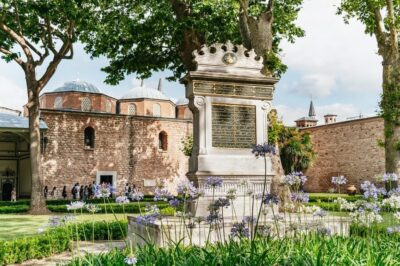
Topkapi Palace gets about two hours, which is the right amount of time for a first visit. This was the Ottoman sultans’ residence as well as a center of government and education. The tour includes the weapons section, a worthwhile detail for anyone interested in how the empire presented power.
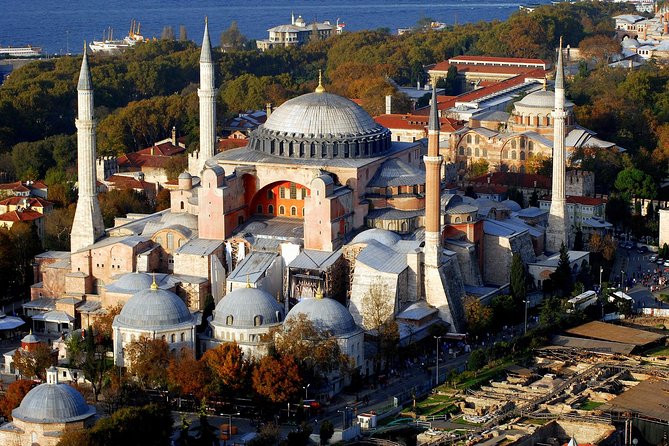
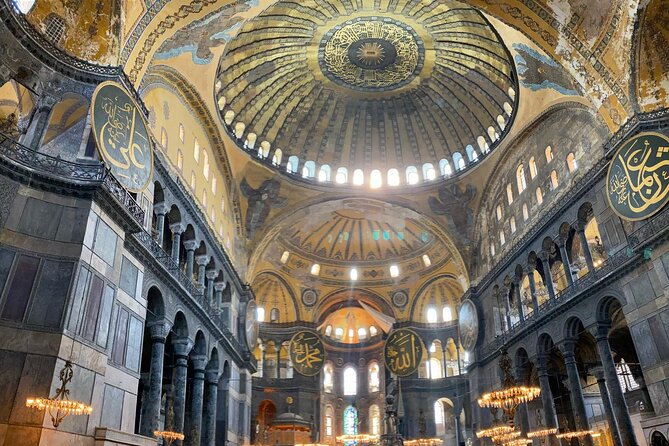
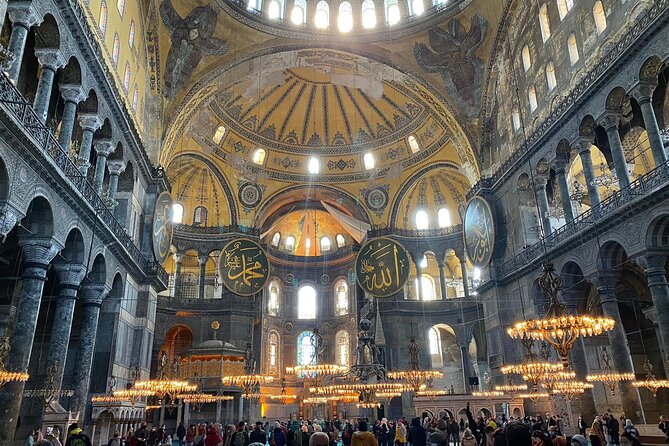
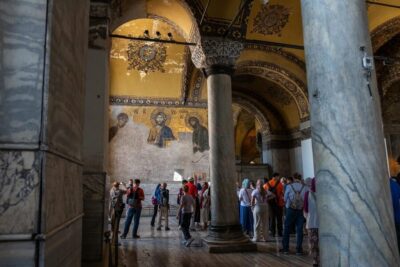
After lunch, you walk to Hagia Sophia. The building dates to the reign of Justinian I and was built in 532. Since live guiding is not allowed inside after January 15, 2024, you need a smartphone and headphones for the audio-style system. Headphones can be bought at the entrance for $3.50 if needed. Without a smartphone, you follow the signs and posted information.
The Grand Bazaar closes the day with about 90 minutes. It has more than 1,200 shops along 58 covered streets, selling jewelry, pottery, spices, carpets, and other goods. It is an entertaining stop, but it can feel intense after a full day of monuments. On Sundays, the Spice Market replaces it, and on certain listed dates, Arasta Bazaar is used instead.
Day 3: Spice Market, Bosphorus, and a flight west
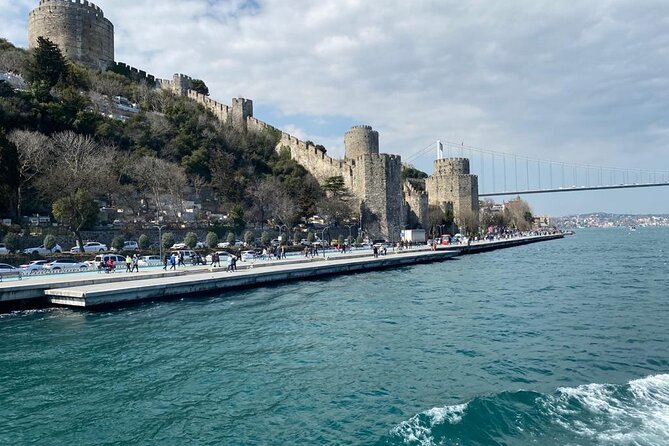
The morning begins with the Spice Market, followed by a boat ride on the Bosphorus. The waterway separates Europe and Asia, and the cruise gives you a different view of Istanbul’s old wooden houses, palaces, fortifications, and fishing villages.
The boat trip lasts about three hours, so this is one of the more relaxed portions of the Istanbul program. I like the change of rhythm. After two days of indoor monuments and crowded streets, the open water gives you time to take in the city without another lecture every few minutes.
The Basilica Cistern comes in the afternoon. This underground water storehouse is atmospheric and easy to pair with the old-city sights. Afterward, you transfer to Istanbul Airport for the flight to Izmir, then continue to your hotel.
The domestic flight saves considerable driving time. The luggage allowance is limited to 15 kilograms checked and 8 kilograms in the cabin, so pack with that rule in mind. Heavy bags can become a nuisance on a route with several transfers.
Day 4: Pergamum, Thyatira, and Smyrna
Pergamum is one of the most rewarding archaeological stops on the tour. The Acropolis rises above modern Bergama, and the theater is famous for its steep slope. You also visit the Asklepion, an ancient medical center, and see remains connected with temples, the library, and the famous Altar of Zeus.
The connection to Revelation gives the site extra weight. Pergamum is identified with the church addressed in Revelation, and the Altar of Zeus has long been linked with the passage’s reference to the throne of Satan. Your guide’s interpretation matters here because the ruins alone cannot explain the religious and political tensions behind the text.
Allow four hours for Pergamum. Wear shoes with a firm sole, carry water, and expect uneven ground. The site is spread out, so this is not a quick stop beside a single monument.
Thyatira, now Akhisar, is a sharper contrast. The remains include a basilica and Roman architectural fragments, but the site is less visually complete than Pergamum. It was known for purple dye, and Lydia, the seller of purple goods in Philippi, came from Thyatira.
The day ends with a panoramic look at Smyrna, modern Izmir, including the Clock Tower. Smyrna is one of the seven churches and a major modern city, so this portion helps connect ancient names with present-day Turkey. You return to an Izmir hotel such as the DoubleTree by Hilton Alsancak or Hilton Garden Inn Bayrakli.
A different side of Istanbul on the same trip:
- Best of Istanbul 1, 2 or 3-Day Private Guided Istanbul Tour
★ 5.0 · 8,922 reviews - Istanbul: Basilica Cistern Fast-Track Entry and Audio Guide
★ 4.6 · 7,521 reviews - Istanbul: Hagia Sophia Skip-the-Line Ticket & Museum Option
★ 3.7 · 4,958 reviews - Istanbul: Hodjapasha Whirling Dervishes Show & Exhibition
★ 4.4 · 4,790 reviews
Day 5: Sardis, Philadelphia, Laodicea, and Pamukkale
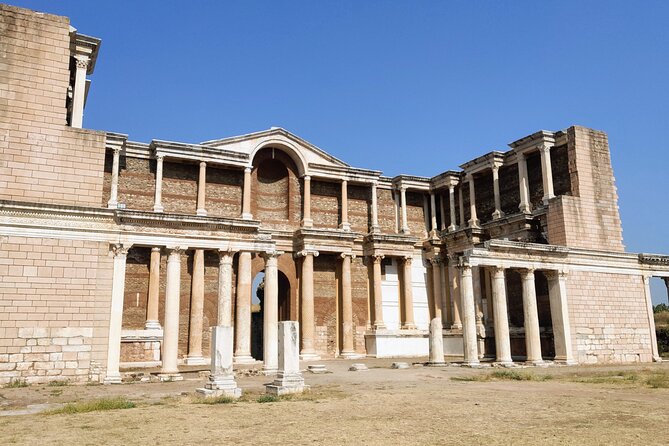
Sardis is an early start, but it rewards the effort. Once the capital of the Lydian kingdom, the site includes the Temple of Artemis, a restored gymnasium, and a reconstructed synagogue. You also see the final section of the Persian Royal Road from Susa to Sardis and the Pactolus River, associated with the area’s old wealth.
The biblical link is especially direct here. Sardis is portrayed as a dying church in Revelation, and standing among the remains gives that warning a physical setting. The visit lasts about an hour, which is enough for an overview but not for a slow archaeological study.
Philadelphia, now Alasehir, is another modest stop. The church is described as the only one not censured in Revelation. What survives includes part of a Byzantine basilica, a high arch, and some eleventh-century frescoes. Expectations matter: this is a site for context and reflection, not a grand ruin on the scale of Ephesus.
Laodicea is larger and more spread out. Founded in the third century BC by the Seleucid ruler Antiochus II and named for his wife, it grew at the meeting point of important roads. Its commercial position helps explain the tone of the message to the Laodicean church.
The day finishes at Hierapolis and Pamukkale. Hierapolis was known as a healing center, while Pamukkale is famous for white mineral terraces formed by hot water. The combination of ruins and thermal formations is unusual, but the schedule gives about two hours, so you will need to keep moving.
You spend the night at a thermal hotel such as Colossae Thermal or Pam Thermal Hotel. That sounds restful after a long day, though the overall route means you should not expect a leisurely spa holiday.
Day 6: Ephesus and the final western sites
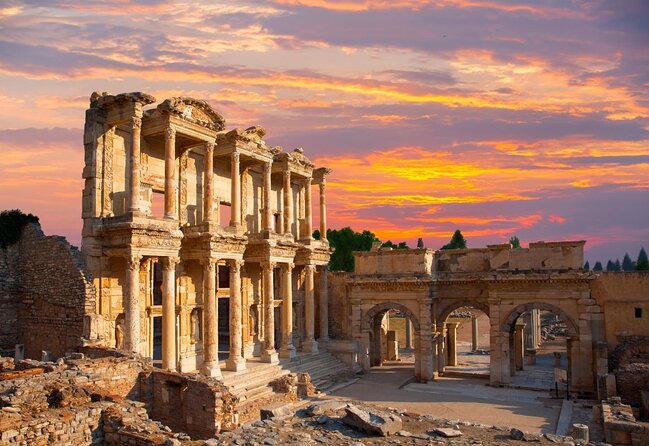
Ephesus is the archaeological high point for many people. The marble streets lead past the Library of Celsus, Baths of Scholastica, Temple of Hadrian, and the theater. Excavation continues, so the appearance of the site can change over time.
The connection to Paul is central. He preached in Ephesus and lived there for three years, and the city received one of his letters. The two-hour visit gives you the main route through the ruins, though anyone with a strong archaeological interest may wish for more time.
The House of the Virgin Mary is about five miles from Ephesus in the Aladag Mountains. The site became a pilgrimage destination after its identification in the late nineteenth century, and Pope Paul VI visited in 1967. The stop lasts about 45 minutes and has a different tone from the large classical ruins.
St. John’s Basilica follows. It is traditionally associated with the evangelist’s burial place on the southern slope of Ayosolug Hill. The visit is brief, at about 30 minutes, but it adds another Christian site to a day already full of biblical connections.
The Temple of Artemis is a short final stop. Only limited remains survive, but the temple once ranked among the Seven Wonders of the ancient world. Fifteen minutes is enough to grasp its location and importance, not enough for a long examination.
You finish in Kusadasi, passing the marina, port, caravanserai, and Grand Bazaar. It is a short sightseeing segment before dinner and the overnight stay at a boutique property such as Efe Boutique.
Days 7 and 8: Back to Istanbul and home
After breakfast, you transfer to Izmir Airport for a midday flight to Istanbul. A representative meets you on arrival and takes you to the hotel. The afternoon is free, which is useful after the tightly planned archaeological days.
Do not count on fitting in a major new Istanbul attraction during this free period. Use it for a meal, a neighborhood walk, shopping, or a return to a place you saw earlier. Your final night is in Istanbul, followed by an airport transfer for your international flight on Day 8.
What the $1,684 price really covers
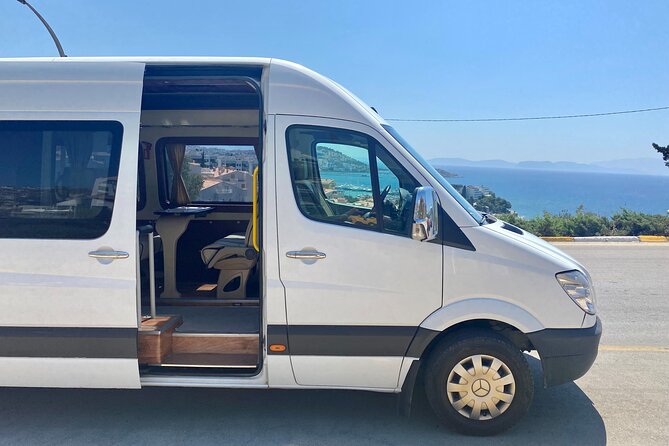
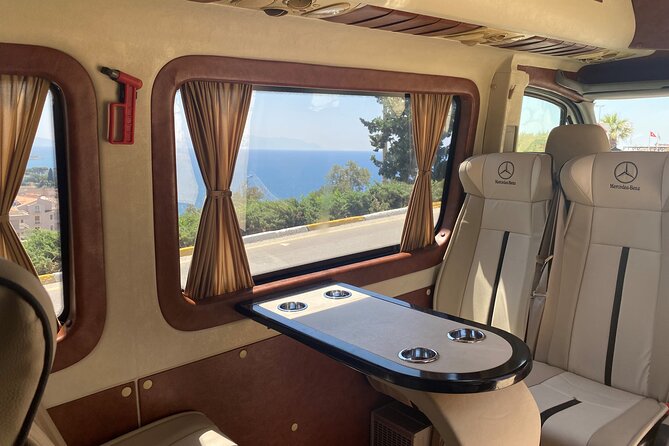
At $1,684 per person, the price is reasonable for a route that includes seven hotel nights, two domestic flights, an air-conditioned minivan or minibus, a licensed Bible-oriented guide, and entrance fees with prepaid tickets intended to reduce queuing.
It also includes seven breakfasts and two dinners according to the detailed inclusions. Drinks, unlisted meals, international airfare, and dinners in Istanbul and Izmir are extra. The tour summary refers to 11 freshly prepared meals, so I would ask the operator to clarify that difference before booking.
The two domestic flights are a major value point. Renting a car could give you more freedom, but it would leave you responsible for navigation, parking, long drives, hotel coordination, and site interpretation. The tour trades independence for a much simpler route.
Pace, group size, and practical tradeoffs
A group of no more than 10 is small enough for a more personal guide experience. It also makes airport pickups and minivan seating less awkward than a large coach tour. The Bible-focused guide is an important part of the value, especially at the less intact sites.
The physical demands are moderate, not trivial. You should be comfortable walking for several hours, handling uneven ancient surfaces, and managing early departures. The route changes hotels several times, so a compact suitcase is far easier than a large one.
The strongest praise has centered on problem-solving. Fezvi helped revise arrangements after a flight cancellation, while Melih was noted for keeping the group moving when issues arose. That matters on a trip with multiple flights and transfers, though no operator can remove every risk from a tightly timed schedule.
Cancellation is flexible only if you act early. Cancel at least six full days before the start for a full refund. Two to six days allows a 50 percent refund, while cancellation less than two days before the start receives no refund.
Who should book this tour
I would choose this trip if you want the biblical context explained on site and prefer a managed route to independent driving. It suits people who value coverage and interpretation more than long stays in each ruin.
I would look elsewhere if you want slow museum days, generous free time, or a relaxed hotel-based holiday. The itinerary is ambitious, and the most important sites deserve attention, but several smaller stops are necessarily brief.
Before booking, confirm three things: the exact meal count, the hotel names for your dates, and the current flight luggage rules. With those points clear, the tour offers a practical way to connect Istanbul with all seven churches, Ephesus, Pamukkale, and several major Christian and classical sites in one organized journey.
FAQ
How long is the tour?
The tour lasts eight days and includes seven nights of accommodation.
What airports can I use for arrival in Istanbul?
You can arrive at Istanbul Airport or Sabiha Gokcen Airport. A representative provides airport pickup.
How many people are in the group?
The group has a maximum of 10 people. At least two people are required per booking.
Which Seven Churches of Revelation are included?
The route includes Pergamum, Thyatira, Smyrna, Sardis, Philadelphia, Laodicea, and Ephesus.
Are domestic flights included?
Yes. The package includes Istanbul to Izmir and Izmir to Istanbul domestic flights. The stated luggage limit is 15 kilograms checked and 8 kilograms in the cabin.
What meals are included?
The detailed inclusions list seven breakfasts and two dinners. Drinks, other meals, and dinners in Istanbul and Izmir are not included. The tour summary mentions 11 meals, so confirm the final meal arrangement before booking.
Are entrance fees included?
Yes. Entrance fees are included, and the guide is scheduled to have prepaid tickets for the listed sites.
What happens if a museum is closed?
An alternative similar museum is planned if a closure affects the route. Topkapi Palace may be replaced by the Basilica Cistern on Tuesdays, and the Grand Bazaar may be replaced by the Spice Market on Sundays.
Recently added in Istanbul
- Two (2) Days Istanbul Old City and Two Continents Walking Tour★ 5.0 · 6 reviews
- istanbul old city private tour★ 5.0 · 19 reviews
- Private Guided Tour: Discovering Istanbul★ 4.5 · 9 reviews
- Istanbul Airport (IST) To Hotels Transfer★ 5.0 · 80 reviews
- Best Of İstanbul Europe Side In One Day★ 5.0 · 10 reviews
- 2 Days Cappadocia Tour from Istanbul with Optional Balloon★ 5.0 · 10 reviews
- Hagia Sophia Private Skip The Ticket line guided Tour★ 4.5 · 17 reviews
- historical peninsula walking tour★ 5.0 · 6 reviews
Tours, compared.
Blue Mosque & Hagia Sophia Guided Tour w/ Tickets
Read our review →
Bosphorus Sightseeing Cruise Tour with Audio Guide
Read our review →
Princes Islands Tour with Heybeliada and Buyukada
Read our review →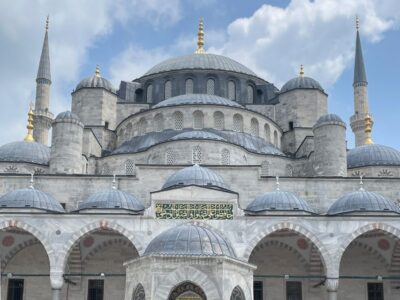
Bursa & Uludag Tour with Lunch & Cable Car Option
Read our review →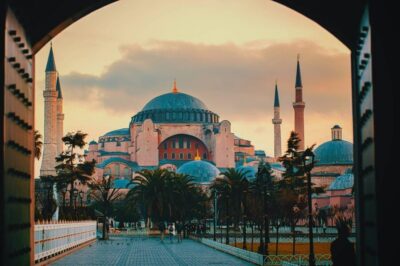
Blue Mosque, Hagia Sophia, & Basilica Cistern Tour
Read our review →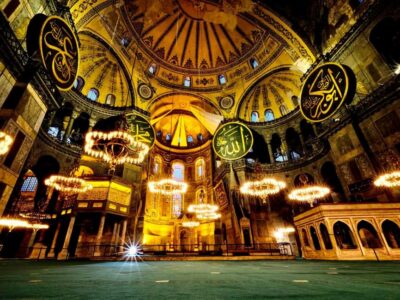
Hagia Sophia Skip-the-Line Ticket with Audio Tour
Read our review →