
Reviewed · BASILICA CISTERN TICKETS
Istanbul: Basilica Cistern Small Group Tour with Tickets
Beneath the streets of old Istanbul, the Basilica Cistern feels like another world: rows of columns, shallow water, reflected light, and the famous upside-down Medusa heads. This one-hour tour gives you the setting and the story without leaving you to puzzle it out alone.
I like the skip-the-line entry, especially when the queue outside is long, and I like the small-group format, which makes it easier to hear the guide and stop for photos. Guides such as Can, Fatih, Sarah, and Fatih Mehmet have been praised for clear English, warmth, and useful historical detail.
The main drawback is the short duration. The cistern is an atmospheric place rather than a large museum with dozens of rooms, so some people may find an hour plenty while others may want more time to wander independently afterward.
Key points to know before you book
- Sixth-century engineering: See the underground reservoir built during the reign of Byzantine Emperor Justinian I.
- Two mysterious Medusa heads: Your guide explains the carved Roman pieces and why they were reused here.
- Skip the ticket queue: Meet at the Basilica Cistern exit gate, then enter with your ticket arranged.
- Small groups matter: Groups may be as small as three, five, or even one guest and one guide.
- Good for photographs: Dim lighting, columns, water, and reflections create unusual pictures.
- One-hour visit: The tour is focused and efficient, with no transport between sights.
Why the Basilica Cistern is worth your time
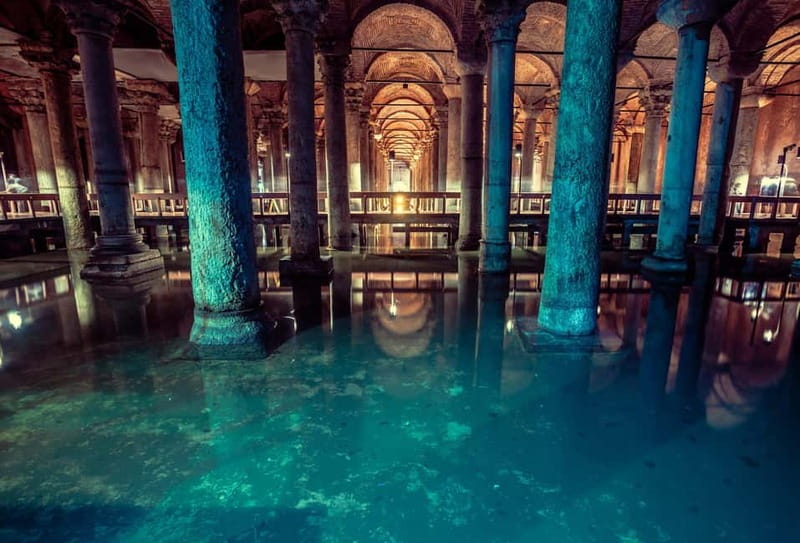
Istanbul has no shortage of famous monuments, but the Basilica Cistern offers a very different view of the city. Above ground, you have mosques, markets, trams, and crowds. Below ground, the mood changes at once. The air feels cool and still, and the huge chamber opens around you in a forest of columns.
The cistern dates from the sixth century, during the reign of Byzantine Emperor Justinian I. It was built to supply water to the Great Palace complex, an important reminder that an imperial city depended on large, carefully planned water systems. You are not simply looking at old stone. You are seeing the practical infrastructure that helped Constantinople function.
A guide adds real value here. Without context, the columns can blend into one another after the first few minutes. A good guide points out the different styles, explains how the reservoir worked, and connects the building to the wider story of Byzantine Istanbul.
The setting does much of the work. Low light and reflections make the cistern memorable, but the atmosphere is not the only reason to visit. The combination of engineering, reused Roman sculpture, and imperial history gives the place substance beneath its dramatic appearance.
More Basilica Cistern Tickets:
- Istanbul: Basilica Cistern Fast-Track Entry and Audio Guide
★ 4.6 · 7,521 reviews - Istanbul: Basilica Cistern Skip-the-Line Entry Ticket
★ 4.6 · 2,270 reviews - Istanbul: Basilica Cistern & Hagia Sophia Combo Ticket
★ 4.6 · 1,990 reviews
Meeting your guide at the Basilica Cistern
The meeting point is at the exit gate of the Basilica Cistern. That detail matters because the area around Sultanahmet can be crowded, and several major sights sit close together. Give yourself enough time to find the correct gate rather than arriving at the last minute.
The tour ends back at the same meeting point. There is no hotel pickup or transportation included, which keeps the arrangement simple. You make your own way to the cistern, meet the guide, and spend the next hour inside the attraction.
A useful touch is guide identification. On one outing, the guide contacted the group through WhatsApp about 30 minutes before the start and described what he would be wearing. That can help when you are standing near a crowded entrance. You may wish to keep your phone available before the tour begins.
The guide will handle the included entrance ticket. You do not need to buy a separate ticket at the door, and the experience is designed to bypass the ticket line. You should still allow time for the meeting process and entry, since skip-the-line access does not mean you can arrive at any time without checking the scheduled start.
The descent into Justinian’s underground reservoir
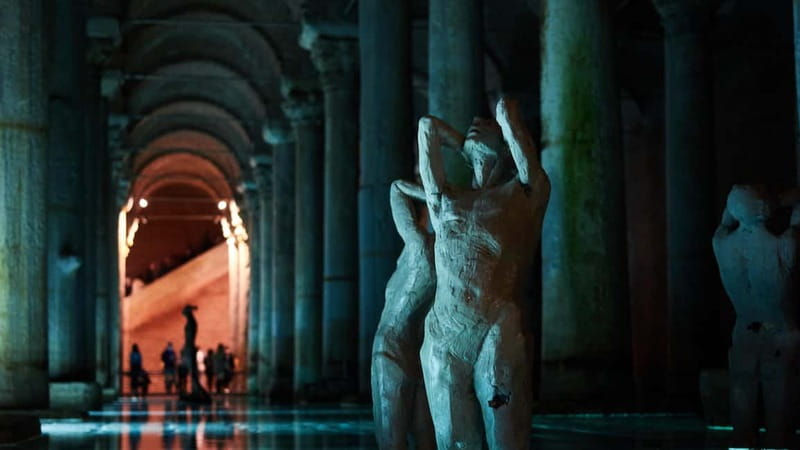
Once inside, you walk down into the cistern and leave the noise of the street behind. The site is underground, and the route includes stairs. One family managed the visit with children aged five and two and brought a stroller, although the stroller was not especially easy on the stairs.
That makes the tour possible for families, but it is not a completely effortless route for wheels. The actual walk through the cistern can be manageable with a stroller, yet you should expect one flight of stairs down and roughly 30 steps back up based on one family’s experience. If you are traveling with a stroller, plan for assistance.
The main viewing area is broad enough for a steady walk, but you will want to pause often. The water, columns, and lighting create good photo opportunities, and a patient guide can help you find angles that show the scale of the room.
The cistern is not visited through a long sequence of separate galleries. The experience centers on one large underground chamber. That is why the hour feels focused rather than rushed, but it also explains why some people consider the tour short.
Columns, water, and Byzantine design
The columns are the cistern’s main visual feature. They rise from the water in long rows, supporting the ceiling and giving the room its cathedral-like scale. They were made in different architectural styles, and the guide helps you notice those differences instead of seeing only a repeated pattern.
This is where a live tour works better than a quick self-guided visit. The guide can explain the construction and point out details that are easy to miss in the dim light. You can also ask questions as you go, which is useful if you want more than a quick introduction.
The water is part of the character of the place, even though the cistern now functions as a historic attraction rather than a working reservoir for visitors. Reflections ripple beneath the columns, and the lighting changes the feeling of the room as you walk. The atmosphere is quiet and almost theatrical, with music adding to the sense of a place preserved beneath the modern city.
I would not book this tour expecting a fast list of dates and names. The best part is the connection between the physical space and its purpose. You understand why such a large underground structure was needed and how much planning went into supplying water to an imperial complex.
A few more Istanbul bookings to weigh up
- Istanbul: Hagia Sophia Skip-the-Line Ticket & Museum Option
★ 3.7 · 4,958 reviews - Istanbul: Topkapi Palace & Harem Museum Ticket & Audio Guide
★ 4.1 · 3,977 reviews - Istanbul: Blue Mosque & Hagia Sophia Guided Tour w/ Tickets
★ 4.8 · 3,600 reviews - Istanbul: Hagia Sophia Skip-the-Line Ticket and Audio Guide
★ 4.3 · 2,246 reviews
The Medusa heads and the questions they raise
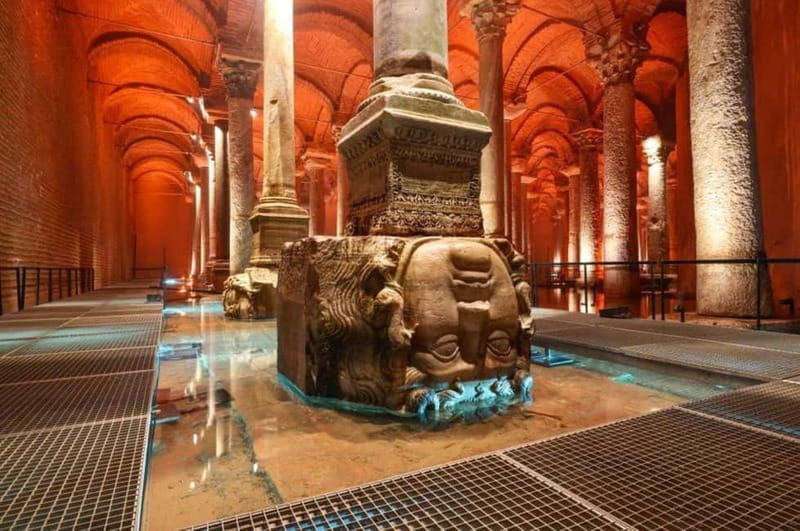
The two Medusa heads are the cistern’s most famous details. Both are carved stone pieces placed beneath columns, and one is positioned upside down while the other lies on its side. Their exact purpose and the reason for their placement remain topics of discussion.
The widely accepted explanation is that the heads were reused from an earlier Roman building. That makes them interesting in two ways. They show the practical reuse of older materials, and they leave room for the myths and theories that make the cistern so memorable.
A guide can put the sculptures in context instead of treating them as isolated curiosities. You will hear about their craftsmanship, their Roman connection, and the different interpretations of their unusual positions. The Medusa heads are not just a photo stop. They reveal how buildings in Istanbul often contain layers from different periods.
Expect other people to pause here for pictures. A guide familiar with the space can suggest good positions and help you avoid missing the main details. One guide was specifically praised for helping the group stake out strong photo spots, which is useful in a dark interior where composition is not always obvious.
What the one-hour tour actually feels like
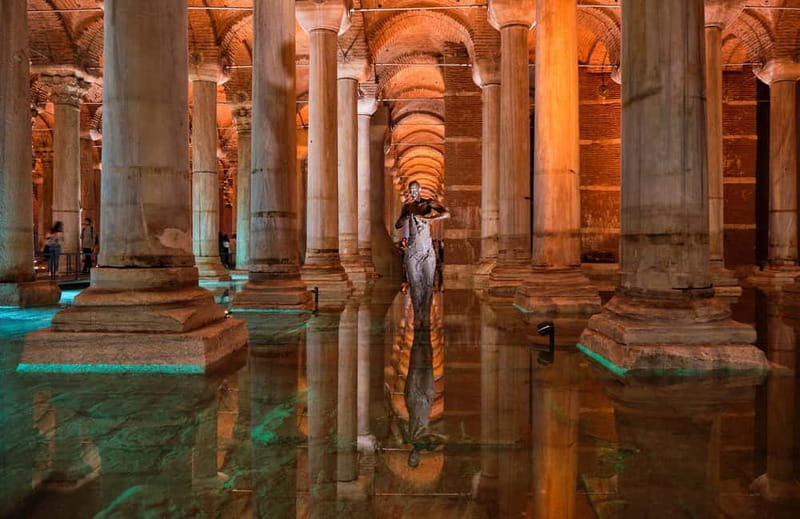
The itinerary is simple: meet at the cistern, enter with your guide, walk through the underground chamber, stop for explanations and photographs, and return to the meeting point. There is no second attraction added to fill the hour, so the experience stays focused.
A one-hour format suits a first visit. You get the essential history, see the columns and Medusa heads, and have time to take pictures without committing half a day to one site. It also fits neatly between other Sultanahmet sights.
The pace can change with the group. Some guides are flexible about stopping for photos, and one guide adjusted the timing to suit the group. In very small groups, the tour can feel almost private. One booking had only one guest and the guide, while other groups had three or five people.
That flexibility is a strong point, but you should not assume every departure will be private. The advertised format is small group, not guaranteed one-to-one guiding. Group size and starting times depend on availability.
The short length is the only real limitation. If you want a long, detailed architectural study, you may wish to stay after the guided portion and look around at your own pace, if site rules and opening hours permit. The tour itself is designed as an introduction with expert commentary, not an extended seminar.
How the guides shape the experience
The guide is the difference between simply seeing a dramatic room and understanding it. Can has been praised for being friendly, flexible, and easy to follow, and several outings were led by him. Fatih was noted for his English, humor, and personal approach, while Sarah was praised for detailed explanations and patient answers.
Fatih Mehmet also led a very small group and tailored the tour so communication was easy. These examples suggest that the company uses different guides, so your exact style may vary. You might receive a lively history lesson, a relaxed walk, or a more compact explanation focused on the major sights.
The strongest qualities to look for are clear English, patience, and an ability to point out small details. The cistern is visually powerful, but a guide who knows where to pause can make the hour much more useful.
Headsets have also been provided on at least one outing, which can help in a busy underground space. Since this is not listed among the formal inclusions, I would not assume they are guaranteed for every departure. If hearing every explanation matters to you, ask the operator when booking.
Is $51 a fair price?
At $51 per person, this tour costs more than entering the Basilica Cistern on your own. The extra money pays for the skip-the-line ticket arrangement and an English-speaking guide, not for transportation, food, or a longer sightseeing program.
The value depends on your priorities. If you are visiting during a busy period, bypassing the ticket queue can save meaningful time. That is especially useful if you have a tightly planned day around Hagia Sophia, the Blue Mosque, and Topkapi Palace.
The guide is also worthwhile if you want the building explained rather than simply photographed. Several guides have offered historical background, answered questions, and helped with pictures. In very small groups, the price can feel particularly fair because you receive direct attention.
On the other hand, independent visitors who already know the cistern’s history may prefer to buy a standard ticket and explore alone. The attraction is compact, and some people will feel comfortable reading the available information and taking their time.
For most first-time visitors, I see the price as reasonable if the line is long or if you value context. It is less compelling if you are watching every dollar, have plenty of time, and do not need a guide.
Who should book this Basilica Cistern tour?
I would recommend it to first-time visitors to Istanbul, history-minded sightseers, photographers, and anyone with a limited schedule. Families can manage it too, though the stairs deserve attention if you bring a stroller or have mobility concerns.
The tour also suits people who prefer smaller groups. You are not being moved through a huge crowd with a flag in the distance. The group may be small enough to ask questions and hear the guide clearly.
It is a good pick for people who like atmosphere but still want facts. The cistern can look mysterious and almost unreal, yet the guide keeps the visit anchored in Byzantine engineering, Roman reuse, and the practical purpose of the building.
I would hesitate only if you expect several hours of sightseeing or a long list of separate rooms. The Basilica Cistern is one main chamber, and the tour lasts about an hour. Its appeal comes from quality of setting and explanation, not quantity of exhibits.
Cancellation is flexible up to 24 hours before the activity for a full refund, and you can reserve now and pay later. The tour is offered with a live English-speaking guide, and you should check availability for the exact starting time.
Should you book it?
Book this tour if you want quick entry, a clear explanation of the cistern, and help spotting the Medusa heads and best photo angles. The small-group setup and consistently strong guide feedback make it a practical choice for a first visit.
Skip it if you prefer complete independence and are happy to wait in line or arrange your own ticket. For most visitors, though, the extra cost buys convenience and context in a place that is far more interesting once you understand what you are seeing.
FAQ
How long does the Basilica Cistern tour last?
The guided activity lasts one hour. Check availability for the starting times offered on your chosen date.
What language is the tour conducted in?
The live tour guide speaks English.
Where do I meet the guide?
Meet the guide at the exit gate of the Basilica Cistern. The activity ends back at the same meeting point.
Is the entrance ticket included?
Yes. The experience includes a skip-the-line ticket to the Basilica Cistern.
Does the tour include transportation?
No. Transportation is not included. You make your own way to the Basilica Cistern meeting point.
Can I cancel for a full refund?
Yes. You can cancel up to 24 hours in advance for a full refund.
Can I reserve the tour without paying immediately?
Yes. The reserve-now, pay-later option lets you book your place without paying at the time of reservation.
Recently added in Istanbul
- Two (2) Days Istanbul Old City and Two Continents Walking Tour★ 5.0 · 6 reviews
- istanbul old city private tour★ 5.0 · 19 reviews
- Private Guided Tour: Discovering Istanbul★ 4.5 · 9 reviews
- Istanbul Airport (IST) To Hotels Transfer★ 5.0 · 80 reviews
- Best Of İstanbul Europe Side In One Day★ 5.0 · 10 reviews
- 2 Days Cappadocia Tour from Istanbul with Optional Balloon★ 5.0 · 10 reviews
- Hagia Sophia Private Skip The Ticket line guided Tour★ 4.5 · 17 reviews
- historical peninsula walking tour★ 5.0 · 6 reviews
Basilica Cistern Tickets, compared.
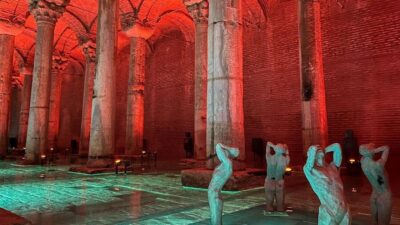
Basilica Cistern Fast-Track Entry and Audio Guide
Read our review →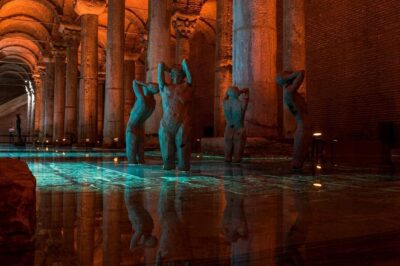
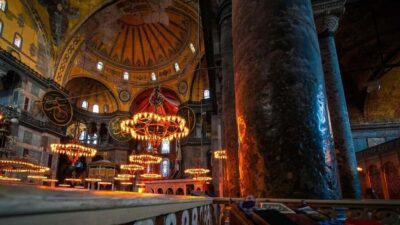
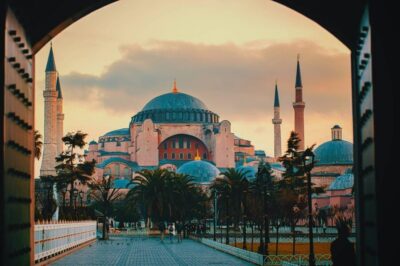
Blue Mosque, Hagia Sophia, & Basilica Cistern Tour
Read our review →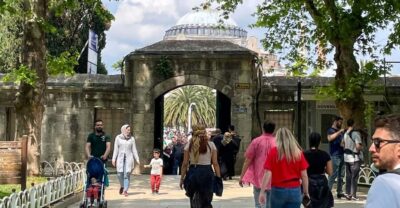
Blue Mosque, Basilica Cistern, & Hagia Sophia Tour
Read our review →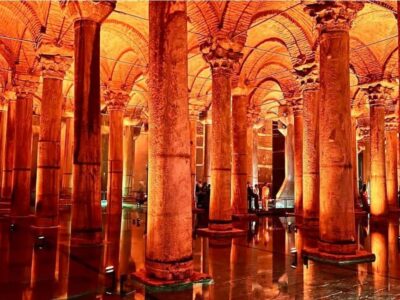
Basilica Cistern Skip-the-Line Entry & Audio Guide
Read our review →
Basilica Cistern &Topkapi Palace &Hagia Sophia Combo Tickets
Read our review →
Basilica Cistern Guided Tour & Skip the Line Ticket
Read our review →Browse the lists this tour appears in