
Reviewed · GALLIPOLI TOURS FROM ISTANBUL
Private Day-Tour of Ancient Battle Fields (Troy & Gallipoli)
Troy and Gallipoli tell two very different stories on opposite sides of the Dardanelles. One reaches back to Homer, Bronze Age legend, and the search for the city of Priam. The other recalls the brutal 1915 campaign that shaped modern Turkey, Australia, and New Zealand.
I like that this is a private tour, so your day is not tied to a large coach group. I also like the chance to cross the Dardanelles by ferry and see both Troy and Gallipoli in one carefully packed outing. The drawback is the distance: this is a very long day, often returning to Istanbul around 8 pm, and Troy is an open archaeological site rather than a city of towering monuments.
Key points to know before booking
- Troy is about the setting and layers of civilization: Expect city walls, the Temple of Athena, the Odeon, and wide views rather than intact palaces.
- Gallipoli is personal and solemn: Anzac Cove, cemeteries, and battlefield locations make this more than a military sightseeing stop.
- The Dardanelles ferry adds real geographic context: You see the waterway that links the Sea of Marmara with the Aegean.
- Your guide matters: Guides named Ali, Cenk, and Sevinc Kalik have been associated with particularly strong experiences, though the assigned guide can vary.
- The price includes convenience, not every expense: Hotel or port transport and guiding are included, while meals, drinks, and entrance fees are extra.
- Bring patience and comfortable shoes: You will cover a lot of road distance and walk over uneven ground at archaeological and battlefield sites.
Why this day from Istanbul is worth considering
At $541.85 per person, this is not a budget day trip. The price makes more sense if you value a private vehicle, direct hotel or port pickup, and the ability to cover two distant sites without arranging separate transport.
You are paying for access to a full day of guiding and logistics. The drive, ferry crossing, and return journey take up much of the day, but that is also the main advantage. Reaching Troy and Gallipoli independently from Istanbul would require careful planning, several transport connections, and an overnight stay would make the schedule more comfortable.
The private format is especially useful for couples, families, or a small group with a shared interest in ancient and military history. You can ask questions as you go, and the guide can spend more time on the subjects that matter most to you. The tour is still demanding, so I would not choose it if you prefer slow mornings or long, unhurried visits at each place.
The early pickup is around 6:30 am. You need to be ready in your hotel lobby 15 minutes before the confirmed time. Pickup is available from your Istanbul hotel or port, and transportation back to that base is included. Bring your printed voucher and photo ID, as both are required at the meeting point.
More Gallipoli Trips from Istanbul:
- Istanbul to Gallipoli Full Day Tour with Lunch and Transfers
★ 5.0 · 567 reviews - Gallipoli Full-Day Tour from Istanbul
★ 4.9 · 468 reviews - From Istanbul: Gallipoli and Anzac Full-Day Tour
★ 4.9 · 345 reviews
Crossing the Dardanelles by ferry
The Dardanelles is not just a route between two stops. It is the reason both Troy and Gallipoli matter.
This narrow strait connects the Sea of Marmara with the Aegean and separates European Turkey from Asian Turkey. In ancient times it was known as the Hellespont. It also provides the wider water route toward the Black Sea through the Bosphorus.
The ferry crossing gives you a useful sense of scale. Maps can make the region seem simple, but seeing the waterway helps explain why control of the strait mattered to ancient armies, empires, and the Allied forces in the First World War. The route also offers views of the European shore, summer villas, and the surrounding waters.
The crossing is included as part of the day’s transport, with no separate admission charge listed. Keep your camera handy, but do not expect a long sightseeing cruise. This is a working ferry crossing within a busy touring day.
Troy: what the ancient site really offers
Troy requires sensible expectations. It is famous because Homer made the Trojan War part of Western literature, but the remains are not a grand, intact city with complete temples and palaces.
Instead, you see layers of settlement built over one another. The site includes sections of city wall, foundations, stonework, the Temple of Athena, and the Odeon. Your guide’s explanation is important because many remains can look like scattered masonry without context.
The city’s setting is one of the great rewards. From the Temple of Athena, much of the surrounding plain is visible. On a clear day, the view reaches toward Lesbos to the south, Pergamum to the southeast, and Mount Ida to the east. The Tuzla River lies to the north, while large Hellenic columns mark a city gate toward the northwest.
Those views help you picture why this location was valuable. Troy sat near a major water route and within reach of the Aegean. The site’s power comes less from surviving buildings and more from its position, its layers, and the stories attached to it.
Plan for uneven ground and sun exposure. A moderate level of fitness is advised, and comfortable shoes are a smart choice. Troy is not a place to rush through while expecting one dramatic monument. Give your attention to the walls, the changing levels, and the view across the plain.
The Trojan horse and the power of the story
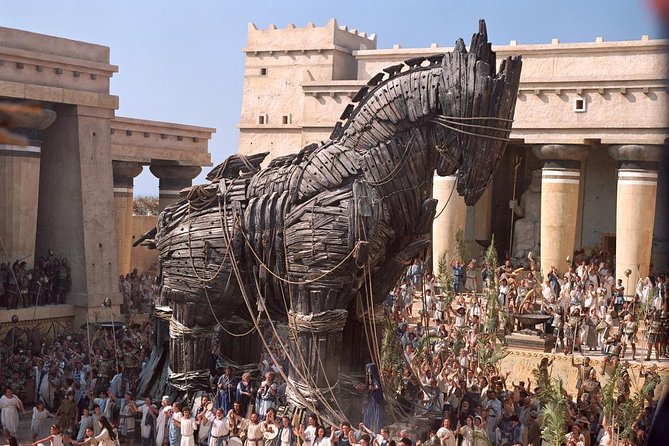
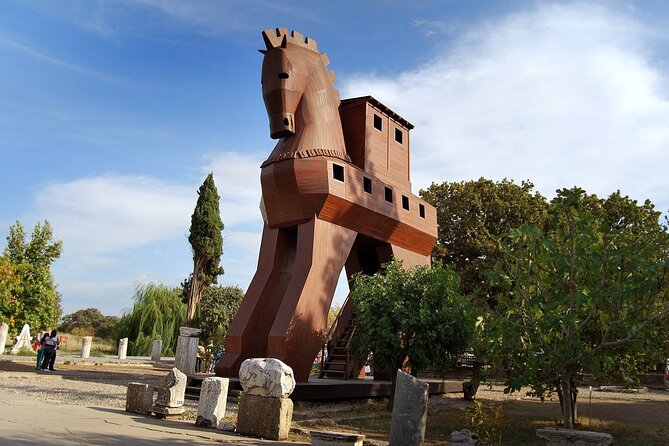
A reconstructed Trojan horse gives the famous legend a physical shape. You can climb inside it and think through the trick that, according to the familiar story, allowed Greek soldiers to enter Troy after a ten-year siege.
The story says that the Greeks built a huge wooden horse, hid soldiers inside, pretended to sail away, and waited for the Trojans to bring the horse inside their walls. Once night fell, the hidden troops opened the gates for the returning Greek army.
The horse is more accessible than the ruins themselves, and it helps connect the archaeological visit to the story most people know before arriving. It is also a reminder to separate myth from excavation. Troy is a real archaeological site with many settlement layers, while the exact events described by Homer remain part of a much larger debate.
The listed time here is about 45 minutes. Entrance fees are not included, so budget separately for the archaeological site and any applicable museum charges. The tour includes skip-the-line access with the guide, but that does not mean admission is free.
More Troy Trips from Istanbul:
- Troy: Full-Day Tour from Istanbul
★ 4.7 · 312 reviews - Istanbul to Gallipoli, Canakkale and Troy. 2 Day Tour with Hotel
★ 5.0 · 144 reviews - Istanbul to Truva Troy Guided Day Tour with Lunch and Transfers
★ 4.5 · 134 reviews - Troy Full-Day Guided Tour incl. Transfer, Ferry Tickets w/Lunch
★ 5.0 · 126 reviews
A note about the Behram stop
The itinerary also includes a one-hour stop in Behram, described in connection with Assos and Aristotle. The town is associated with Aristotle’s time there, when he opened an academy after leaving Athens and later moved on to Macedonia, where he tutored Alexander the Great. A modern statue of Aristotle is located at the town entrance.
This stop deserves clarification before you book. Behram and Assos are not the same archaeological focus as Troy, and the provided route description places the stop alongside Troy and Gallipoli without explaining the exact sequence. Ask the operator to confirm if Behram is part of your specific departure, since the tour is advertised primarily around Troy and Gallipoli.
The stop is listed as free admission. If included, it adds an interesting philosophical and regional layer to the day, but it also makes an already packed schedule even tighter.
Gallipoli: the history becomes immediate
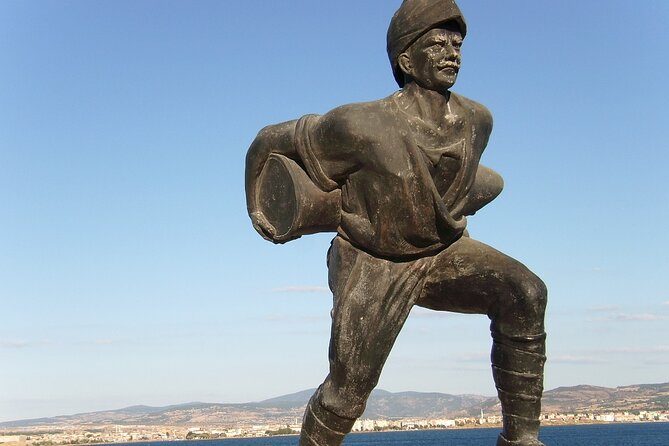
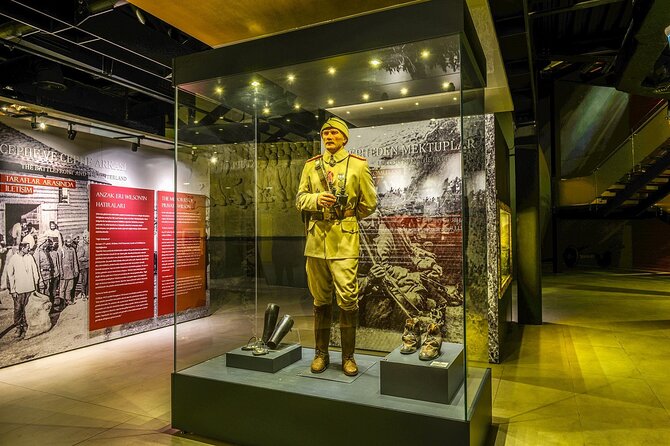
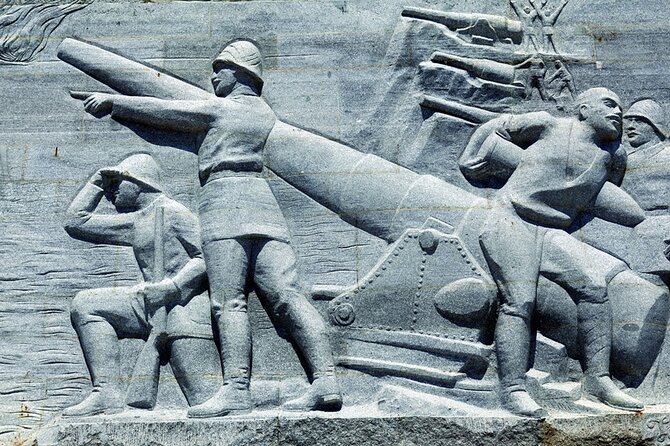
The Gallipoli portion shifts the mood completely. The campaign ran from February 1915 to January 1916, when Britain, France, and Russia tried to gain control of the Dardanelles and open a supply route to Russia.
The naval effort failed, followed by amphibious landings on the Gallipoli Peninsula in April 1915. The wider aim was to reach Constantinople, now Istanbul, and weaken the Ottoman Empire. Instead, the campaign became a costly stalemate with heavy losses on both sides.
A good guide can make the military story easier to follow by connecting the beaches, ridges, routes, and defensive positions. Local perspective also matters here. The fighting is often presented through the Australian and New Zealand experience, but the Ottoman defense was central to the campaign, and the Turkish memory of Gallipoli remains powerful.
The battlefield visit is not a museum-style tour. You are moving through outdoor sites, cemeteries, and coastal areas. Some entrance fees are not included, so keep extra money available. The guide will provide context, but you should also allow time for quiet observation. Gallipoli is not a place where constant narration improves the experience.
Anzac Cove and the cost of the landing
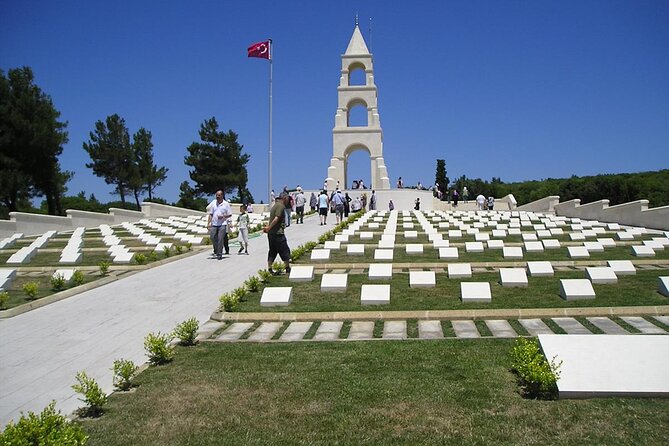
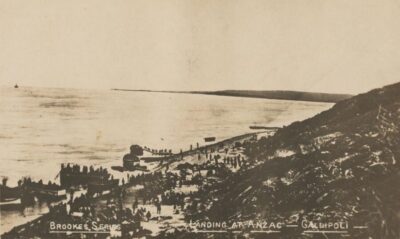
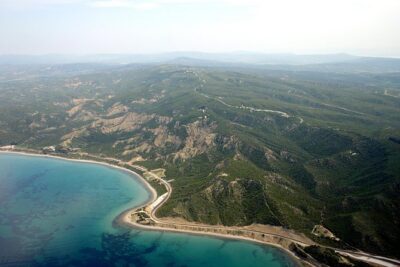
Anzac Cove is one of the most important stops. On April 25, 1915, Australian and New Zealand troops landed on the western side of the peninsula, along the Aegean coast.
The landing happened at night, and the troops came ashore about a mile north of their intended beach. Darkness, rough terrain, confusion, and strong Ottoman resistance quickly disrupted the original plan. Units became mixed up, orders changed, and soldiers were sent into battle in fragments rather than as one clear force.
That detail helps explain why the first day became so chaotic. This was not a neat advance from beach to objective. It was a confused landing under pressure, followed by fighting in difficult ground.
The stop is listed at about one hour and has no admission charge. You may find the physical setting surprisingly quiet, especially outside major commemorative periods. That quiet can make the site more affecting than a crowded display. The value is in understanding what happened here and paying respect, not in collecting a long list of military facts.
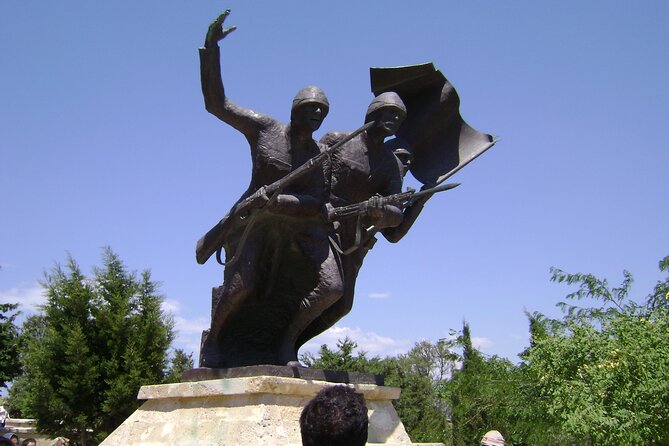
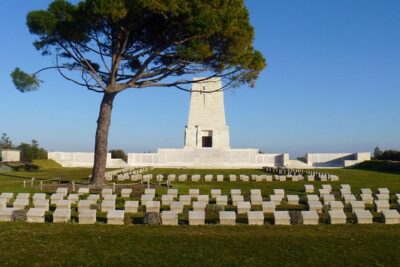
The tour also visits cemeteries and other key battlefield locations. You will hear about Ottoman and ANZAC forces, the political setting, and why some people later described the clash as a Gentleman’s War. That phrase should be treated carefully. The campaign involved severe hardship and enormous loss, even if later traditions emphasized respect between opposing soldiers.
What the guide and vehicle add
The private vehicle is one of the strongest practical reasons to choose this tour. You are not spending the day changing between public transport services or trying to coordinate ferry schedules and distant sites on your own.
The advertised service includes a professional guide, transportation from and back to your Istanbul base, and skip-the-line access with the guide. A driver and guide may both accompany you. That arrangement was specifically appreciated on one departure using a comfortable BMW, although the exact vehicle can vary.
Guide quality will shape the day. Ali has been praised for detailed knowledge of the Gallipoli campaign, the battles, and the political setting. Cenk has been described as attentive and personable, while Sevinc Kalik guided a couple through both sites in a considerate way. Those names do not guarantee your assigned guide, but they show the kind of personal service this private format can provide.
English is the offered language. The guide’s ability to explain archaeological details and military events clearly matters more here than a fast list of dates. If your main interest is Troy, ask for help understanding the site’s settlement layers. If Gallipoli is your priority, ask about the Ottoman defense as well as the ANZAC landing.
Food, breaks, and the long return to Istanbul
Meals and drinks are not included. One departure included a memorable regional lunch on the way to Troy, but you should not treat that as part of the guaranteed package. Ask what meal stop is planned and bring water and snacks for the road.
The day lasts about 12 hours, though the return can run later. One couple arrived back around 8 pm. That is a long stretch when you add the early pickup, road travel, ferry crossing, outdoor walking, and the emotional weight of Gallipoli.
The timing is the tradeoff for seeing both places from Istanbul in one day. Build in some flexibility at the end of the evening. You may be tired, and traffic or site timing can affect the return.
Who should book this day trip?
I would choose this tour if you have limited time in Istanbul and want a private, history-heavy day outside the city. It suits people who care about Homer, ancient settlements, the First World War, or the connection between geography and military events.
It also works well for a couple or small group that wants its own guide and vehicle. The private setup lets you ask questions and move at a pace that fits your group, although the overall schedule cannot become leisurely because the route is so long.
I would think twice if your main goal is grand ancient architecture. Troy is compelling, but the remains are modest and spread across an open site. I would also avoid this day if you dislike early starts, long drives, or walking over uneven ground.
The price is easier to justify for a group that would otherwise need private transfers and separate planning. For one person, or for someone mainly seeking a relaxed day, the cost may feel high, especially once entrance fees, meals, drinks, and tips for the guide and driver are added.
Should you book Troy and Gallipoli in one day?
Book it if you want the broadest historical reach from Istanbul and accept the stamina required. You will move from Homeric legend to Bronze Age ruins, across the Dardanelles, and then into the difficult memory of Gallipoli.
The tour works best when you see it as a transport solution and a guided introduction, not as a slow archaeological study. Troy rewards imagination and explanation. Gallipoli rewards time, respect, and careful listening.
Before paying, confirm the exact route, the Behram stop, entrance fees, meal arrangements, and the name of your guide if that matters to you. Cancel at least 24 hours before departure for a full refund, since later cancellations and changes are not accepted.
For a private group with only one day available, I think the combination is worthwhile. For a deeper visit to Troy or Gallipoli, stay closer to the region and split the sites across more time.
FAQ
How long does the Troy and Gallipoli tour last?
The tour lasts approximately 12 hours. The start time is around 6:30 am, and the return to Istanbul may be around 8 pm.
Is hotel pickup included?
Yes. Pickup and drop-off are offered from your Istanbul hotel or port. You should wait in the hotel lobby 15 minutes before the confirmed pickup time.
Is this a private tour?
Yes. Only your group participates in the private tour.
Is transportation included?
Yes. Transportation from and back to your Istanbul base is included, along with the guide.
Are meals and drinks included?
No. Meals and drinks are not included. A regional lunch may be arranged during the day, but you should confirm the meal plan before departure.
Are entrance fees included?
No. Museum and site entrance fees are not included. The tour does provide skip-the-line access with the guide.
What language is the tour offered in?
The tour is offered in English. A printed voucher and photo ID are required when you meet the guide.
Recently added in Istanbul
- Two (2) Days Istanbul Old City and Two Continents Walking Tour★ 5.0 · 6 reviews
- istanbul old city private tour★ 5.0 · 19 reviews
- Private Guided Tour: Discovering Istanbul★ 4.5 · 9 reviews
- Istanbul Airport (IST) To Hotels Transfer★ 5.0 · 80 reviews
- Best Of İstanbul Europe Side In One Day★ 5.0 · 10 reviews
- 2 Days Cappadocia Tour from Istanbul with Optional Balloon★ 5.0 · 10 reviews
- Hagia Sophia Private Skip The Ticket line guided Tour★ 4.5 · 17 reviews
- historical peninsula walking tour★ 5.0 · 6 reviews
Gallipoli Tours from Istanbul, compared.
Istanbul to Gallipoli Full Day Tour with Lunch and Transfers
Read our review →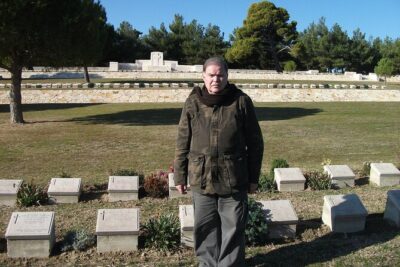
Istanbul to Gallipoli, Canakkale and Troy. 2 Day Tour with Hotel
Read our review →
6 Days Turkey Tour Cappadocia, Pamukkale, Ephesus, Gallipoli Troy
Read our review →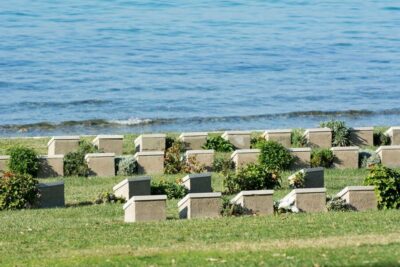
5-Day Aegean Tour – Gallipoli, Troy, Ephesus, Kusadasi, Pamukkale
Read our review →Browse the lists this tour appears in