
Reviewed · HAGIA SOPHIA TOURS
Istanbul: Blue Mosque and Hagia Sophia Tour w/Entry Tickets
Istanbul’s grandest sights sit close together, but their stories stretch across empires, religions, and centuries. This three-hour walking tour brings the Blue Mosque, Hagia Sophia, and Hippodrome into one tidy route, with an English-speaking guide to explain what you are seeing rather than leaving you to admire a dome without context.
I like the small-group format, which makes it easier to hear the guide and ask questions. I also like the practical ending: guides such as Jan, Deniz, and Fatih have helped visitors with tram advice, restaurant suggestions, and ideas for the rest of their time in Istanbul.
The main drawback is the walking and the rules at active religious sites. You will need modest clothing, comfortable shoes, and patience for security checks or prayer-time closures. The tour is not suitable for wheelchair users or people with major mobility limits.
Key points at a glance
- Two major monuments in one morning or afternoon: Visit the Blue Mosque and Hagia Sophia without arranging separate admissions.
- The Hippodrome adds essential context: See the obelisks and learn why this open space once mattered so much to Constantinople.
- Small groups make the history easier to follow: Guides can answer questions and keep the group together in crowded streets.
- Priority admission saves time, but not every queue: Pre-arranged tickets help, while security lines may still be unavoidable.
- Dress and pack with care: Shorts, short skirts, backpacks, large bags, and large umbrellas are not allowed inside the main sights.
- The tour ends in Sultanahmet Square: You are left in the best part of the old city for further sightseeing on foot.
Starting beside the German Fountain
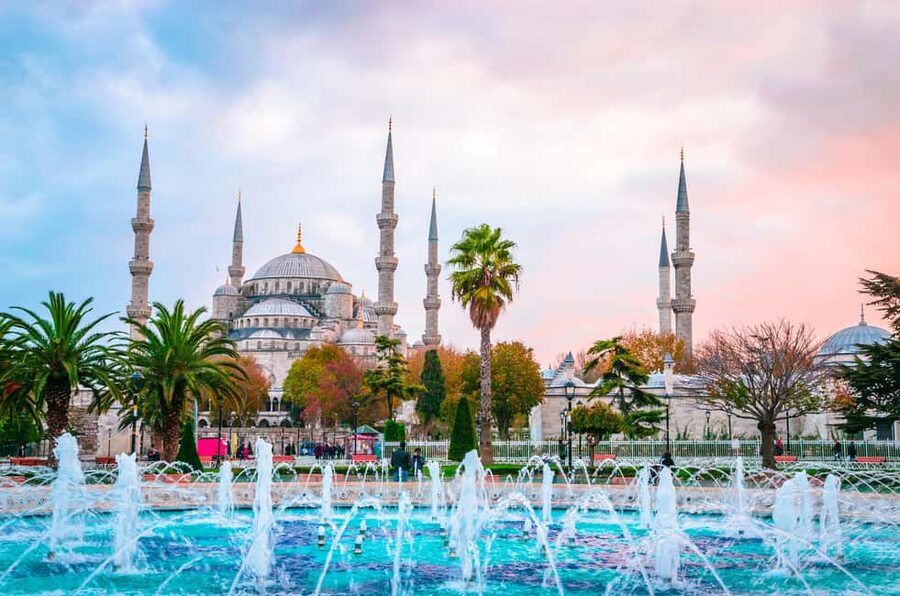
The meeting point is the German Fountain, also known as Alman Çeşmesi, in the Sultanahmet area. Look for a guide holding a Tourmania sign. This is a central and recognizable place, but the square can be busy, so arrive early enough to find the sign without rushing.
The tour stays on foot from start to finish. There is no hotel pickup or drop-off, and food and drinks are not included. For most people, that is a reasonable arrangement because the main sights are close together and public transport can be slower than walking around Sultanahmet.
Wear shoes you can walk in for three hours. You may also need to remove footwear at the Blue Mosque, so shoes that are easy to take off and put back on are useful. That detail is easy to overlook when packing for the day.
More Ways to See Hagia Sophia:
- Istanbul: Hagia Sophia Skip-the-Line Ticket & Museum Option
★ 3.7 · 4,958 reviews - Istanbul: Blue Mosque & Hagia Sophia Guided Tour w/ Tickets
★ 4.8 · 3,600 reviews - Istanbul: Hagia Sophia Skip-the-Line Ticket and Audio Guide
★ 4.3 · 2,246 reviews
Sultanahmet puts Istanbul’s story under one roof
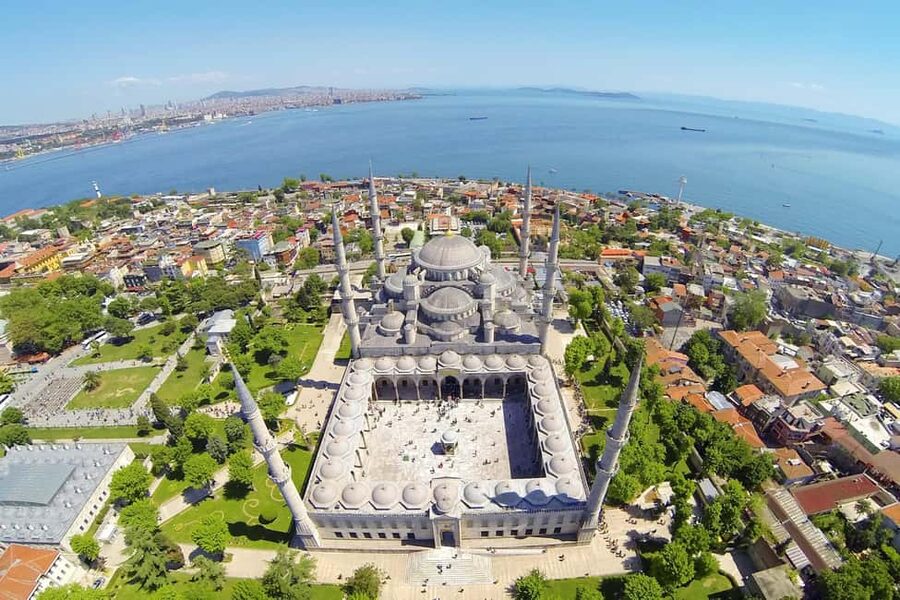
Sultanahmet is the old imperial center of Istanbul. Within a short walk, you encounter the remains of the Hippodrome, the Blue Mosque, Hagia Sophia, the German Fountain, and Sultanahmet Square.
I like this concentration of sights because the tour does not waste time on long transfers. The guide can point out how Ottoman and Byzantine monuments occupy the same small district, helping you understand that Istanbul is not a city with one single past. It is a city where one era was built directly beside another.
The pace is generally designed for looking and listening rather than racing between stops. Still, the area can be crowded, and you need to stay close to your guide. Several people have valued guides who kept the group together in busy places, an important benefit when the square fills with visitors.
The Hippodrome and its surviving obelisks
The Hippodrome is an open-air stop, so you do not enter a building here. Instead, you walk through the former center of public life in Constantinople, where political events, celebrations, and chariot races once took place.
The remaining obelisks provide a physical link to the ancient city. Your guide explains what they are, how they arrived here, and why this long public space mattered. Without that explanation, the Hippodrome can look like an ordinary plaza with a few old monuments. With context, it becomes the connecting thread between the Roman, Byzantine, and Ottoman chapters of Istanbul.
This part of the route also gives you a little breathing room before entering the mosques. You can take photographs, listen to the guide, and get a sense of the street plan. It is not a long museum visit, but it adds real value to the two indoor monuments.
Entering the Blue Mosque
The Blue Mosque, officially the Sultan Ahmed Mosque, is the first major interior stop. Sultan Ahmed commissioned it, and the building is famous for its large dome, slender minarets, spacious interior, and blue İznik tiles.
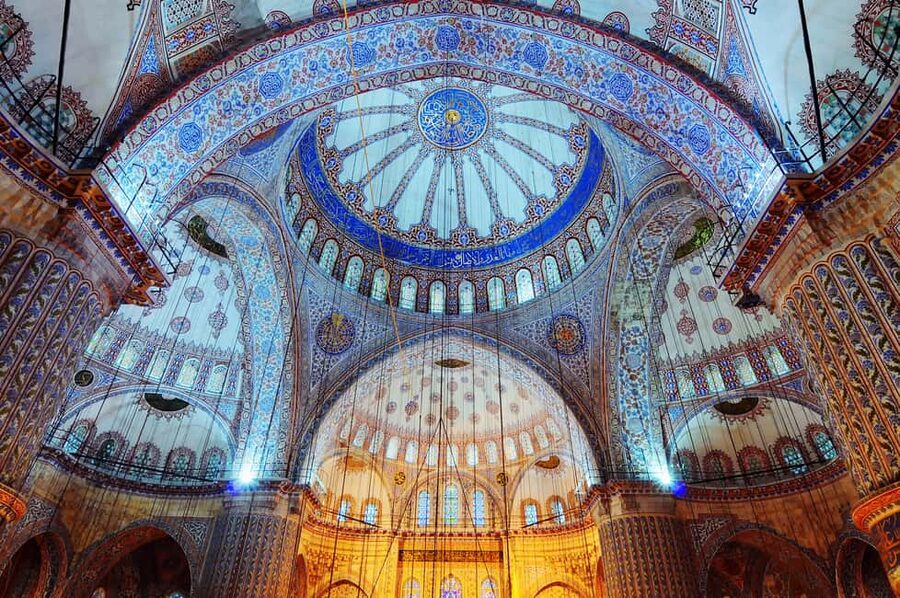
The name can create the wrong expectation. The interior is not simply a blue room. The tiles are one part of a larger design that includes light, calligraphy, patterned surfaces, and a vast prayer space. Your guide can show you where to look and explain how the mosque functions as a place of worship, not only as a monument.
That distinction matters. The Blue Mosque remains active, so visitors may have to wait outside during prayer times. You might also encounter a security queue even with priority admission. A guide cannot remove every delay, but can keep the visit organized and continue explaining the building while you wait.
Modest dress is required. Shorts and short skirts are not suitable, and you should dress in a way that covers shoulders and legs appropriately. Bring water, sunscreen, and a hat for the outdoor sections, but leave large bags and backpacks behind. They are not allowed inside the Blue Mosque or Hagia Sophia for security reasons.
The courtyard is another worthwhile part of the visit. It offers a broad view toward modern Istanbul and gives you a chance to appreciate the mosque’s exterior proportions. This is also a good place for photographs, although your guide will set the pace for the group.
More Blue Mosque Tours:
- Istanbul: Blue Mosque Guided Tour
★ 4.5 · 1,910 reviews - Istanbul: Blue Mosque, Hagia Sophia, & Basilica Cistern Tour
★ 4.7 · 1,806 reviews - Istanbul: Blue Mosque, Basilica Cistern, & Hagia Sophia Tour
★ 4.3 · 1,634 reviews - Istanbul: Hagia Sophia Ticket with Audio Guide & Blue Mosque
★ 3.9 · 799 reviews
Hagia Sophia’s layered interior
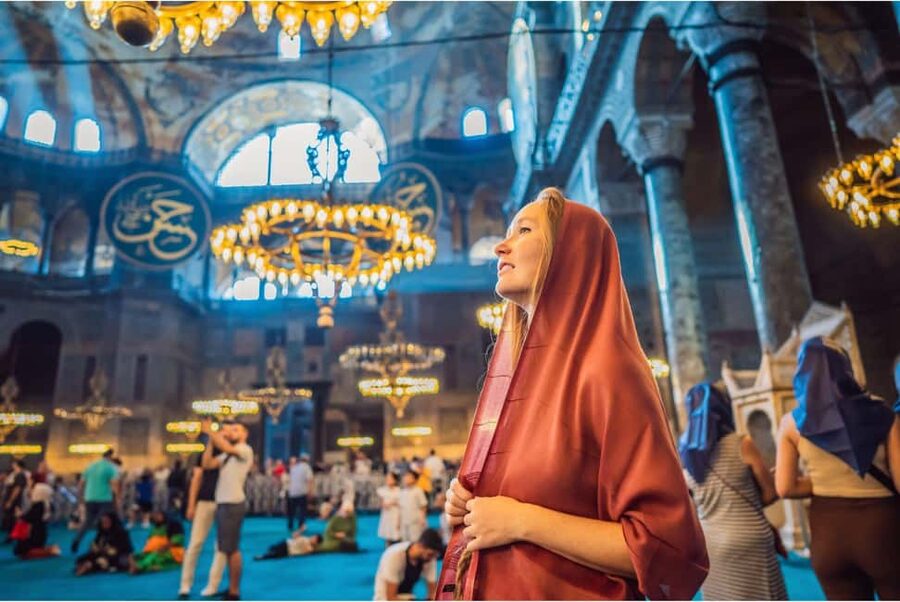
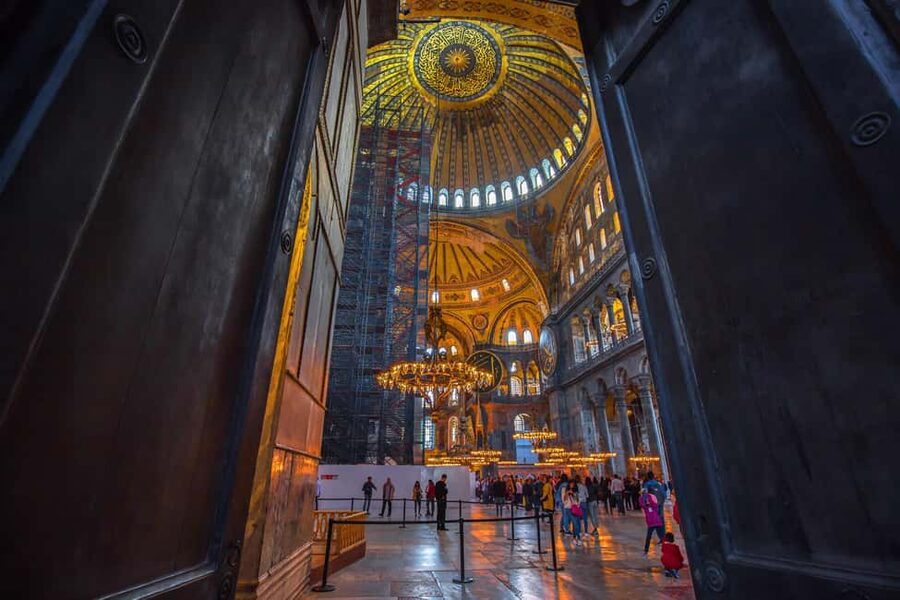
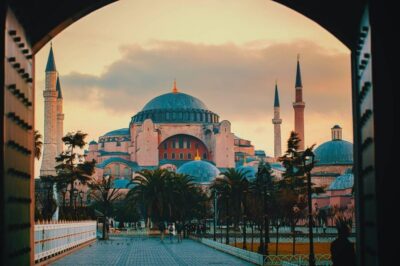
Hagia Sophia is the tour’s other major stop and often the most complicated to understand without guidance. The building began as a Greek Orthodox cathedral and became a mosque after the Ottoman conquest of Constantinople. Its interior reflects both identities.
You will see the huge dome, minarets, Islamic decoration, and surviving Christian mosaics in the same building. The appeal is not just visual contrast. Hagia Sophia shows how a single structure can be reused, altered, and given new meaning by different rulers and communities.
The guide points out features that are easy to miss, including İznik tiles, the Virgin Mary mosaic, and the courtyard tombs of sultans. These details help turn a grand but sometimes overwhelming interior into a sequence of things you can actually notice.
Priority admission tickets are included, which is valuable at a site where admission can be expensive. One guide specifically explained that the high Hagia Sophia ticket price is set by the authorities, not the tour company. At $37 per person for both major sites, the tour can make sense if you want admission arranged and prefer not to manage the visit alone.
Still, priority admission should not be read as a promise of instant entry. Security checks remain part of the process, and crowd levels can change. One benefit of joining a guide is that the waiting time can still be useful rather than dead time.
Flash photography is not allowed inside Hagia Sophia or the Blue Mosque. Bring a camera if you like, but plan to photograph without flash and follow instructions from staff and your guide.
Why the guide matters here
You can walk around Sultanahmet independently, but these monuments reward explanation. A guide helps you connect architectural details with political and religious changes, and can answer the small questions that arise as you look around.
The strongest part of this experience is the human element. Guides named in the tour feedback include Canhalil, Deniz, Jan, John, Fatih Mehmet, and Celal, also referred to as Cellaletin in one account. The exact guide depends on the date, but the pattern is clear: the tour relies heavily on an engaging English-speaking guide rather than a recorded audio system.
Good guides do more than recite dates. They explain why a building looks the way it does, point out smaller details, and adjust their pace to the group. Some have also offered advice on using Istanbul’s trams and suggested places to eat after the tour.
The small group helps. You are less likely to miss an explanation, and it is easier to ask about architecture, Ottoman rulers, Christian art, or practical transport. Group size can vary, so you should not expect a private tour, but the format is more personal than a large crowd following a flag.
A realistic three-hour pace
Three hours is enough for a well-paced introduction to the district, not enough for a slow study of every detail. You will walk between the meeting point, Sultanahmet District, the Hippodrome, the Blue Mosque, Hagia Sophia, and the square.
The route includes photo stops, guided visits, and short breaks. It is not a food tour, and there is no extended free time built into the schedule. You should plan a separate meal before or after the tour.
The pace has generally been described as smooth and unhurried, with enough time to look around. Even so, the walking is moderate. Uneven surfaces, crowds, stairs, and the need to remain with the group can make the experience tiring for young children, older visitors, or anyone with mobility concerns.
Children under six may find the walking difficult. Pregnant visitors should consider the amount of time spent standing and walking before booking. The activity is not wheelchair accessible and is not suitable for people with mobility impairments.
What the $37 price really buys you
At $37 per person, you are paying for more than a walk around the square. The price includes priority admission tickets to Hagia Sophia and the Blue Mosque, an English-speaking guide, and a small-group format.
The value depends on your travel style. If you are comfortable researching the monuments, checking entry rules, and managing queues alone, you may prefer an independent visit. If you want the history explained and would rather have tickets arranged in advance, $37 is a fair price for a concentrated introduction.
Hagia Sophia admission can be costly, so combining it with the Blue Mosque and a guide may be useful for a first visit. The tour also reduces the risk of missing important details in buildings that can feel visually crowded.
The tradeoff is limited independence. You follow the group’s timing, and you will not have unlimited time for photography or quiet observation. I would use this tour as an orientation, then return to any site you want to study more closely if your schedule allows.
Practical preparation before you go
A little planning will make the three hours easier.
- Wear comfortable walking shoes and bring water.
- Use sunscreen and a hat in sunny weather.
- Dress modestly, especially for the Blue Mosque.
- Avoid backpacks, large bags, and large umbrellas.
- Do not plan on using flash photography.
- Arrive at the German Fountain in time to find the Tourmania sign.
- Expect possible waiting during prayer times or security checks.
- Keep your guide in sight in crowded squares and streets.
The tour is offered in English. It includes free cancellation up to 24 hours before the start time, and you can reserve now and pay later. Check the available starting times because the schedule can affect crowds, heat, and the chance of encountering prayer-time closures.
Who should book this Istanbul tour?
I recommend this experience for a first visit to Istanbul, especially if you want the two headline monuments explained in one efficient outing. It suits adults, older children who can walk for three hours, and anyone interested in architecture, art, religion, or Ottoman and Byzantine history.
It is also a good choice if you are only in Istanbul for a short stay. The route puts you directly in the old city and finishes in Sultanahmet Square, where you can continue exploring independently.
I would hesitate to book it if you dislike group schedules, need a wheelchair-accessible route, or want a long, quiet visit inside each building. You should also reconsider if you cannot meet the modest dress requirements or carry a large bag that cannot be stored elsewhere.
Should you book it?
Book this tour if you want clear historical explanations, arranged admission, and a manageable introduction to Istanbul’s most important old-city sights. The guides are the main reason to choose it, and the small-group format gives the visit a friendly, practical feel.
Skip it if you prefer exploring alone and already understand the history of Hagia Sophia and the Blue Mosque. For most first-time visitors, though, the combination of two major monuments, the Hippodrome, and useful local advice makes $37 a sensible way to get your bearings.
FAQ
How long does the Blue Mosque and Hagia Sophia tour last?
The tour lasts three hours. Check availability for the exact starting times offered on your chosen date.
Where does the tour start?
It starts at the German Fountain, or Alman Çeşmesi, in Istanbul’s Sultanahmet area. The guide will hold a Tourmania sign.
Where does the tour finish?
The activity ends back at the meeting point area, in Sultanahmet Square.
Are admission tickets included?
Yes. Priority admission tickets to Hagia Sophia and the Blue Mosque are included in the price.
Is the tour conducted in English?
Yes. The tour includes a live English-speaking guide.
What should I wear to the Blue Mosque?
Modest dress is required. Shorts and short skirts are not suitable. Comfortable shoes are also important because the tour involves a moderate amount of walking.
Can I bring a backpack or take flash photographs?
Backpacks, large bags, and large umbrellas are not allowed inside Hagia Sophia or the Blue Mosque. Flash photography is also not allowed inside either site.
Recently added in Istanbul
- Two (2) Days Istanbul Old City and Two Continents Walking Tour★ 5.0 · 6 reviews
- istanbul old city private tour★ 5.0 · 19 reviews
- Private Guided Tour: Discovering Istanbul★ 4.5 · 9 reviews
- Istanbul Airport (IST) To Hotels Transfer★ 5.0 · 80 reviews
- Best Of İstanbul Europe Side In One Day★ 5.0 · 10 reviews
- 2 Days Cappadocia Tour from Istanbul with Optional Balloon★ 5.0 · 10 reviews
- Hagia Sophia Private Skip The Ticket line guided Tour★ 4.5 · 17 reviews
- historical peninsula walking tour★ 5.0 · 6 reviews
Hagia Sophia Tours, compared.

Hagia Sophia Skip-the-Line Ticket & Museum Option
Read our review →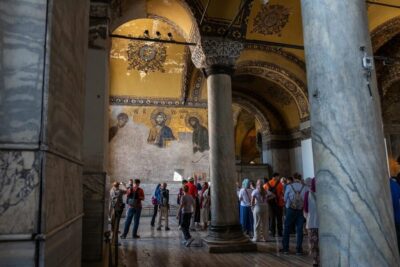
Blue Mosque & Hagia Sophia Guided Tour w/ Tickets
Read our review →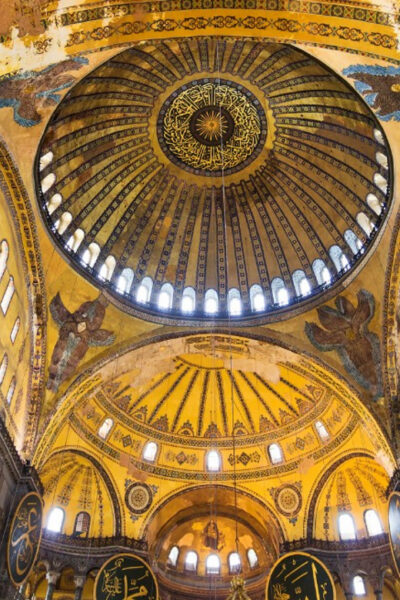
Hagia Sophia Skip-the-Line Ticket and Audio Guide
Read our review →
Blue Mosque, Hagia Sophia, & Basilica Cistern Tour
Read our review →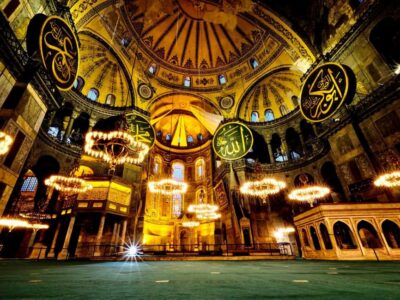
Hagia Sophia Skip-the-Line Ticket with Audio Tour
Read our review →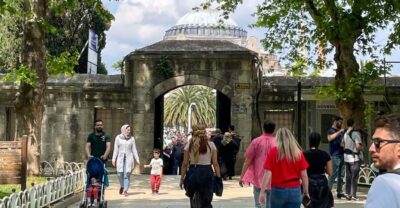
Blue Mosque, Basilica Cistern, & Hagia Sophia Tour
Read our review →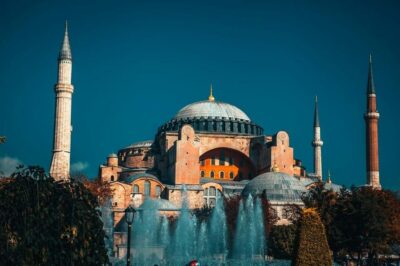
Hagia Sophia Skip-the-Ticket Line & Audio Guide
Read our review →Browse the lists this tour appears in