
Reviewed · SHOW
Istanbul: Hodjapasha Rhythm of The Dance Show
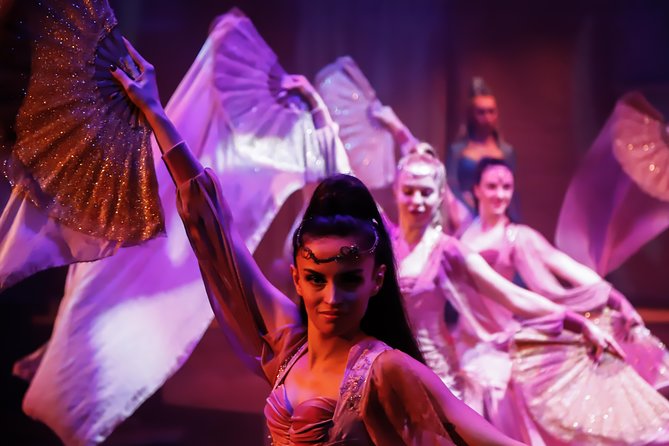
The most striking part of this Istanbul evening is the setting: you watch a fast-moving dance show inside a 550-year-old Ottoman bath. The former Hodjapasha Hamam gives the performance a sense of place that a modern theater cannot match. I like the wide range of regional dances and the way live drumming, lighting, costumes, and video projections keep the hour moving.
I also like the assigned seating, which avoids the usual rush for the best places, and the compact 65-minute running time. The main drawback is that the show is not a quiet cultural lecture. It is polished, colorful entertainment, with modern choreography mixed into traditional material. Finding the entrance can also take patience, since the center is reached through small lanes.
Key points at a glance
- A historic Ottoman setting: The show takes place in the restored Hodjapasha Hamam, built in the 15th century.
- Many dance styles in one evening: The program draws from Turkish folklore and dances linked to regions across Anatolia.
- High-energy presentation: Expect live music, forceful drumming, colorful costumes, lighting effects, and video projections.
- A short, useful evening activity: The performance lasts about 65 minutes, making it easy to fit around dinner or sightseeing.
- Seats are assigned: Places are given in booking order, so booking earlier may help you get a better position.
- Extra cultural detail before the show: The foyer includes a Dervish exhibition, and a program booklet is included.
What the Hodjapasha Rhythm of the Dance show is really like
I would describe this as a stage performance inspired by Turkish folklore, not as a formal lesson in dance history. You get a lively sequence of dances from different parts of Türkiye, presented by a professional company with a clear interest in spectacle.
The program brings together traditional steps, group formations, solo work, live music, modern choreography, and dramatic lighting. The effect is closer to a cultural theater show than to a village performance recreated exactly as it might have appeared in the past. That distinction matters. If you want an easy introduction to Turkish dance with plenty of energy, this works well. If you want a scholarly presentation with detailed explanations of each region, this is not that.
The performance is designed to hold your attention without a long pause. One act gives way to the next, with changes in music, costume, lighting, and movement. A drum feature adds extra force, and the performers interact with the audience at points. There is also some light comic business within the program, which keeps the tone relaxed rather than solemn.
The program has been updated over time. That is useful to know if you return to Istanbul and see it again, since it may not feel exactly the same on a later visit. The mix of classic and modern elements gives the company room to refresh the show without losing its folk basis.
More Shows and Performances in Istanbul:
- Istanbul: Bosphorus Dinner Cruise & Show with Private Table
★ 4.8 · 44,561 reviews - Istanbul: Bosphorus Dinner Cruise with Turkish Night Show
★ 4.8 · 10,127 reviews - Istanbul: Hodjapasha Whirling Dervishes Show & Exhibition
★ 4.4 · 4,790 reviews
Entering a 15th-century Ottoman bath
The HodjaPasha Culture Center occupies a restored hammam built in the 15th century. The old bath architecture is not just a background detail. It shapes the whole evening, from the entrance and foyer to the enclosed performance room.
You can look around the foyer before the show and see the Dervish exhibition. This gives you a little cultural context before the dancing begins, although the performance itself is not a whirling dervish ceremony. The center also presents other programs, including sema performances, so check the title of your booking carefully if you are specifically looking for whirling dervishes.
The historic building has a more intimate feel than a large concert hall. That intimacy helps the music and footwork reach you directly. It also makes the lighting effects feel more concentrated, especially during solo numbers.
One practical point is worth taking seriously: allow time to find the entrance. The center is in a maze of small lanes, and the doorway may not be obvious if you do not know the area. The meeting point is Hodjapasha Culture Center, not a hotel pickup location, and no pickup service is included.
A journey through Turkish folk dance
The heart of the evening is the variety. Dancers perform material associated with different regions of Anatolia, and the program also reflects Türkiye’s position where several cultural traditions meet. The music and movements can carry Arab, Balkan, and Levant influences alongside Turkish folk forms.
You are not given a detailed stop-by-stop itinerary in the usual sightseeing sense. Instead, the show works as a sequence of dance pieces. Some involve the full company, while others focus on one or a few performers. This keeps the visual pattern changing and prevents the hour from feeling like one long group number.
The costumes do much of the explanatory work. Color, cut, movement, and ornament help distinguish one section from another, even when there is little spoken information. The result is easy to follow for an international audience. You do not need prior knowledge of Turkish dance to understand when the mood has shifted from a communal folk dance to a solo or theatrical piece.
I especially like this format for a first visit to Istanbul. In one sitting, you get a broad sample rather than a narrow look at one regional tradition. The tradeoff is that each dance receives limited time. You may leave curious about a particular style without having learned its name or background.
Drums, music, lighting, and modern choreography
Live music gives the show much of its drive. The drumming is a major feature, and the program uses musical changes to move from one dance style to another. If you enjoy rhythm-heavy performances, this will likely be one of the evening’s strongest elements.
The music does not sit quietly behind the dancers. It pushes the action forward and gives the group numbers their lift. At times, the performers and musicians connect with the audience, adding a sense of play. The combination of forceful drumming and quick choreography makes the show feel larger than its 65-minute length.
Lighting and video projections add a modern theater layer. They are used most clearly during solo work, where the focus narrows to one performer. A modern solo Sama dance is one of the memorable sections, and its unusual presentation shows how the production moves beyond a strict folk reenactment.
That modern touch will please some people more than others. I enjoy it because it gives the show pace and visual variety. If you are hoping for an entirely traditional presentation with plain staging, the projections and dramatic lighting may feel less authentic to your taste.
A different side of Istanbul on the same trip:
- Istanbul: Daytime or Sunset Sightseeing Cruise & Audio Guide
★ 4.8 · 14,430 reviews - Best of Istanbul 1, 2 or 3-Day Private Guided Istanbul Tour
★ 5.0 · 8,922 reviews - Istanbul: Basilica Cistern Fast-Track Entry and Audio Guide
★ 4.6 · 7,521 reviews - Istanbul: Hagia Sophia Skip-the-Line Ticket & Museum Option
★ 3.7 · 4,958 reviews
Costumes and the performers
The dancers are the main reason to book this show. The company performs with speed, control, and plenty of physical energy. Group numbers depend on timing, while the solo work gives individual performers a chance to show precision and personality.
The costumes are among the most noticeable features. They make the stage colorful without needing a spoken explanation, and they move dramatically during spins, turns, and fast footwork. Several sections have a polished, theatrical look rather than a simple folk demonstration.
You may also see a belly dance presentation, which has become a favorite part of the program for many people. It is presented within the larger sequence of regional and modern dance pieces, rather than as the entire focus of the evening.
The performers do not linger long at the end for a formal greeting. If you like a cast farewell or a chance to meet the dancers, you may find the ending brisk. The show moves quickly from its final number, which helps keep the evening on schedule but leaves little time for applause or interaction afterward.
Seating, timing, and what you receive
The show lasts 65 minutes. That is long enough to feel like a complete evening activity, but short enough to fit before or after dinner. I can see why it works well on your first full day in Istanbul: it is lively, requires no long excursion, and gives you a pleasant cultural introduction without using up the whole night.
Seats are allocated on a first-booked, first-served basis. You do not need to compete at the door, since your place is assigned, but booking earlier may improve your position in the seating plan. Several parts of the room can offer a good view because the venue is relatively intimate, though you should not assume that every booking receives the same location.
Admission includes a program booklet and bottled drinking water. The water is useful, especially if you are coming straight from a day of sightseeing. Do not plan on a bar service as part of the evening. No bar is included in the stated package, so eat or drink beforehand if that matters to you.
There is no hotel pickup. You make your own way to the cultural center. Also note that the activity is listed as unsuitable for wheelchair users, so accessibility should be considered before booking.
Is $32 a fair price?
At $32 per person, the show is priced as a midrange cultural evening rather than a major theater production. I think the value is good if you want a convenient introduction to Turkish dance and prefer a finished performance over a long guided explanation.
You are paying for several things at once: admission, a professional dance company, live music, the historic setting, lighting, video projections, and a program booklet. The 65-minute length also makes the price easier to accept if you have only a few nights in Istanbul.
The value is less clear if you are mainly interested in detailed cultural interpretation. The program shows many styles, but it does not promise a long lecture or a close study of one regional dance. You are buying atmosphere, variety, and performance skill more than background teaching.
Compared with a large-scale evening show, the smaller venue can feel personal. Compared with a simple folk demonstration, it is more theatrical and polished. I would place it in the useful middle: an accessible cultural night with enough traditional material to feel connected to Türkiye, and enough modern staging to keep a broad audience interested.
Who will enjoy this show most
I would recommend it to first-time visitors who want to see Turkish dance but do not know where to begin. You can sit down, watch several styles, hear live music, and leave with a clearer sense of Türkiye’s regional variety.
It also suits families and mixed-age groups because the performance is visual, fast, and not dependent on fluent English. The one-hour format is easier for children than a long evening production, though the show’s intensity may not appeal to every child.
Couples and solo visitors can fit it neatly into an evening plan. Since the center is near Istanbul’s historic attractions, you might pair it with dinner or an afternoon around the old city, while allowing extra time to locate the entrance.
It is also a good choice for anyone who has already seen a quiet sema ceremony and wants a sharp contrast. The dance show is energetic and theatrical. A dervish ceremony is slower, more meditative, and focused on spiritual ritual. They are different experiences, not substitutes for one another.
I would hesitate if you need wheelchair access, want hotel transportation, or prefer an event with extensive spoken explanation. I would also think twice if you dislike theatrical lighting or modern choreography mixed with traditional dance.
Planning your evening at HodjaPasha
Book earlier if seat position matters to you, since seats are assigned by booking order. On arrival, identify the cultural center carefully and allow extra time for the small lanes around the entrance. A little spare time is better than arriving flustered just before the music starts.
The 65-minute length leaves room for a meal afterward, and the show is short enough to fit into a packed Istanbul schedule. I would not build a complicated plan immediately before it, though. Getting to the venue calmly is more pleasant than cutting your sightseeing too close.
The experience includes free cancellation up to 24 hours before the start time, and you can reserve now and pay later. Those options are useful if your Istanbul schedule is still changing.
Should you book the Rhythm of the Dance show?
Book it if you want a colorful, energetic introduction to Turkish folklore in an unusual historic building. The strongest reasons are the professional dancers, wide mix of regional material, live drumming, striking costumes, and compact running time.
Skip it if you want a quiet ritual, a detailed lecture, or a fully traditional presentation without modern staging. For most visitors with a free evening, though, $32 buys a well-contained cultural experience that is easy to add to an Istanbul itinerary. I would especially choose it near the start of a stay, when the music and movement can help you get your bearings in the city.
FAQ
How long does the Hodjapasha Rhythm of the Dance show last?
The performance lasts 65 minutes.
Where does the dance show take place?
It takes place at the Hodjapasha Culture Center, inside a restored 550-year-old Ottoman Turkish bath built in the 15th century.
What types of dances are included?
The program includes Turkish folklore dances from different regions of Anatolia, along with modern choreography and dance influences connected with Arab, Balkan, and Levant cultures.
Is live music included?
Yes. Live music is part of the performance, with drumming forming one of the notable features.
Are seats assigned?
Yes. Seats are allocated on a first-booked, first-served basis.
Is hotel pickup included?
No. Pickup service is not included. You meet at the Hodjapasha Culture Center.
Is the show suitable for wheelchair users?
The activity is listed as unsuitable for wheelchair users.
What is included with admission?
Admission, a program booklet, and bottled drinking water are included.
Recently added in Istanbul
- Two (2) Days Istanbul Old City and Two Continents Walking Tour★ 5.0 · 6 reviews
- istanbul old city private tour★ 5.0 · 19 reviews
- Private Guided Tour: Discovering Istanbul★ 4.5 · 9 reviews
- Istanbul Airport (IST) To Hotels Transfer★ 5.0 · 80 reviews
- Best Of İstanbul Europe Side In One Day★ 5.0 · 10 reviews
- 2 Days Cappadocia Tour from Istanbul with Optional Balloon★ 5.0 · 10 reviews
- Hagia Sophia Private Skip The Ticket line guided Tour★ 4.5 · 17 reviews
- historical peninsula walking tour★ 5.0 · 6 reviews
Show, compared.
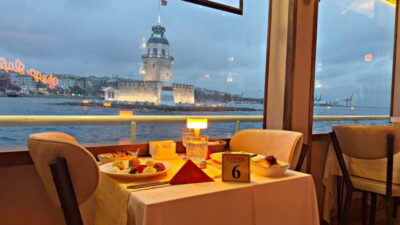
Bosphorus Dinner Cruise & Show with Private Table
Read our review →
Bosphorus Dinner Cruise with Turkish Night Show
Read our review →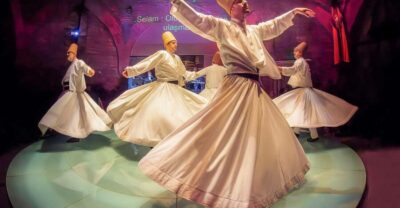
Hodjapasha Whirling Dervishes Show & Exhibition
Read our review →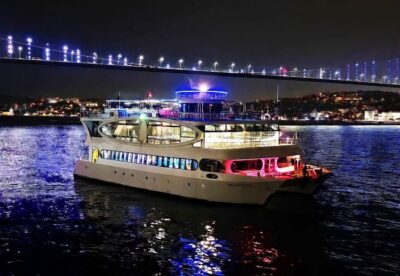
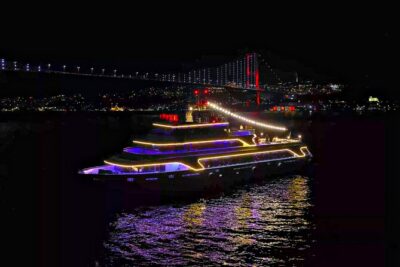
Bosphorus Dinner Cruise with Show and Private Table
Read our review →Bosphorus Dinner Cruise with Turkish Night Show
Read our review →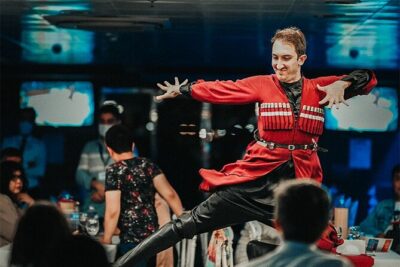
Dinner Cruise On The Bosphorus with Turkish night show
Read our review →