Reviewed · FULL-DAY
Istanbul Private Full-Day Classics Tour with Options
Istanbul’s essential monuments sit close together on the historic peninsula, and this private tour links them in one long, focused day. You’ll see the Hippodrome, Blue Mosque, Topkapi Palace, Hagia Sophia, and Grand Bazaar, with a guide to explain why each place matters. I like the private format and the chance to ask questions as you go. I also like that the route mixes grand buildings with a working market.
The main drawback is the tour’s somewhat confusing cost structure. The advertised price is $244 per group up to one, while entrance fees, lunch, transport, and personal spending are extra. You’ll also walk between sites, and six hours is a brisk schedule for five major stops.
Key points at a glance
- A compact historic core route: The Hippodrome, Blue Mosque, Topkapi Palace, Hagia Sophia, and Grand Bazaar all lie in Istanbul’s old city.
- A genuinely private group: You can ask questions and adjust your attention more easily than on a large shared tour.
- A strong Ottoman focus: Topkapi Palace explains the imperial world that shaped Istanbul for almost four centuries.
- A guide-led day: English, French, and German guides are available, with Salim praised for handling family energy well.
- Entrance fees cost extra: Tickets are pre-reserved, but you pay their value to the guide separately.
- A walking-based outing: Hotel pickup is available on foot, and transportation is not included.
Five major sights in six hours
This tour gives you a fast but useful introduction to Istanbul’s historic center. You are not simply checking off buildings. The route moves through several layers of the city: Byzantine public life, Ottoman worship, imperial rule, Christian and Muslim heritage, and centuries of trade.
That range is the tour’s biggest strength. In one day, you see how Istanbul changed from Constantinople into the Ottoman capital and then into the modern city you visit now. The pace is full, so plan to listen closely and save long, independent exploration for another day.
The tour begins in the morning with a hotel pickup on foot. Since no vehicle is included, the exact walking distance from your hotel matters. Wear comfortable shoes, keep water handy, and expect a day shaped by streets, courtyards, palace grounds, and market lanes.
A few more Istanbul bookings to weigh up
- Istanbul: Full-Day Highlights Tour with Guide and Lunch
★ 4.6 · 1,662 reviews - From Istanbul: Full-Day Princes Island Tour with Lunch
★ 4.0 · 1,550 reviews - ISTANBUL BEST: Iconic Landmarks Full Day PRIVATE Guided City Tour
★ 5.0 · 1,032 reviews
The Hippodrome and the remains of Byzantine public life
The Hippodrome is a smart first stop because it gives you the setting for the monuments that follow. During the Byzantine era, it was the center of social and recreational life in Constantinople. The original complex was far larger than what you see today, but several important pieces remain.
Your guide will point out the Obelisk of Thutmose III and the Serpent Column. The obelisk came from ancient Egypt, while the Serpent Column reflects the long reach of the ancient world into Byzantine Constantinople. These objects make the square feel less like an ordinary city space and more like a pageant ground built from earlier civilizations.
I like starting here because the Hippodrome provides scale and context before you enter the Blue Mosque. It also helps you understand how public life once worked around the monuments. The drawback is that the surviving remains are fragments, not a fully preserved arena, so you need the guide’s explanation to picture the original site.
The Blue Mosque, still a place of worship
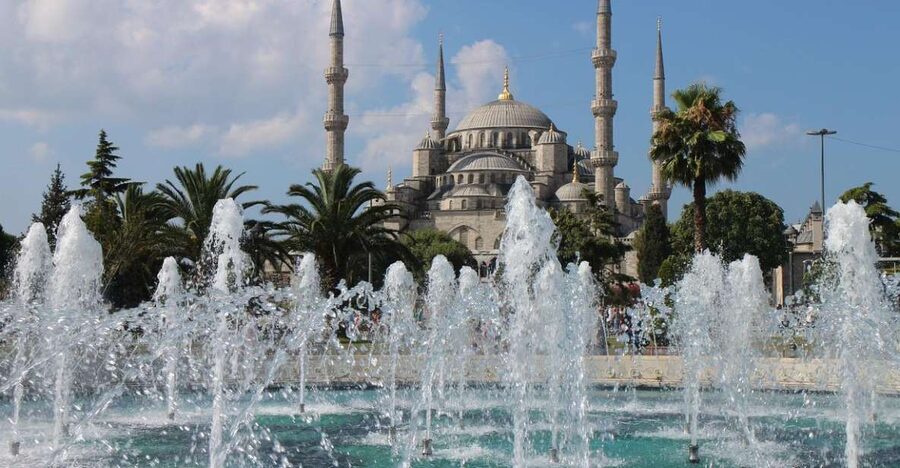
Next comes the Blue Mosque, also called the Sultan Ahmed Mosque. Its design is easy to recognize: one main dome, eight secondary domes, six minarets, and a large quantity of blue tiles that gave the mosque its familiar name.
The building was commissioned during the reign of Ahmed the First. It still functions as a mosque, so this is not simply a historic shell arranged for sightseeing. That matters. You are entering a living religious space, and your guide can help you understand the building as both a major work of architecture and a place used for worship.
Look up at the way the domes gather around the central space. The exterior minarets give the mosque its profile, while the interior design creates the sense of height and ceremony you expect from an imperial mosque. The tour description emphasizes exceptional architecture, and this is one place where that promise is easy to understand.
You should allow for the possibility that the visit feels more controlled than a museum stop because the mosque remains active. The schedule also does not give you a long period for quiet independent study. Still, placing the Blue Mosque beside the Hippodrome makes this a strong early section of the day.
Topkapi Palace and four centuries of Ottoman power
Topkapi Palace is the most substantial stop on the route. Dating from 1459, it served as the primary residence of Ottoman sultans for nearly four centuries. In 1924, it became a museum, and the site now presents a broad view of court life and imperial administration.
The palace covers a large area and includes several buildings. That size is important when judging the six-hour schedule. You are visiting a major complex, not a single room, and the tour can give you an organized introduction, but it cannot provide unlimited time in every section.
Inside, you can expect to see imperial and Ottoman utensils, relics, caftans, and portraits of the sultans. These objects help turn the Ottoman past into something more concrete. Instead of hearing only about rulers and dates, you see the clothing, household items, images, and ceremonial material linked to the court.
I especially like Topkapi in this itinerary because it adds political and domestic context to the mosques. The Blue Mosque shows imperial religious architecture. Topkapi helps explain the people and system that commissioned such buildings.
This stop also requires practical planning. Topkapi Palace is closed on Tuesdays, so do not book this experience for that day. Entrance fees are not included in the base price, although the tickets are pre-reserved. You pay the value of the admission to your guide separately, which may save time at the ticket line but means you need to budget beyond the advertised tour price.
A different side of Istanbul on the same trip:
- Istanbul: Bosphorus Dinner Cruise & Show with Private Table
★ 4.8 · 44,561 reviews - Istanbul: Daytime or Sunset Sightseeing Cruise & Audio Guide
★ 4.8 · 14,430 reviews - Istanbul: Bosphorus Dinner Cruise with Turkish Night Show
★ 4.8 · 10,127 reviews - Best of Istanbul 1, 2 or 3-Day Private Guided Istanbul Tour
★ 5.0 · 8,922 reviews
Lunch is a pause, not a package meal
After Topkapi Palace, you get time for lunch. The guide recommends restaurants where you can eat Turkish food, but lunch is not included in the tour price.
That arrangement gives you some choice, although the final cost depends on where you eat and what you order. Since the morning includes several major sights, use lunch as a real break rather than trying to rush through it. A private guide may also be able to point you toward food that suits your group, but the supplied details do not promise a particular restaurant or menu.
The schedule calls the experience a full-day tour, but the stated duration is six hours. That is best understood as a concentrated day of sightseeing rather than a slow, all-day outing with long meal stops. If you want an extended lunch, you may need to accept less time elsewhere.
Hagia Sophia, where religious identities changed
After lunch, the route continues to Hagia Sophia. Few buildings in Istanbul explain the city’s changing identity as clearly. Hagia Sophia was first built in 537 as an Eastern Orthodox church. After the Ottoman conquest of Constantinople in 1453, it became an imperial mosque. About five centuries later, it was converted into a museum.
That sequence gives your guide a lot to work with. You can expect the visit to focus on how the building served Christianity and Islam at different points in its life. The value here lies not only in the architecture, but in the way the site shows political change through religious use.
Hagia Sophia works well after Topkapi because the two stops speak to different sides of imperial Istanbul. Topkapi presents the rulers, objects, and court world. Hagia Sophia presents a building repeatedly adapted as power and religious authority shifted.
The tour information does not specify how much independent time you get inside, so keep your expectations practical. Six hours across five headline attractions means the guide’s explanation will carry much of the experience. If you want to study every architectural feature at length, plan a separate return visit.
The Grand Bazaar, a final change of mood
The last major stop is the Grand Bazaar, one of the world’s oldest and largest covered markets. It includes 61 covered streets and more than 3,000 shops, with goods for almost every need.
After the formal spaces of the mosques and palace, the bazaar changes the tone completely. Here, the focus is trade, movement, shops, and the practical life of the old city. The market forms part of Istanbul’s walled city and was built between 1455 and 1461.
I like ending here because it keeps the day from becoming a parade of monuments. You have seen imperial buildings, and now you see a historic commercial center still organized around buying and selling. The sheer size can also be disorienting, which is one reason a guide is useful on a first visit.
Do not expect the Grand Bazaar to feel like a quiet museum. You may find the market more useful as an introduction to its layout and character than as a place to inspect every shop. If you plan to buy something, allow time for browsing and remember that personal expenses are not included.
What the private guide adds
The guide is the main variable in a private tour, and the available feedback points to a strong experience overall. Salim is praised for clear explanations, entertaining conversation, and good judgment with children whose energy changed during the day. That is useful if you are traveling as a family, since five major sites can test even enthusiastic young sightseers.
One guide with a PhD is described as offering serious insight into Istanbul’s historic, cultural, and theological influences, while keeping the presentation engaging. That suggests the best value here is not merely getting from one doorway to another. A good guide can connect the Hippodrome, mosque, palace, church, and market into one understandable story.
The feedback is not completely perfect. One person found the guide used a cellphone too much during the private tour. That is a fair concern. When you pay for a private guide, you are paying for attention as well as information. It is reasonable to expect the guide to stay focused on your group except when the phone is needed for tour business.
Languages offered are English, French, and German. Since this is a private group, you should be able to ask about subjects that interest you, though the exact guide assigned to your date is not guaranteed by the information provided.
Price, tickets, walking, and timing
The listed price is $244 per group up to one. That wording is unusual, so check the final booking screen carefully if you are traveling with more than one person. The experience is described as a private group, but the supplied price line only specifies a group of up to one.
The price does not include several expenses:
- Transportation
- Admission fees
- Lunch
- Personal purchases
Hotel pickup is included on foot. That can work well if your hotel is near the historic center, but it is not the same as a private vehicle transfer. You should confirm how the meeting point and walking pickup work before booking.
Pre-reserved entrance tickets are included as a service, but the value of the entrance fees is paid separately to the guide. This may help you skip the ticket line, which is especially useful when the schedule includes several headline sites. It does not mean the admissions are free.
For value, compare this tour with what you want from the day. If you want an organized route, private attention, and historical explanation across five major sights, the price can make sense. If you mainly want long visits at one or two buildings, a shorter or self-guided plan may suit you better.
Free cancellation is available up to 24 hours before the experience for a full refund, and you can reserve now and pay later. Those terms give you some flexibility, but the Tuesday closure at Topkapi remains the key date to check.
Who will get the most from this tour?
I would recommend it to a first-time visitor who wants a clear introduction to Istanbul’s old city without managing the route alone. It also suits families, especially if you value a guide who can adjust the conversation and keep children involved.
The tour is a good match for people who enjoy context. The buildings are impressive on their own, but the real benefit comes from learning how Byzantine, Ottoman, Christian, Muslim, imperial, and commercial stories overlap in one compact area.
You should think twice if you dislike a brisk schedule or want to linger at every stop. Topkapi is large, Hagia Sophia deserves attention, and the Grand Bazaar can absorb far more time than the itinerary allows. Six hours gives you a strong first look, not complete coverage.
Should you book the Istanbul Classics Tour?
Book it if you want five of Istanbul’s signature sights handled in a logical order, with a private guide and pre-reserved entry arrangements. The strongest reasons are the focused route, the range of historical subjects, and the chance to ask questions in English, French, or German.
Before booking, confirm the unusual group-price wording, check that your date is not a Tuesday, and budget for admission fees, lunch, and personal expenses. If you accept the walking and brisk pace, this is a practical way to get your bearings in Istanbul’s historic center. If you want a slow museum day, choose fewer sights and give each one more time.
FAQ
How long does the Istanbul Classics Tour last?
The stated duration is six hours. Starting times depend on availability.
Which sites are included in the route?
The tour visits the Hippodrome, Blue Mosque, Topkapi Palace, Hagia Sophia, and Grand Bazaar.
Is the tour private?
Yes. It is offered as a private group experience.
Which languages are available?
Live guides are available in English, French, and German.
Is hotel pickup included?
Hotel pickup is available on foot. Transportation is not included.
Are entrance fees included in the price?
No. Tickets are pre-reserved, but the value of the entrance fees is paid separately to the guide.
Is lunch included?
No. Lunch is not included. The guide recommends restaurants where you can eat Turkish cuisine.
Is Topkapi Palace open every day for this tour?
No. Topkapi Palace is closed on Tuesdays, so you should choose another tour date if you want to visit the palace.
Recently added in Istanbul
- Yildiz Palace & Park: Skip-the-Line Entry with Audio Guide★ 5.0 · 4 reviews
- Walls of Contantinople and Blachernea Palace Tour★ 4.1 · 7 reviews
- Whirling Dervish Ceremony★ 4.5 · 35 reviews
- Istanbul:Whirling Dervish Ceremony, Mystical Sufi Experience★ 4.1 · 17 reviews
- Turkish Tapas – Meze Cooking for Beginners in Istanbul★ 4.5 · 16 reviews
- İstanbul: Turkish Night On the Bosphorus with Private Table★ 3.2 · 9 reviews
- Istanbul Bosphorus Dinner Cruise Tour – Private Table★ 3.9 · 8 reviews
- Istanbul Sultanahmet Turkish Bath Sultan Suleyman Bath★ 3.7 · 38 reviews
Full-Day, compared.
Full-Day Highlights Tour with Guide and Lunch
Read our review →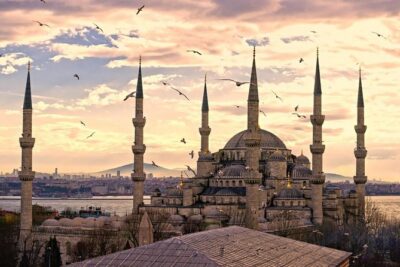
ISTANBUL BEST: Iconic Landmarks Full Day PRIVATE Guided City Tour
Read our review →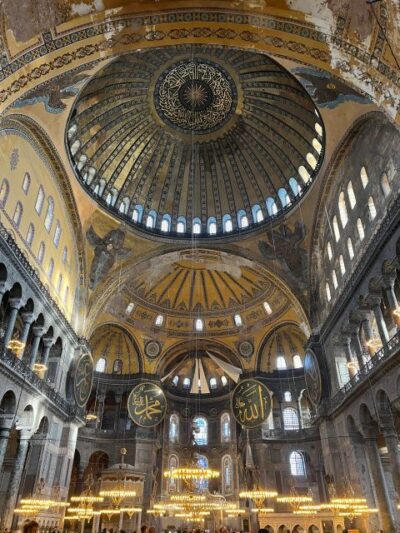
Istanbul to Gallipoli Full Day Tour with Lunch and Transfers
Read our review →
Full Day Istanbul 1, 2 or 3-Day Private City Guided Tour
Read our review →