
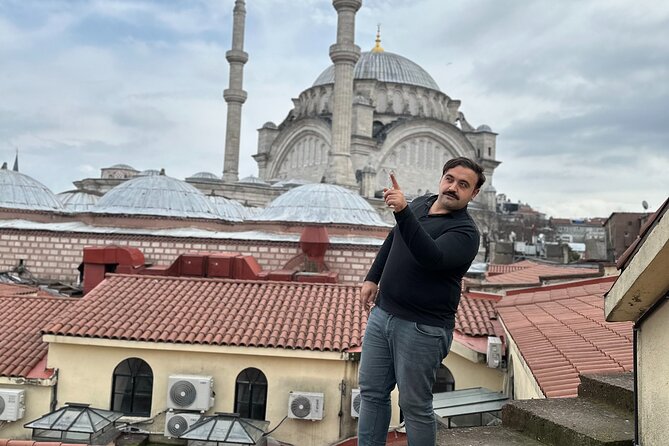
Reviewed · WALKING TOURS
Byzantion Walk Path and City Walls of Istanbul
Istanbul’s old land walls tell the city’s story in stone. This private walk takes you from Yedikule’s Golden Gate north through Silivrikapı and Mevlanakapı, then finishes at the Chora Museum, where 14th-century Byzantine mosaics and frescoes provide a fitting artistic finale.
I like the clear focus on a part of Istanbul that many first-time visitors miss, and I like the private format, which lets your guide adjust the pace and explain the military details in plain language. The main drawback is the walking: anyone with leg problems should think twice, and the route depends on transport between the meeting point and Yedikule.
Key points to know before you book
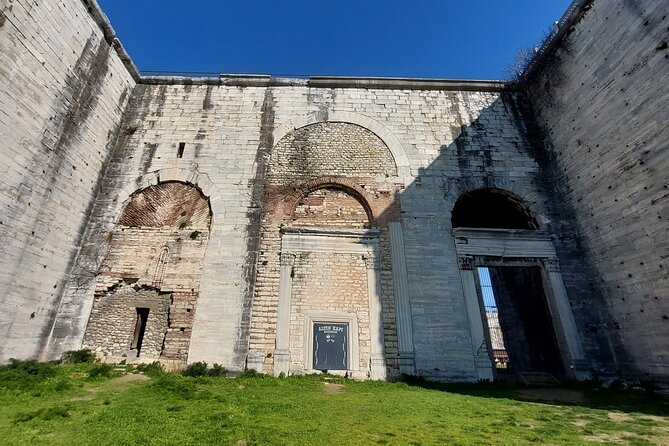
- The route follows the Theodosian Walls: See the Golden Gate, major gateways, towers, moat defenses, and the massive inner wall.
- Yedikule is the strongest opening: The area includes Istanbul’s largest surviving section of the city walls and the Ottoman-era dungeons.
- Chora is the artistic payoff: Its Byzantine mosaics and frescoes are the tour’s most delicate and memorable stop.
- The experience is private: Your group alone takes part, with a maximum of 15 people.
- The guide matters: The English-speaking guide is licensed or certified, and past bookings identify Taha, Ally, and Taja.
- Plan for a half day: The listed visits total about four hours, with transport and walking time around them.
Why Istanbul’s land walls deserve your time
Most visitors to Istanbul stay near Hagia Sophia, the Blue Mosque, and the Grand Bazaar. Those places deserve their fame, but the city walls give you a different way to understand Constantinople. Here, the city’s defenses are not just a backdrop for photographs. They explain how the capital protected itself for centuries.
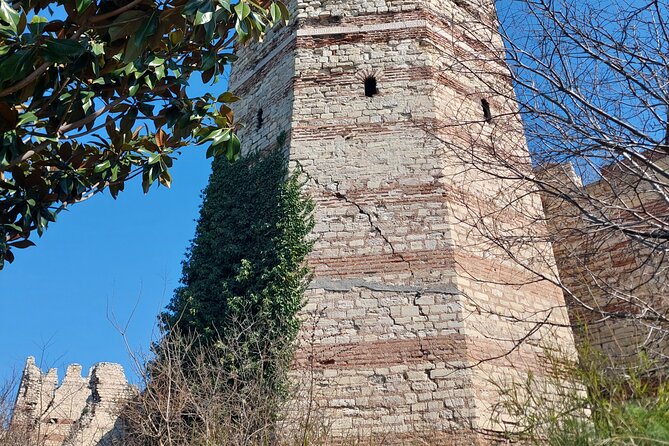
The Theodosian Walls were built as a layered defense system. Instead of one barrier, the landward side used a moat, an outer wall, and a tall inner wall. The inner wall reached about 12 meters, creating a serious obstacle for armies and siege equipment.
That layered design is what makes the walk worthwhile. I like tours that help you see why a ruin mattered, rather than simply pointing at old stones and naming a date. A good guide can show how the gates controlled movement, how the towers supported defense, and why this stretch of wall shaped the city’s survival.
The route also gives you a useful change of pace from Istanbul’s busiest historic sites. You are moving through a series of gates and defensive structures rather than standing in a single grand interior. The experience is best for you if you enjoy history, architecture, and walking with a clear subject in mind.
More Walking Tours in Istanbul:
- Istanbul: Fener Balat Half-day Guided Walking Tour
★ 4.9 · 1,711 reviews - Istanbul Highlights Small-Group Walking Guided Tour
★ 4.5 · 1,346 reviews - Istanbul: European and Asian Side Guided Foodie Walking Tour
★ 4.9 · 1,038 reviews
Starting at German Fountain and reaching Yedikule
The meeting point is the German Fountain near the Hippodrome in Sultanahmet. This is a practical central location, close to several major sights and public transport. From there, the guide takes the group toward Yedikule by taxi or public transportation.
That transfer is part of the tour’s practical reality. The walls are spread along the western edge of the historic peninsula, so you are not starting directly at the first stop. The benefit is that the route begins at one of the most important surviving sections rather than wasting your walking time on a long urban approach.
The tour starts at 9:00 a.m. An early start makes sense here. It gives you time to see the wall sections and Chora before the day becomes too crowded or rushed, although the actual pace will depend on transport and the needs of your private group.
The advertised duration ranges from one to five hours, while the scheduled stops add up to roughly four hours and 15 minutes. Allow extra time for the transfer to Yedikule and the walk between sites. If you have another appointment that day, do not schedule it too tightly.
Yedikule and the Golden Gate
Yedikule is the tour’s strongest historical opening. It includes the biggest part of the city walls shown on this route and the Golden Gate, an important ceremonial and military entrance to Constantinople.
The Golden Gate was a major gateway during the Byzantine period, and Yedikule later became associated with Ottoman fortifications and dungeons. That combination gives the stop more range than a simple wall photograph. You can think about the city first as an imperial capital and later as the center of the Ottoman Empire.
You should expect about an hour and a half here. That is enough time for the guide to explain the structure, point out the defensive layers, and set the wider story of the walls before you continue north.
The admission ticket is listed as free for this stop. Even so, conditions around historic walls can vary, and the experience is not presented as a polished museum visit. You are coming for scale, structure, and context. Wear shoes that are comfortable for walking and uneven ground.
Yedikule is also where the guide’s storytelling can make a big difference. One of the strongest themes in the feedback about Taha is his ability to explain important details while also adjusting the plan to the group. That matters at a site like this, where the remains can seem confusing without someone to connect the walls, gates, and fortifications.
Silivrikapı and a quieter Byzantine gate
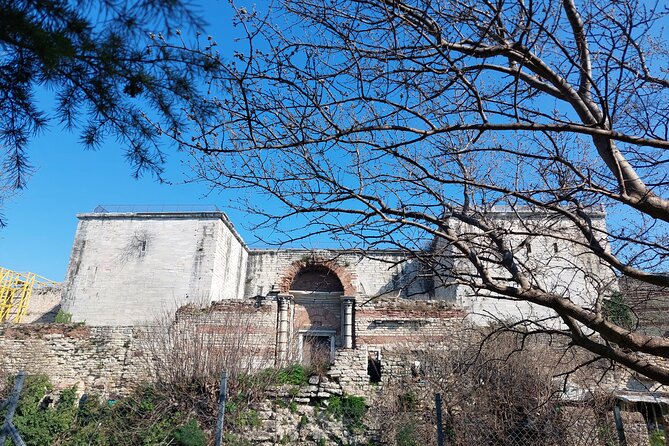
The next stop is Silivrikapı, one of the main gates north of Belgrad Kapı. It sits between two polygonal gateway towers and was renewed during the Late Byzantine period.
The building method is worth noticing. The renewed section uses irregular stones with rows of brick between them, a pattern that gives the gateway a different texture from the larger wall surfaces. This is the kind of detail you might miss if you were simply passing by on your own.
The stop lasts about 40 minutes and has no admission charge. That makes it a useful pause between the larger sites. You can focus on the gate itself, its position in the defensive line, and the way later repairs changed the appearance of the Byzantine structure.
Silivrikapı is not a grand interior attraction. Its appeal lies in the remains and the explanation. If you want ornate rooms and polished displays at every stop, this tour may feel too rugged. If you enjoy seeing how a city was actually defended, the gate adds valuable detail.
A few more Istanbul bookings to weigh up
- Istanbul: Private Turkish Bath, Massage, and Spa in Old City
★ 4.6 · 3,225 reviews - ISTANBUL BEST: Iconic Landmarks Full Day PRIVATE Guided City Tour
★ 5.0 · 1,032 reviews - Istanbul: Best of The City Full-Day Tour with Transfers
★ 4.6 · 616 reviews - Full Day Istanbul 1, 2 or 3-Day Private City Guided Tour
★ 4.7 · 411 reviews
Mevlanakapı and the engineering of the walls
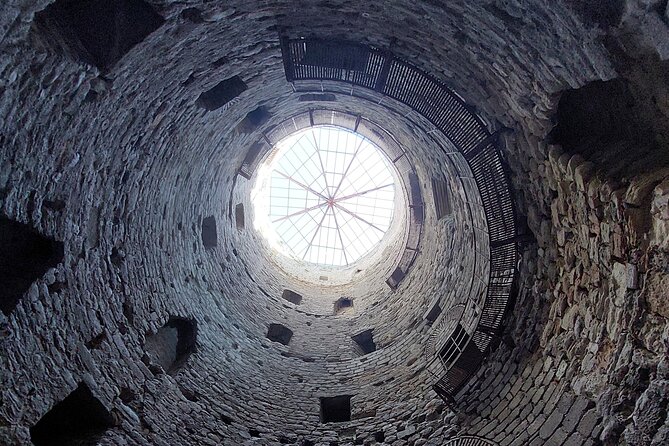
At Mevlanakapı, the tour turns the wall into a lesson in medieval military engineering. The defenses protected Constantinople from invading armies for more than a thousand years, and their design was carefully layered to slow attackers and absorb pressure from siege weapons.
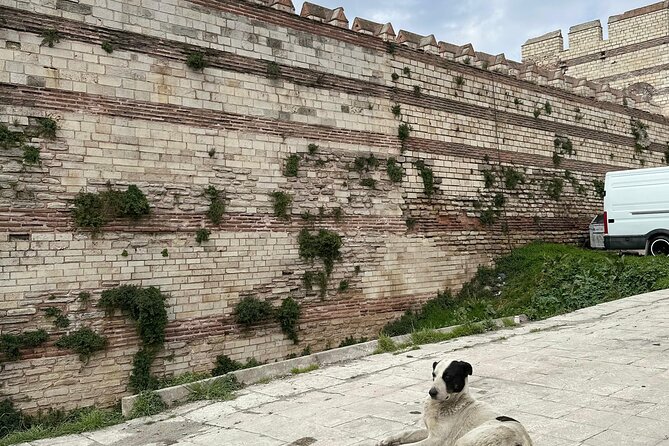
The route presents three main elements: the deep moat, the outer defense wall, and the taller inner wall. The inner wall reached about 12 meters, giving the defenders a much stronger position than a single thin barrier would have provided.
This is where the tour’s central idea becomes easiest to grasp. A city wall is often imagined as one tall line, but the Theodosian system worked more like a series of obstacles. An attacking army had to cross open ground, negotiate the moat, breach the outer defenses, and then face the inner wall.
The stop lasts about 45 minutes. Your guide should help you read the wall as a plan rather than a pile of ruins. I especially like this part for visitors who want more than dates and rulers. The design explains how power worked on the ground.
Some bookings have included climbing the city walls, with one account describing that as a particularly special part of the experience. The supplied details do not promise climbing on every departure, so ask before booking if that is important to you. Do not assume that every visible section is open or suitable for climbing.
Chora Museum and the art of the Palaeologan Renaissance
Chora Museum, once the Church of the Holy Savior in Chora, is the tour’s final major stop and its most visually refined one. The building contains a celebrated collection of Byzantine mosaics and frescoes dating mainly from the 14th century.
These works belong to the Palaeologan Renaissance, a period known for a move toward more natural forms and stronger human feeling in religious art. The scenes are not simply flat symbols. Facial expressions, gestures, and details give the images a sense of movement and emotion.
The visit lasts about one hour and 20 minutes. That is a useful amount of time for looking carefully rather than rushing through the decoration. If the walls appeal to you because they show military planning, Chora appeals because it shows the city’s artistic ambition.
Admission is not included in the tour price, so budget for a separate ticket. Chora is also closed on Fridays. This is the single most important scheduling detail in the itinerary. If your available day is Friday, confirm an alternative plan before paying, since the listed visit cannot take place then.
The museum works especially well as the final stop. After seeing the city’s outer defenses, you end inside a building that reflects its spiritual and artistic life. The contrast gives the day more depth than a wall-only walk.
What the private format adds
The experience is private for your group, with up to 15 people. That is a useful feature in a route involving public transport, walking, and several sites with different levels of interest.
With a private group, you can ask questions without interrupting a large tour. You can also request breaks, spend longer at a gate, or move on when a stop has given you what you need. Feedback about the guide Taha repeatedly highlights his habit of checking on breaks and making sure the pace suits the group.
The guide may be Taha, Ally, or Taja, based on the names connected with past bookings. The official service is in English, and the guide is described as licensed or certified. The strongest praise centers on clear explanations, friendly conversation, and the ability to shape the day around what the group wants to see.
That flexibility can be valuable in Istanbul. Some visitors want military history explained in detail. Others care more about architecture, photography, or the Byzantine artwork at Chora. Tell the guide early what interests you most.
Price and value for a group of 15
The listed price is $372.07 per group, not per person, for up to 15 people. For a full group, that works out to about $25 per person before the Chora admission and lunch. For two people, the per-person cost is much higher, so the value depends heavily on your group size.
The price includes the in-person English-speaking guide, but not lunch or the Chora admission. Lunch is estimated at about 300 to 6,000 Turkish lira, an unusually wide range that suggests your final cost will depend on where you eat and what you order. Since lunch is not built into the schedule details, you should ask the guide how it will be handled if you want a meal during the outing.
I see the best value for families, friends, and small groups who would otherwise book several separate visits or want one person to connect the sites. The private format also saves you from joining a fixed group with a pace that may not suit you.
For a solo visitor or couple, the cost is harder to justify unless having a dedicated guide is a high priority. The tour’s strength is not low price. It is the focused route, private attention, and historical explanation across several scattered locations.
Walking, transport, and who should book
You need a moderate level of physical fitness. This is not a gentle museum circuit. You will travel to Yedikule, walk between wall sections, and spend several hours moving through outdoor historic areas.
The experience is not recommended for anyone with leg problems. That warning should guide your decision. The route may include uneven surfaces, extended standing, and the physical demands of visiting old fortifications. Service animals are allowed, and the meeting point is near public transportation.
I would book this if you:
- Want Byzantine and Ottoman history beyond the central mosque district
- Enjoy ruins, gates, fortifications, and historic engineering
- Prefer a private guide to a fixed large-group tour
- Have enough time for a half-day outing
- Can manage sustained walking and transport between sites
- Want Chora’s mosaics included in a wall-focused route
I would choose another experience if you mainly want Istanbul’s famous imperial interiors, dislike outdoor walking, or have only a short window in the city. This route is specialized. Its appeal comes from following one subject across several places, not from ticking off every major sight.
Booking and cancellation details
You receive confirmation at the time of booking. The experience requires good weather, and it also requires a minimum number of participants. If poor weather or an insufficient number of bookings cancels the outing, you are offered another date or experience, or a full refund.
You can cancel for a full refund up to 24 hours before the local start time. Changes or cancellations made less than 24 hours before the start are not accepted for a refund.
Should you book the Byzantion Walk?
Book it if you want to understand Istanbul through its walls rather than only its grand monuments. Yedikule gives you the strongest defensive remains, Silivrikapı and Mevlanakapı add important gate and engineering details, and Chora closes the day with some of the city’s finest Byzantine art.
The tour is especially appealing for a private group that can share the $372.07 cost. Taha, Ally, and Taja are the guide names associated with the experience, and the most consistent strengths are flexible pacing, friendly conversation, and clear historical explanations.
Before you commit, check two things: your group can handle the walking, and your date is not Friday if Chora is essential. If both points work, this is a focused and worthwhile way to see a less familiar side of Istanbul.
FAQ
Where does the tour start?
The tour starts at the German Fountain on At Meydanı Cd in the Binbirdirek area of Fatih, Istanbul.
What time does the tour begin?
The scheduled start time is 9:00 a.m.
Where does the tour end?
The activity ends back at the meeting point.
How long does the experience last?
The approximate duration is listed as one to five hours. The scheduled stops total about four hours and 15 minutes, not including all transport time.
Is the tour private?
Yes. Only your group participates, with up to 15 people.
What language is the tour offered in?
The tour is offered in English with an in-person guide who is licensed or certified.
Is Chora Museum open every day?
Chora Museum is closed on Fridays. Its admission ticket is not included in the tour price.
Can I cancel for a full refund?
Yes. You can cancel at least 24 hours before the local start time for a full refund. Poor weather or failure to meet the minimum number of participants may also lead to another date or a full refund.
Recently added in Istanbul
- Two (2) Days Istanbul Old City and Two Continents Walking Tour★ 5.0 · 6 reviews
- istanbul old city private tour★ 5.0 · 19 reviews
- Private Guided Tour: Discovering Istanbul★ 4.5 · 9 reviews
- Istanbul Airport (IST) To Hotels Transfer★ 5.0 · 80 reviews
- Best Of İstanbul Europe Side In One Day★ 5.0 · 10 reviews
- 2 Days Cappadocia Tour from Istanbul with Optional Balloon★ 5.0 · 10 reviews
- Hagia Sophia Private Skip The Ticket line guided Tour★ 4.5 · 17 reviews
- historical peninsula walking tour★ 5.0 · 6 reviews
Walking Tours, compared.


Istanbul Highlights Small-Group Walking Guided Tour
Read our review →
European and Asian Side Guided Foodie Walking Tour
Read our review →

Colorful Fener & Balat Walking Tour w/Expert Guide
Read our review →
Old Town Of Istanbul Orientation – Tip Based Walking Tour
Read our review →Istanbul Highlights Small-Group Walking Guided Tour
Read our review →Browse the lists this tour appears in