
Reviewed · ISTANBUL
Pearl’s of Turkey – 8 Days
Istanbul’s grand mosques and palaces are only the opening act. In eight days, this tour carries you from Byzantine and Ottoman landmarks to Gallipoli’s battlefields, the ruins of Troy and Ephesus, Pamukkale’s white terraces, and Antalya’s Mediterranean coast. I like the small maximum of 12 people and the way the route links far-flung sites without making you arrange each hotel and transfer yourself.
I also like the use of family-owned local restaurants and centrally located special-class hotels rather than large group properties. The trade-off is pace: long road days, several early starts, and extra entrance fees mean this is a survey of Turkey’s highlights, not a slow stay in each place. Check the exact transport and flight details before booking, since the overview says internal flights are included, while the detailed inclusions do not list them separately.
Key points to know before booking
- Seven nights in four bases: Two nights in Istanbul, one in Canakkale, two in Kusadasi, and two in Antalya.
- A serious ancient-site itinerary: You see Troy, Pergamon, Asklepion, Ephesus, Hierapolis, and the Temple of Artemis.
- Gallipoli has real emotional weight: The route includes ANZAC Cove, Lone Pine, Chunuk Bair, cemeteries, and wartime trenches.
- The group is capped at 12: That matters on long drives and at crowded archaeological sites.
- Entrance tickets cost extra: Your guide is expected to hold skip-the-line tickets, but you pay for the used admissions in cash.
- One published comment needs checking: It refers to Cappadocia and a guide named Hati, but Cappadocia is not part of this eight-day route.
Istanbul begins with the city’s greatest hits
Your first day is simple. You arrive at Istanbul Airport or Sabiha Gökçen Airport, meet the transfer, and go to your hotel for check-in. Airport pickup is offered when you provide your international flight details at booking. Since the tour does not describe a sightseeing stop on arrival day, treat this as a recovery day rather than a hidden bonus.
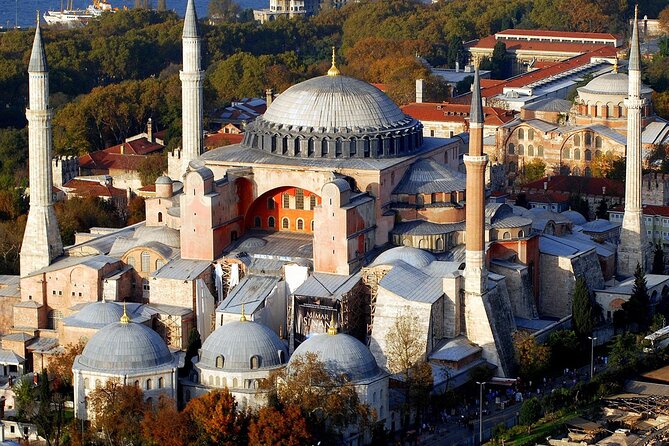
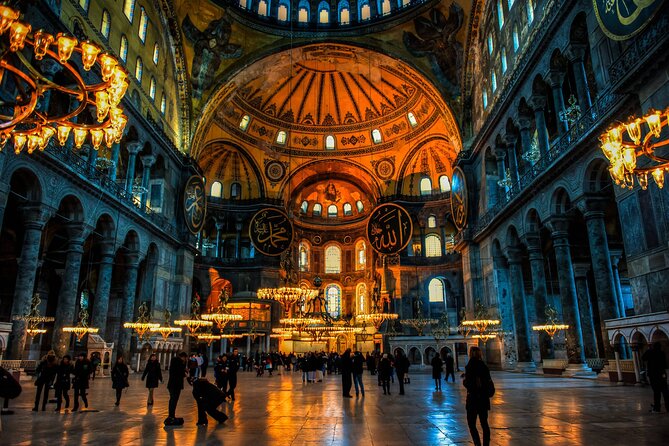
Day two packs the old city’s major sights into one busy circuit. At Hagia Sophia Grand Mosque, you are entering a building that served as the religious center of Byzantine Constantinople and was once among the largest buildings in the world. Give yourself time to look up at the dome and notice how the building’s long religious story is written into its architecture.
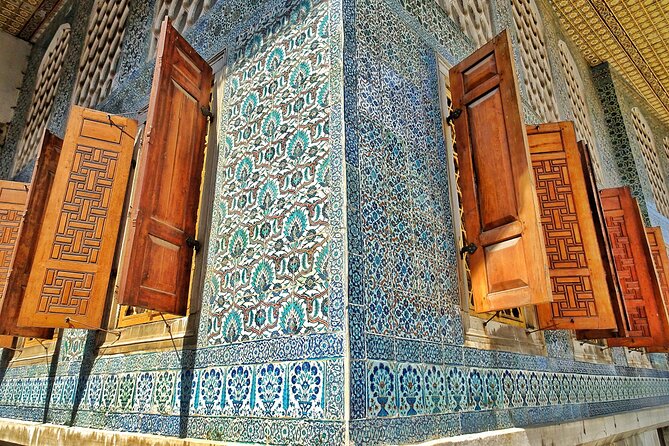
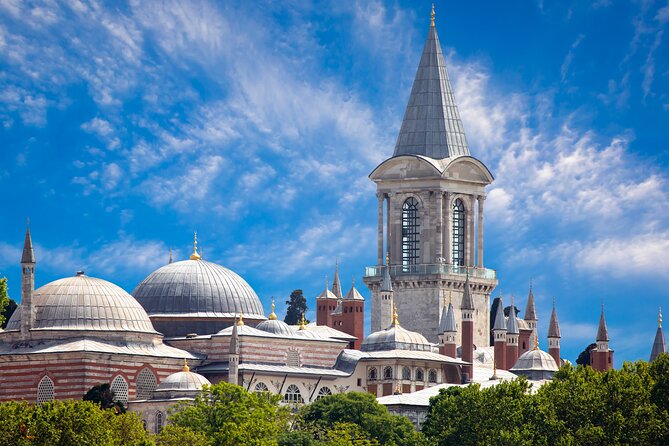
Topkapı Palace takes about two hours. This was not simply a royal home. It was the Ottoman sultans’ residence and the seat of government for nearly four centuries. The palace visit gives you a useful counterpoint to Hagia Sophia: one represents imperial Christian Constantinople, the other Ottoman power.
The Hippodrome is less complete than the palace or mosque, but do not dismiss it. The Roman arena once held as many as 100,000 spectators and served as the city’s public center. You can understand Istanbul better here by imagining crowds, ceremonies, and chariot races where the open square now sits.
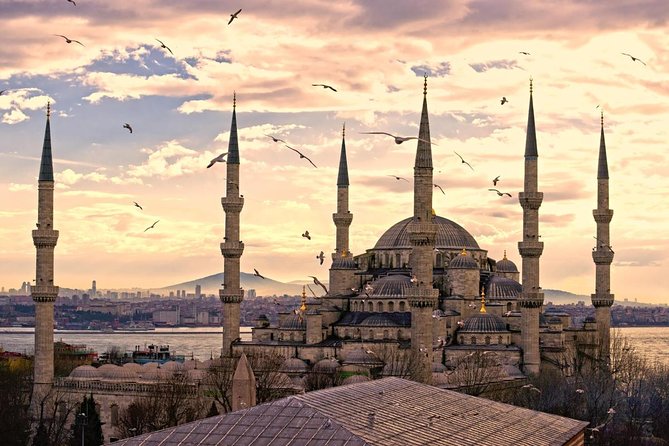
The Blue Mosque follows, with its famous six minarets and large dome. Admission is free, but it remains an active mosque, so access can vary around prayer times. Dress respectfully and expect possible closures during worship.
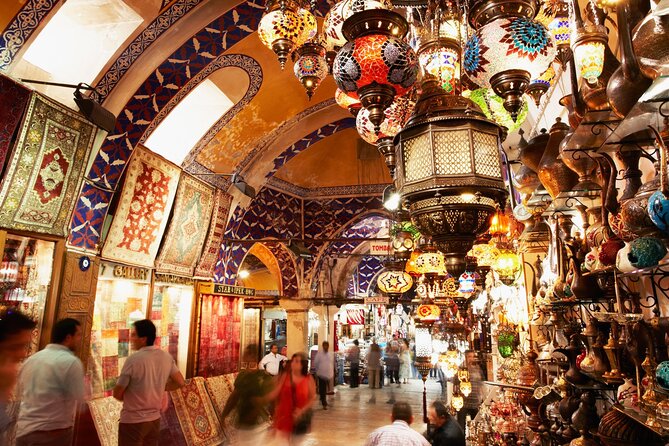
The Grand Bazaar closes the day with thousands of shops and 18 entrances. Two hours is enough to browse, compare prices, and get pleasantly turned around. I would avoid treating every first price as final, and I would leave room in your luggage for the souvenirs you will probably find.
The main concern is the schedule. Five major stops in one day leave limited time for lingering. If Istanbul is your main reason for visiting Turkey, consider adding extra nights before or after the tour.
Other Istanbul outings people put on the same list:
- Istanbul: Bosphorus Dinner Cruise & Show with Private Table
★ 4.8 · 44,561 reviews - Istanbul: Daytime or Sunset Sightseeing Cruise & Audio Guide
★ 4.8 · 14,430 reviews - Istanbul: Bosphorus Dinner Cruise with Turkish Night Show
★ 4.8 · 10,127 reviews
Gallipoli and Troy connect memory with legend
Day three shifts from city sightseeing to a long transfer toward Canakkale. The drive from Istanbul is listed at about four hours before the Gallipoli visits, so prepare for a full day. The small group helps here. On a long road journey, fewer people usually means less waiting at stops and a more manageable pace.
Gallipoli is not treated as a quick photo stop. The route includes Brighton Beach, ANZAC Cove, Beach Cemetery, Lone Pine Australian Memorial, Johnston’s Jolly tunnels and trenches, the 57th Regiment Turkish Memorial, and Chunuk Bair New Zealand Memorial. These places carry different national memories, and seeing both Allied and Turkish sites gives the visit a broader frame.
Allow yourself quiet time here. Gallipoli is valuable not because it is easy sightseeing, but because the ground makes the scale and cost of the campaign more real. The two-hour estimate may feel short if you want to read every memorial or spend time at each cemetery.
Troy comes later, followed by a hotel check-in. The archaeological site connects the famous Trojan War, Helen of Troy, Prince Paris, Achilles, and Hector with the remains of a real ancient settlement. You will see elements associated with Troy II, including the ramp and Megaron House, along with Roman baths, an odeon, the Temple of Athena, and layers of city walls.
The site requires imagination. Troy is not a single perfectly preserved city waiting in the sand. It is a series of settlements built over one another. That makes a guide especially useful, since the ruins can otherwise feel scattered.
Troy’s entrance fee is extra. Your guide is expected to have prepaid skip-the-line tickets, and the admission cost can be paid in cash in Turkish lira, US dollars, or euros.
Pergamon and Asklepion show Turkey’s intellectual side
Day four begins with breakfast, checkout, and the drive to Pergamon. The ancient city was a capital for nearly 400 years and passed through several cultural periods, from the Stone and Bronze Ages through the Archaic and Classical eras.
The ruins include temples, palaces, agoras, and the remains connected with the famous Zeus Altar and parchment library. The program gives Pergamon about two hours, which is enough for a strong introduction but not a detailed study of every structure.
The Asklepion is a separate stop and focuses on ancient medicine. Known as the Pergamum God of Health, Asklepios was linked to dietary care and medical treatment. The site served as an important medical center for centuries, and the itinerary connects it with figures such as Hippocrates and Galenus.
This pairing is one of the tour’s better choices. Pergamon gives you politics, religion, and scholarship, while Asklepion shows how ancient people thought about health and healing. After lunch, you continue to Kusadasi, with about two hours listed for the transfer.
Kusadasi is your base for two nights. The program does not set aside a separate sightseeing period for the town, so see it mainly as a practical base for Ephesus and nearby sites rather than as a full destination in its own right.
Ephesus is the archaeological centerpiece
Day five starts at the House of the Virgin Mary, a religious site built in the sixth century over foundations dating to the first century. The church recognizes it as the place where Mary spent her final days. The claim has religious importance for many visitors, while others approach it as a place of pilgrimage and tradition.
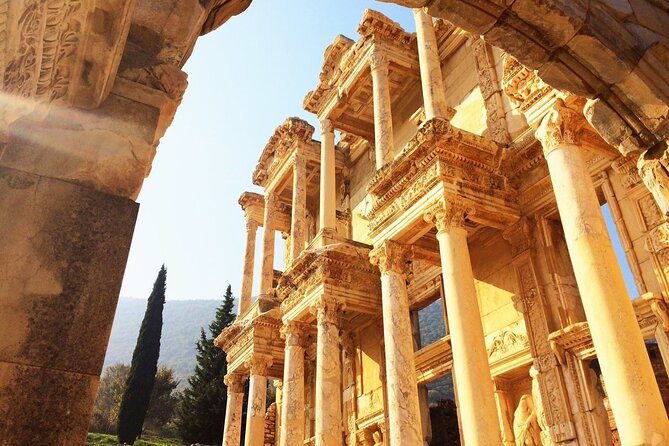
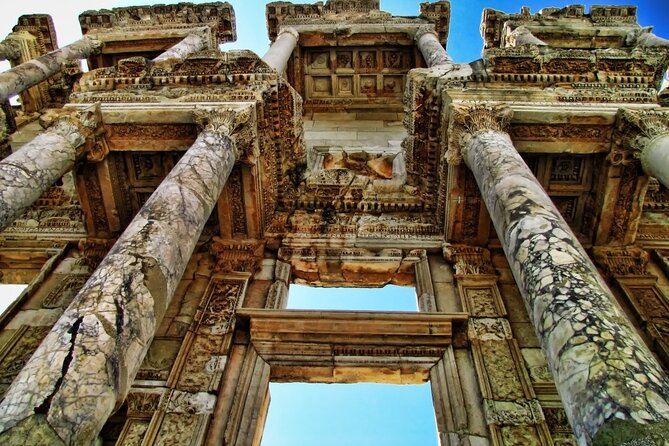
The main event is Ephesus. This is among the best-preserved classical cities in the eastern Mediterranean, and its streets make the ancient world unusually easy to picture. You will see the remains of the Library of Celsus, a large Roman theater, public streets, and monumental ruins that once belonged to a city of more than 250,000 people during the first century.
The listed visit lasts two hours. Wear shoes suited to uneven stone surfaces, and remember that the site can be exposed. Two hours gives you the essential route, but it will pass quickly if you stop often for photographs or detailed explanations.
The Temple of Artemis is a shorter stop. It was one of the Seven Wonders of the Ancient World and helped make Ephesus a major pilgrimage center. Today, the remains are far less complete than the name suggests, so keep your expectations in check. Its importance comes from what the site represented in antiquity, not from a large surviving temple.
Entry fees for the House of the Virgin Mary and Ephesus are extra. The guide’s skip-the-line arrangement should reduce time at the ticket window, but it does not remove the cost.
A different side of Istanbul on the same trip:
- Best of Istanbul 1, 2 or 3-Day Private Guided Istanbul Tour
★ 5.0 · 8,922 reviews - Istanbul: Basilica Cistern Fast-Track Entry and Audio Guide
★ 4.6 · 7,521 reviews - Istanbul: Hagia Sophia Skip-the-Line Ticket & Museum Option
★ 3.7 · 4,958 reviews - Istanbul: Hodjapasha Whirling Dervishes Show & Exhibition
★ 4.4 · 4,790 reviews
Pamukkale and Hierapolis make a dramatic pair
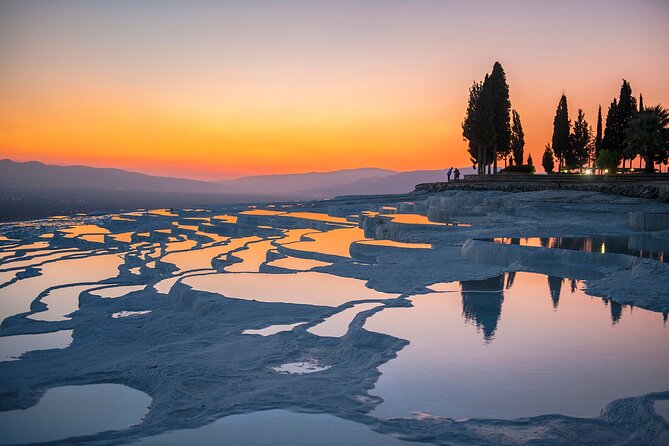
Day six is another full-day transfer and sightseeing day. After breakfast and checkout, you travel to Pamukkale, famous for its white mineral terraces formed by warm spring water. The water is listed at about 35 degrees Celsius and contains calcium bicarbonate, which created the bright travertine formations.
Pamukkale is best understood as both a natural site and an ancient spa. People came here for the hot springs long before modern tourism. The terraces are fragile, so follow local access rules and expect some areas to be restricted.
Hierapolis sits above the terraces and adds a major archaeological layer. Its necropolis is described as the largest in Anatolia, with about 1,200 gravestones. The Sacred Pool is another highlight, where shallow thermal water moves over Roman ruins.
The program allows three hours at Pamukkale, with a very brief separate listing for Hierapolis. In practice, these sites are closely linked, but the time can still feel tight. You will want to balance the terraces, ruins, photographs, and any permitted water access without assuming you can see every corner.
At the end of the day, you continue to Antalya. The listed drive takes about three hours. This is one of the tour’s more demanding days, but the payoff is considerable: you go from a striking geological site to one of Turkey’s major ancient cities in a single day.
Antalya adds mountain views, waterfalls, and old streets
Day seven gives you a change of rhythm after several archaeological sites. At Tunektepe, the cable car rises to about 1,365 meters above sea level. From the top, you can see Antalya’s coastline, mountains, pine forests, and the Mediterranean. The ride takes about two hours, including time for views and photographs.
The cable car admission is extra. Weather can affect how much you see, so treat the ride as a scenic addition rather than the sole reason to book the tour.
Next comes Upper Duden Waterfalls. A park walk and the sound of falling water provide an easy contrast to the ruins and long drives. The stop is listed at one hour and is included without a separate admission charge.
After lunch at a local restaurant with a panoramic view, you get about one to one and a half hours of free time in Kaleiçi, Antalya’s old town. Look for Hadrian’s Gate, the Clock Tower, the Kesik Minare, and sections of city walls dating to the second century. Narrow stone streets lead to boutiques, galleries, museums, and shops selling souvenirs.
The free time is useful, but limited. You can explore the central streets and make a few purchases, yet you will not have time to investigate every museum. If Kaleiçi interests you, consider adding a post-tour night in Antalya. The tour ends after breakfast on day eight, with hotel checkout at noon.
What the $1,400 price really covers
At $1,400 per person, the value depends on how much independent planning you want to avoid. The price includes two nights in Istanbul, one in Canakkale, two in Kusadasi, and two in Antalya. Breakfast is listed for seven days, and six lunches are included, with meals served at family-owned local restaurants.
The package also includes the planned transfers and, according to the overview, internal flights between destinations. The detailed inclusions do not list those flights separately, so I would ask for a written confirmation before paying. That small check matters because domestic transport can change the value of the package.
Entrance fees are not included. This covers major sites such as Topkapı Palace, Hagia Sophia, Troy, Pergamon, Asklepion, Ephesus, Pamukkale, the House of the Virgin Mary, and the Tunektepe cable car. You also pay for drinks, personal purchases, and any extra services.
The guide is expected to carry prepaid skip-the-line tickets. You pay the admission cost in cash to the guide in Turkish lira, US dollars, or euros. Carrying some Turkish currency is still sensible for drinks, small purchases, and places where exchange rates may be less favorable.
The biggest value is the route. Booking hotels, transfers, long-distance transport, and meals separately would take time and careful coordination. The cost is less attractive if you prefer independent days, want to linger at one site, or already have lodging and transport arranged.
Who should book this route
I would recommend it to someone visiting Turkey for the first time who wants the main historical and natural highlights in one compact trip. It suits you if you value a small group, planned transport, English-language service, included meals, and a guide who can put complex ruins into context.
It is less suitable if you dislike early starts, long road transfers, or a fixed schedule. The route has little free time in Istanbul, Ephesus, Pamukkale, and Antalya. It also does not include Cappadocia, despite one published comment referring to Cappadocia and a guide named Hati. That comment appears not to match this program, so confirm your guide and route before booking.
Free cancellation is available if you cancel at least 24 hours before the start time. Some sites may close during religious or national holidays, so ask about your dates before you commit.
Should you book Pearl’s of Turkey?
Book it if you want a well-organized first look at Turkey’s western and southern highlights, and you are comfortable trading leisure for coverage. The combination of Istanbul, Gallipoli, Troy, Pergamon, Ephesus, Pamukkale, and Antalya is substantial for eight days.
Before booking, confirm three things: the exact hotel names, whether internal flights are included in your quoted price, and the expected total for entrance fees. If those details are clear, the tour offers a practical way to see a large part of Turkey without rebuilding the trip yourself.
FAQ
How long is Pearl’s of Turkey?
The tour lasts approximately eight days, beginning with airport pickup and ending after hotel checkout in Antalya on day eight.
Which airports offer pickup?
Pickup is offered from Istanbul Airport and Sabiha Gökçen Airport. You need to provide your international flight details at booking.
How many people are in the group?
The tour has a maximum of 12 travelers.
Which cities include overnight stays?
You spend two nights in Istanbul, one night in Canakkale, two nights in Kusadasi, and two nights in Antalya.
Are meals included?
Breakfast is listed for seven days, and six lunches are included. Beverages with meals are not included.
Are historical-site entrance fees included?
No. Entry fees are extra. The guide is expected to have prepaid skip-the-line tickets, and you can pay the used ticket costs in Turkish lira, US dollars, or euros.
Is Cappadocia part of this tour?
No. The eight-day route described here includes Istanbul, Gallipoli, Troy, Pergamon, Ephesus, Pamukkale, and Antalya, but not Cappadocia.
Is the tour offered in English?
Yes. The experience is offered in English.
Can children join the tour?
Most travelers can participate, and historical sites offer free entry for children aged eight and below. The tour data does not provide a minimum age for participation.
What happens on the final day?
You have breakfast and check out of your Antalya hotel by noon. The tour service ends there, with no additional sightseeing stop listed.
Recently added in Istanbul
- Yildiz Palace & Park: Skip-the-Line Entry with Audio Guide★ 5.0 · 4 reviews
- Walls of Contantinople and Blachernea Palace Tour★ 4.1 · 7 reviews
- Whirling Dervish Ceremony★ 4.5 · 35 reviews
- Istanbul:Whirling Dervish Ceremony, Mystical Sufi Experience★ 4.1 · 17 reviews
- Turkish Tapas – Meze Cooking for Beginners in Istanbul★ 4.5 · 16 reviews
- İstanbul: Turkish Night On the Bosphorus with Private Table★ 3.2 · 9 reviews
- Istanbul Bosphorus Dinner Cruise Tour – Private Table★ 3.9 · 8 reviews
- Istanbul Sultanahmet Turkish Bath Sultan Suleyman Bath★ 3.7 · 38 reviews