
Reviewed · MARKETS
Roman Aqueduct, Sehzade Mosques &Women’s Market
Istanbul’s grand sights get the headlines, but this three-hour walk takes you into Fatih, where neighborhood markets, quiet mosques, and old waterworks tell a more personal story. The 6th-century Valens Aqueduct and the less-visited Şehzade Mosque are the main historic stops, while boza and Kurdish lamb give the tour a strong local food angle.
I like the way this tour combines ordinary residential streets with major history, and I like that the guide handles the tram ride between Sultanahmet and Fatih. Guides Salih and Onder have earned especially warm praise for clear explanations and patient pacing. The main drawback is that the tour involves walking, public transport, and a lunch that costs extra, so it is less suitable if you want a seated sightseeing tour.
Key points to know before booking
- A quieter side of Istanbul: Visit Şehzade and Zeyrek mosques without the crowds common around Hagia Sophia and the Blue Mosque.
- A 150-year-old local drink: Try boza at the same Vefa establishment where it has been served for generations.
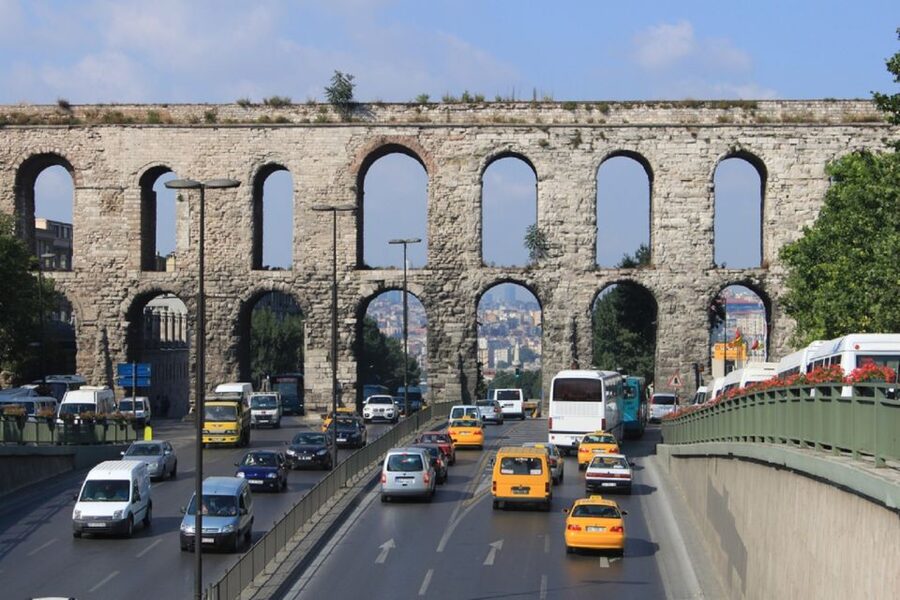
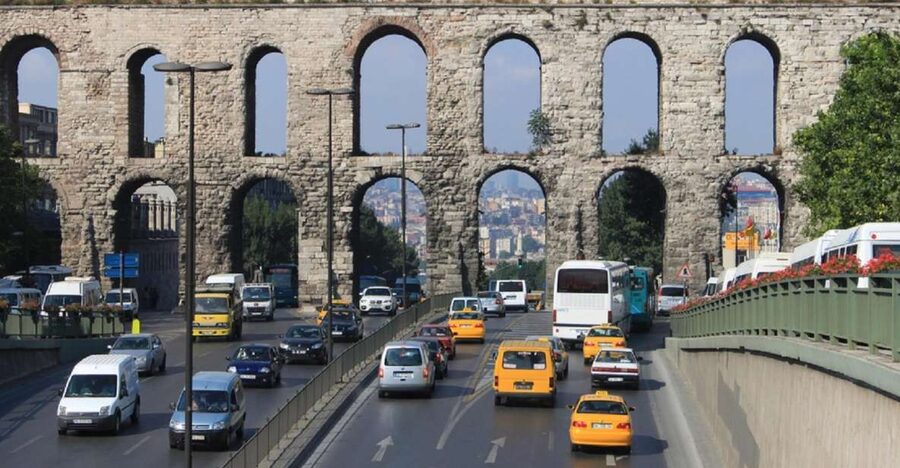
- Roman engineering in the city streets: Walk beneath the Valens Aqueduct, once part of Constantinople’s water supply.
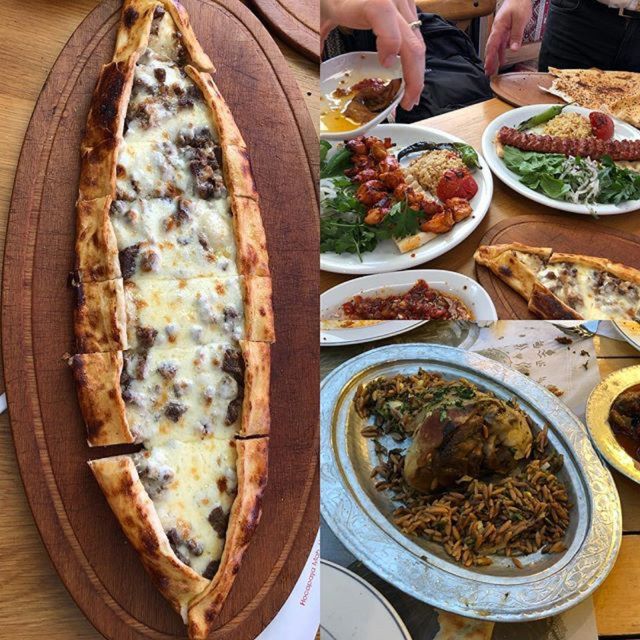
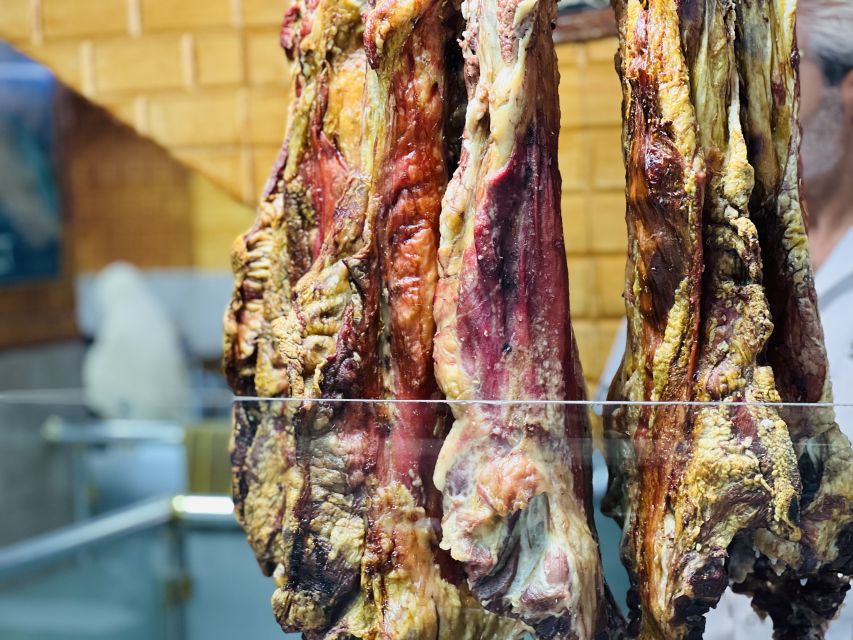
- A serious food stop: Optional lunch features Büryan kebab, lamb slow-cooked in an underground clay oven for about five hours.
- Small-group format: The group is limited to 10 people, with an English-speaking licensed guide.
- Good value for independent explorers: The $71 price includes guiding, boza, VAT, and tram tickets, but not lunch or hotel transfers.
Why this Fatih walk feels different
Istanbul is not short on famous monuments. The challenge is finding a tour that shows you how the city works between those monuments. This route heads from the German Fountain in Sultanahmet toward Fatih, using the tram and then walking through residential districts where daily life takes the lead.
You will still see important architecture, but the mood is different. Instead of moving from one packed photo stop to another, you pass local shops, neighborhood streets, and a market with food traditions from eastern and southeastern Turkey. That change of setting is the real reason to book.
The tour lasts three hours and is limited to 10 participants. That is small enough for direct conversation with the guide, and it gives the group a better chance to pause when a question comes up. The experience has been especially well served by guides Salih and Onder. Salih is described as warm and professional, while Onder is noted for detailed explanations and a considerate pace.
The $71 price is fair if you want history, transport, a local drink, and a guide in one short outing. It is less compelling if you plan to visit only major imperial sights or if you are mainly interested in food. The optional lunch costs another $10 to $15 per person, so count on roughly $81 to $86 if you want the full food experience.
More Shopping and Bazaar Tours:
- Istanbul Grand Bazaar: From Rooftops to the Secret Passages
★ 4.8 · 337 reviews - Istanbul: Hagia Sophia, Blue Mosque and Grand Bazaar Tour
★ 4.5 · 222 reviews - Small-Group Bosphorus Cruise and Istanbul’s Egyptian Bazaar
★ 3.5 · 208 reviews
Meeting at the German Fountain
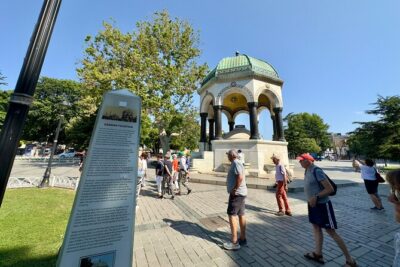
The tour begins at the German Fountain, or Alman Çeşmesi, on the Hippodrome in Sultanahmet. This is a practical meeting place, but give yourself enough time to find it, especially if you are arriving by tram.
From the Sultanahmet Tram Station, walk downhill on the right side of the road toward the small Firuz Ağa Mosque. Take the first right into the Hippodrome square. The green-domed fountain is ahead of you.
The fountain itself is easy to recognize, but the meeting instructions assume you are already comfortable navigating Sultanahmet. If this is your first morning in Istanbul, arrive early. You do not want to begin a walking tour by rushing through the square with your phone out.
From there, the guide takes you toward Fatih by public transport. Tram tickets are included, which removes one small task from the morning. Public transport also makes sense here because Istanbul traffic can slow a short road journey considerably.
Şehzade Mosque and the story behind it
One of the first major stops is Şehzade Mosque, a 16th-century Ottoman mosque commissioned for Şehzade Mehmed, the son of Sultan Süleyman the Magnificent. Mehmed died young and under mysterious circumstances, and the mosque became a memorial to him.
The building is associated with the great Ottoman architect Sinan. Its broad central design and carefully ordered courtyard offer a useful introduction to classical Ottoman mosque architecture, especially if you have already seen the more famous imperial mosques and want another point of comparison.
What I like here is the setting. Şehzade Mosque is historically important, yet it generally feels removed from the sightseeing crush around Sultanahmet. You get time to look at the structure and listen to the guide without competing with a large flow of groups.
As with any mosque visit, dress matters. Bring a scarf, particularly if you need to cover your head. Wear clothing that covers shoulders and knees, and use comfortable shoes because the tour continues on foot after the visit.
The mosque is not just an architectural stop. Its connection to a young prince gives the guide a way to explain Ottoman dynastic life, succession, grief, and the role of royal buildings as memorials. That human detail makes the visit more memorable than a simple list of dates and names.
Zeyrek Mosque, from Byzantine church to Ottoman mosque
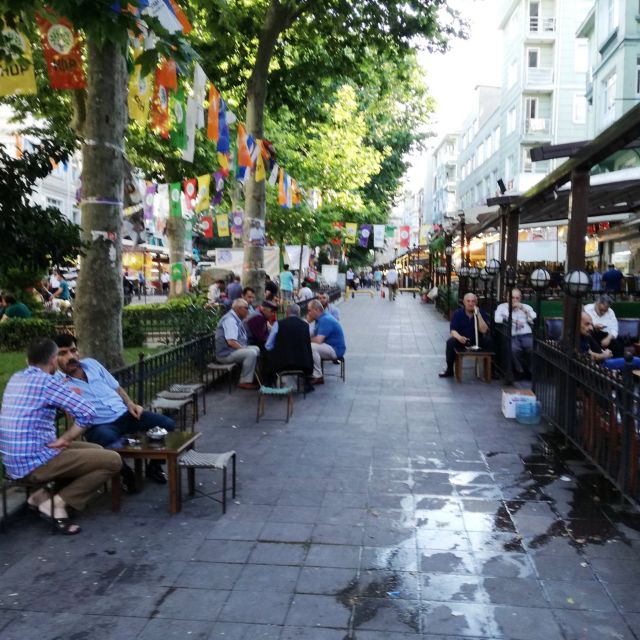
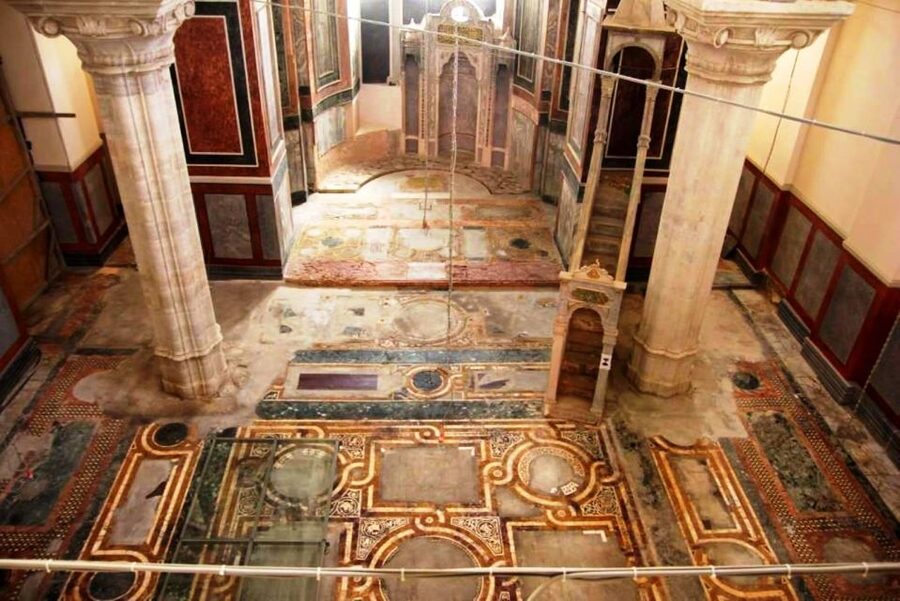
The route continues to Zeyrek Mosque, formerly the Pantokrator church complex, built in 1118 during the Byzantine period. It later became a mosque, and the building reflects the layered history that makes Istanbul so rewarding.
You will not be looking at a single-period monument. The site connects Byzantine Constantinople with Ottoman Istanbul, showing how religious buildings were adapted as political power changed hands. The tour’s focus on Zeyrek adds useful depth because it takes you beyond the better-known Hagia Sophia story.
The complex is in the Zeyrek neighborhood, away from the most heavily visited parts of the city. That gives the stop a more local setting, although it also means the surrounding streets may feel less polished and less arranged for sightseeing. This is part of the appeal, but you should not expect a formal museum visit with extensive visitor facilities.
Your guide is important here. Architectural details can be difficult to read without context, especially when a building has passed through different religious and political eras. Guides Salih and Onder are both praised for explaining such details clearly, and the small group makes it easier to ask about features you might otherwise miss.
A different side of Istanbul on the same trip:
- Istanbul: Bosphorus Dinner Cruise & Show with Private Table
★ 4.8 · 44,561 reviews - Istanbul: Daytime or Sunset Sightseeing Cruise & Audio Guide
★ 4.8 · 14,430 reviews - Istanbul: Bosphorus Dinner Cruise with Turkish Night Show
★ 4.8 · 10,127 reviews - Best of Istanbul 1, 2 or 3-Day Private Guided Istanbul Tour
★ 5.0 · 8,922 reviews
Walking beneath the Valens Aqueduct
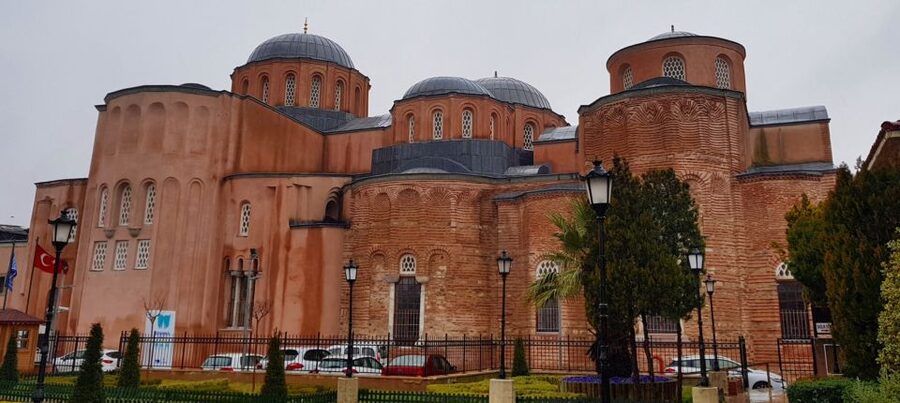
The Valens Aqueduct dates from the 4th century, with major construction and use connected to the water system of Constantinople in the 6th century. It carried water into the city and helped supply a growing imperial capital.
The aqueduct is not presented as an isolated ruin in a distant archaeological park. You see it as part of the city, rising above modern streets and neighborhoods. Walking beneath its arches gives you a quick lesson in scale: this was not decorative architecture, but vital public infrastructure built to move water across difficult ground.
This is one of the strongest parts of the route for visitors who like history in an everyday setting. You can understand the engineering while also seeing how modern Istanbul has grown around it.
The stop is fairly easy physically, but the whole tour involves walking between sites. Distances are generally five to 15 minutes at an easy pace, yet the route includes urban streets and public transport. Comfortable shoes are a must.
The aqueduct also helps connect the earlier stops. Şehzade Mosque reflects Ottoman imperial memory, Zeyrek preserves Byzantine and Ottoman layers, and the aqueduct reaches further back into the city’s Roman and late antique past. In a short time, you move through several periods without leaving the Fatih area.
Vefa boza and a taste of neighborhood Istanbul
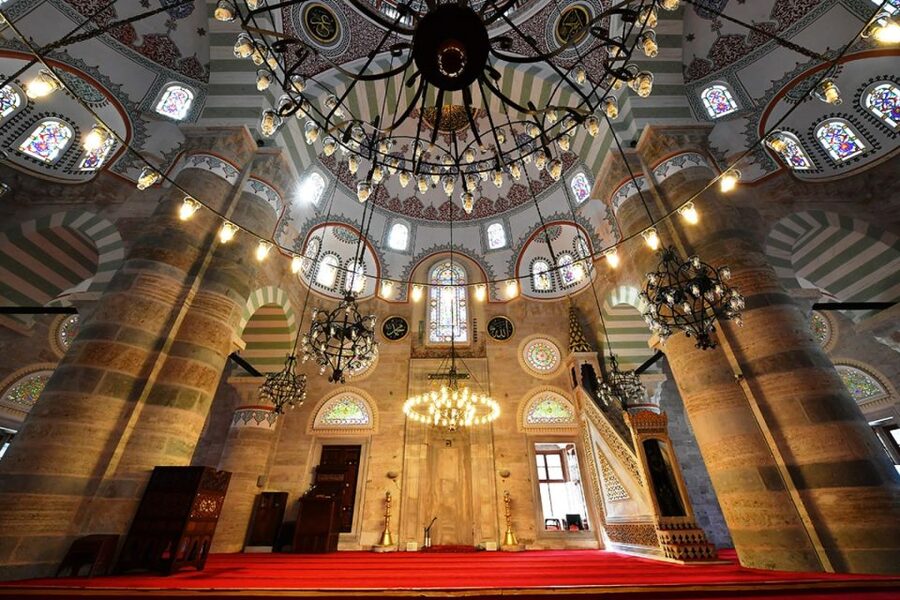
The walk reaches Vefa, where you try boza at the same place it has been served for about 150 years. Boza is a thick, fermented grain drink with a distinctive taste. The experience is less about finding a universally familiar flavor and more about trying something tied to Istanbul’s food culture.
You may find boza refreshing, slightly sour, or unusual. That is part of the fun. It is not a standard tourist tasting designed to please everyone, and the guide can explain how it fits into local traditions.
I like this stop because it gives the tour a sensory break from architecture. You are not just looking at the city. You are tasting something with a long neighborhood connection, in the place associated with that tradition.
The boza is included in the tour price, so there is no extra decision to make at the stop. If you prefer food experiences that are connected to a specific place rather than generic sampling, this is one of the tour’s best details.
The eastern Turkish food market in Fatih
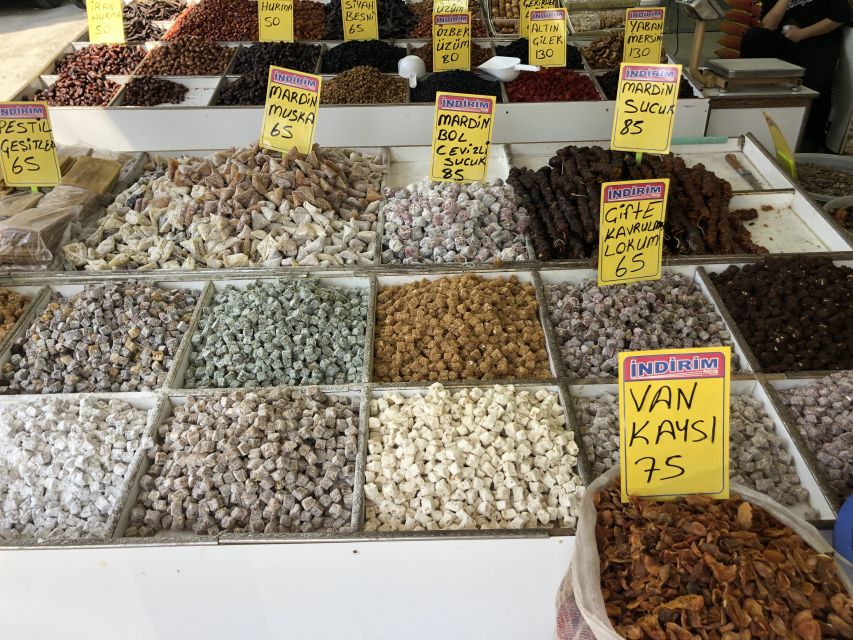
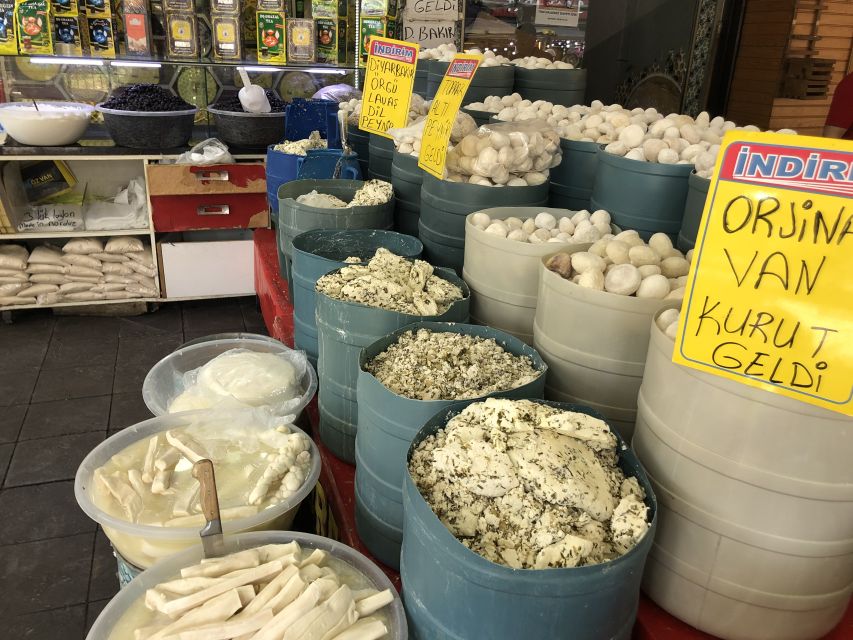
The route continues through a neighborhood market where many foods come from eastern Turkey. This is a useful part of the experience because Fatih is not simply a district of old monuments. It is also a place where regional Turkish identities and food traditions meet in Istanbul.
You will see the tour move from imperial architecture to ordinary commerce. The market helps explain why food is such a good way to understand Istanbul. People from different parts of Turkey have brought ingredients, recipes, and cooking methods into the city, and those traditions remain visible in neighborhood restaurants and shops.
The tour does not treat the market as a shopping mission. You are walking through it as part of the district, with the guide explaining what you are seeing. That makes it a better fit for curious eaters than for anyone expecting a long, organized food crawl.
The streets can be active and uneven, so keep your belongings secure and pay attention while walking. The route is not described as difficult, but it is still an urban walk rather than a controlled attraction.
The optional Büryan kebab lunch
The food highlight is lunch at a simple, non-tourist restaurant serving southeastern Kurdish cuisine. The signature dish is Büryan kebab, lamb baked in an underground clay oven for about five hours.
That cooking method matters. Slow baking produces a very different result from quickly grilled kebab, and the long preparation is part of what makes the meal special. The dish is served with rice, and the meal may also include pumpkin dessert. Previous feedback specifically singled out the lamb, rice, and pumpkin dessert as memorable parts of the stop.
Lunch is not included, and the stated cost is $10 to $15 per person. That is a modest addition for a substantial local meal, especially compared with the price of eating in the most touristed parts of Sultanahmet.
Still, you should know what kind of restaurant to expect. This is described as a simple, non-tourist café, not a polished dining room. That is precisely why it fits the tour, but diners seeking formal service or a broad menu may prefer to skip it.
I would include lunch if you enjoy regional food and want the tour to end with something more filling than a snack. If you have dietary restrictions, ask the guide before ordering. The supplied details confirm the lamb-based dish but do not provide a separate vegetarian menu or allergy information.
The walking pace and accessibility picture
The tour is designed around easy walks of five to 15 minutes between sites, plus tram travel. That keeps the route manageable for many people, but it is not a fully accessible sightseeing ride with every stop beside a vehicle.
A useful example comes from the tour experience of a couple whose guide adjusted the pace for a husband with Parkinson’s disease. The guide allowed more time, found opportunities to sit, and continued explaining the sites during pauses. That suggests a degree of flexibility, especially in a small group, but you should still discuss mobility needs before booking because the tour includes city walking and public transport.
The best footwear is practical rather than stylish. Bring comfortable shoes and a scarf for mosque visits. You may also want water, although the included boza is the only specifically listed drink.
The route is three hours, so it fits well into a morning or afternoon. It also leaves room for you to spend the rest of the day at major sights in Sultanahmet, provided you are not trying to schedule another fixed activity too tightly.
How the $71 price compares
At $71 per person, the tour sits in the mid-range for a small-group city experience. The price includes a licensed English-speaking guide, professional guiding, boza, tram tickets to Fatih and back to Sultanahmet, and VAT.
The strongest value comes from the route design. You are not simply paying for entry to one monument. You are paying for interpretation across several sites, help with local transport, and access to a food tradition and restaurant that may be difficult to arrange efficiently on your own.
The price does not include hotel pickup or drop-off. You must reach the German Fountain independently, and lunch costs another $10 to $15. That is important when comparing the tour with longer excursions that include transfers or meals.
I consider the price worthwhile for a first or second visit to Istanbul if you have already seen the main Sultanahmet sights, or if you want a guide to explain the city’s less obvious layers. Independent visitors who are happy navigating Fatih and researching its monuments may spend less on their own, but they will need to arrange the route, tram travel, boza stop, and restaurant themselves.
Who will enjoy this tour most
This experience suits you if you:
- Want to see residential Fatih rather than only the famous postcard sights.
- Like Ottoman and Byzantine history but prefer smaller, quieter sites.
- Enjoy trying local drinks and regional food.
- Appreciate a guide who can explain cultural details while you walk.
- Have about three hours and want a focused side trip from Sultanahmet.
- Prefer a group of no more than 10 people.
It is less suitable if you dislike walking, public transport, mosque dress requirements, or foods that may be unfamiliar. It is also not the right choice if your main goal is a grand tour of Hagia Sophia, Topkapı Palace, or the Blue Mosque.
Should you book the Şehzade, Aqueducts, and Women’s Market tour?
I would book this tour if you want Istanbul to feel like a lived-in city rather than a collection of famous buildings. The best moments are the connections: a prince’s memorial mosque, a Byzantine church complex, Roman water engineering, a 150-year-old boza tradition, and a Kurdish meal in Fatih.
The tour is particularly strong with a guide such as Salih or Onder, both praised for clear explanations, warmth, and care with pacing. Add the lunch if you enjoy lamb and regional Turkish cooking. Skip it only if you have dietary concerns or want to finish the tour on your own schedule.
For a first-time visitor with only one day in Istanbul, the major sights should come first. For anyone with a little more time, this is a smart way to see what lies beyond the usual route.
FAQ
How long does the tour last?
The tour lasts three hours.
Where does the tour begin?
It begins at the German Fountain, also called Alman Çeşmesi, on Atmeydanı Avenue in Sultanahmet.
How do I find the German Fountain?
From Sultanahmet Tram Station, walk downhill on the right side of the road toward Firuz Ağa Mosque. Take the first right into the Hippodrome square. The green-domed fountain is the meeting point.
Is lunch included?
No. Lunch costs about $10 to $15 per person and is optional.
What food is served at lunch?
The meal features Büryan kebab, lamb baked in an underground clay oven for about five hours. Rice and pumpkin dessert may also be served.
Is public transportation part of the tour?
Yes. The tour uses public transport between Sultanahmet and Fatih, and tram tickets to Fatih and back to Sultanahmet are included.
What should I bring?
Bring comfortable walking shoes and a scarf for mosque visits.
How large is the group?
The tour is a small-group experience limited to 10 participants and is conducted in English by a licensed guide.
Recently added in Istanbul
- Two (2) Days Istanbul Old City and Two Continents Walking Tour★ 5.0 · 6 reviews
- istanbul old city private tour★ 5.0 · 19 reviews
- Private Guided Tour: Discovering Istanbul★ 4.5 · 9 reviews
- Istanbul Airport (IST) To Hotels Transfer★ 5.0 · 80 reviews
- Best Of İstanbul Europe Side In One Day★ 5.0 · 10 reviews
- 2 Days Cappadocia Tour from Istanbul with Optional Balloon★ 5.0 · 10 reviews
- Hagia Sophia Private Skip The Ticket line guided Tour★ 4.5 · 17 reviews
- historical peninsula walking tour★ 5.0 · 6 reviews
Markets, compared.
Istanbul Grand Bazaar: From Rooftops to the Secret Passages
Read our review →
Hagia Sophia, Blue Mosque and Grand Bazaar Tour
Read our review →
Small-Group Bosphorus Cruise and Istanbul’s Egyptian Bazaar
Read our review →
Hagia Sophia, Blue Mosque, Cistern & Bazaar Tour
Read our review →Hagia Sophia, Blue Mosque, and Grand Bazaar Tour
Read our review →
Istanbul Old City: Basilica Cistern – Blue Mosque – Grand Bazaar
Read our review →
Morning Istanbul: Half-Day Tour with Blue Mosque, Hagia Sophia, Hippodrome and Grand Bazaar
Read our review →Browse the lists this tour appears in