
Reviewed · ISTANBUL OLD CITY TOURS
Small-Group Istanbul Old City Guided Tour
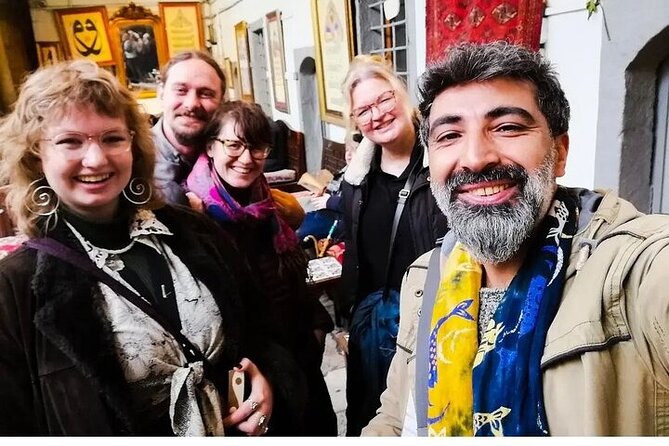
Istanbul’s Old City is easiest to understand when its major monuments are connected by a good guide, and this half-day walk does exactly that. Israfil leads you from the German Fountain through the Hippodrome, Blue Mosque, Hagia Sophia, a former Ottoman school, and the Grand Bazaar, with the Basilica Cistern added for an extra fee. I especially like the small maximum of 10 people and the stop at Caferaga Medresesi, where the tea break adds local texture to a tour otherwise centered on famous sights.
I also like the guide’s apparent strength in explaining context, not just reciting dates. Israfil is praised for clear English, humor, patience, and practical advice about shopping and the rest of your Istanbul stay. The main consideration is that Hagia Sophia is an exterior visit only, while the Basilica Cistern costs an additional 1,500 Turkish lira in cash.
Key points to know before booking
- A compact Old City route: Cover several essential Sultanahmet sights in about three and a half hours.
- A genuinely small group: The tour accepts no more than 10 people, creating a more personal feel than a large walking tour.
- Hagia Sophia is viewed from outside: Current regulations prevent tour guides from explaining inside the mosque.
- The Basilica Cistern costs extra: Bring exactly the practical payment method requested, 1,500 Turkish lira in cash.
- A useful tea stop: Caferaga Medresesi offers a pause in a roughly 300-year-old former Muslim school.
- Sunday plans change: The Grand Bazaar is closed on Sundays, so the route visits the Spice Market instead.
Why this three-and-a-half-hour walk works
At $47.07 per person, this is priced between a basic group walk and a private guide. That matters in Istanbul, where the historical center can feel like a puzzle of mosques, markets, monuments, and lanes. You are paying mainly for a guide who can join the pieces together, not for a long list of included admissions.
The group limit of 10 is one of the strongest features. A guide can usually hear questions more easily in a group this size, and you are less likely to spend the morning trying to keep sight of a flag or umbrella in a crowd. Some departures may be smaller still, and one reported departure had only four people. That is close to a private-guide experience without the private price.
The route is also well suited to your first morning in Istanbul. It gives you bearings in Sultanahmet, introduces the city’s Byzantine and Ottoman layers, and leaves you at the Grand Bazaar area with practical ideas for the rest of your stay. You will not see every major museum, and you will not tour the inside of Hagia Sophia, but you will get a strong first reading of the Old City.
The walk begins at 9:30 a.m. at the German Fountain near Sultanahmet Square. The meeting point is a sensible one, close to major public transportation and easy to recognize once you are in the historic center. Wear comfortable shoes. The route includes outdoor squares, mosque courtyards, market lanes, and the descent into an underground cistern.
More Old City Tours:
- Istanbul: Private Turkish Bath, Massage, and Spa in Old City
★ 4.6 · 3,225 reviews - Istanbul Party Pub Crawl with Party Bus in Sultanahmet and Taksim
★ 5.0 · 1,882 reviews - Istanbul: Blue Mosque, Hagia Sophia & Sultanahmet Tour
★ 5.0 · 566 reviews
The German Fountain and Hippodrome: Istanbul’s opening chapter
The German Fountain is the meeting point, and about 15 minutes are set aside there. Admission is free. This is not the main reason to book the tour, but it gives the guide a clear place to gather the group and begin explaining the area around Sultanahmet.
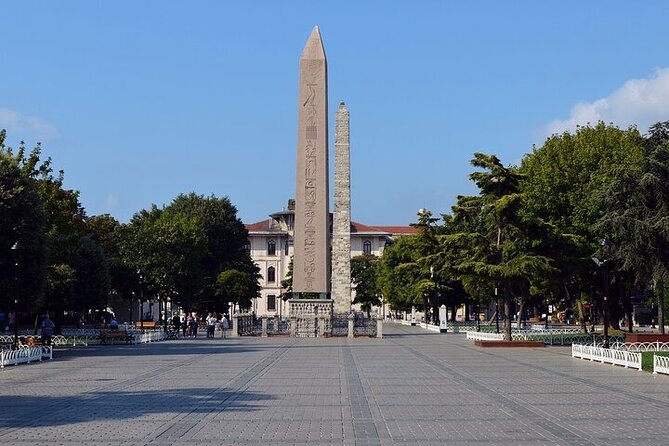
From there, you move to the Hippodrome, now called Sultanahmet Meydanı. The ancient stadium once held as many as 100,000 spectators and served as the sporting and social center of Constantinople. That scale can be hard to grasp because the modern square is an open public space rather than a preserved stadium.
The surviving monuments help you picture the old setting. You will see the Egyptian obelisk, transported from Egypt, and the bronze sculpture of three entwined serpents from Delphi. These objects are reminders that Constantinople gathered material from across a vast empire.
I like this stop because it gives the rest of the morning a useful frame. The Blue Mosque, Hagia Sophia, and cistern are not isolated attractions. They belong to a city shaped first by Byzantium and later by the Ottoman Empire. A good explanation here helps you notice that continuity as you walk.
The Blue Mosque: an active place of worship
The Blue Mosque, officially the Sultan Ahmed Mosque, receives about 45 minutes. Built between 1609 and 1617 during the reign of Sultan Ahmed I, it remains a functioning mosque. That last point is important: this is not simply a monument arranged for sightseeing.
The mosque is famous for the blue tiles associated with its interior, as well as its grand scale and six minarets. The tour information lists admission as free. Since it is an active religious site, access and timing can be affected by prayer services or mosque rules. You should dress respectfully and be ready to follow instructions from the guide and staff.
Forty-five minutes is a sensible amount of time for a guided visit. You have enough time to look up at the architecture, hear why the mosque was built, and ask questions without turning the stop into a long architectural lecture. The guide’s role is especially useful here because the building can be visually overwhelming. A few clear points about Sultan Ahmed, Ottoman imperial power, and the mosque’s continuing use will help you focus.
The tour is not designed as a photography-only stop. You are there to understand why the mosque mattered when it was built and why it still matters to Istanbul today. If you want a long, quiet study of tilework or a detailed treatment of Ottoman architecture, you will need more time on your own.
Hagia Sophia from the outside: an important limitation
The Hagia Sophia stop lasts about 25 minutes, but it is an exterior explanation only. The current rules described for this experience prevent guides from giving explanations inside Hagia Sophia, and there is no guide skip-the-line access. That change took effect on January 15, 2024, according to the tour information.
This is the biggest limitation of the walk, especially if you are hoping for a guided look at the famous dome, mosaics, and stonework. Hagia Sophia’s story stretches across roughly 1,500 years. It has served as a church, a museum, and a mosque, so even the exterior offers plenty to discuss. Still, you should book this tour expecting to learn about the building from outside, not to enter with the group.
The exterior stop can remain worthwhile because the guide can place Hagia Sophia beside the Blue Mosque and explain how the two buildings represent different periods and religious traditions. You will also have a chance to take photographs and decide if you want to return independently.
Do not confuse this tour’s exterior explanation with an admission ticket. Entry arrangements, queues, and religious-site rules can change. If seeing the interior is one of your top priorities, treat this tour as an introduction and plan separately rather than assuming the guide will take you inside.
A few more Istanbul bookings to weigh up
- Istanbul: Daytime or Sunset Sightseeing Cruise & Audio Guide
★ 4.8 · 14,430 reviews - Best of Istanbul 1, 2 or 3-Day Private Guided Istanbul Tour
★ 5.0 · 8,922 reviews - Istanbul: Basilica Cistern Fast-Track Entry and Audio Guide
★ 4.6 · 7,521 reviews - Istanbul: Topkapi Palace & Harem Museum Ticket & Audio Guide
★ 4.1 · 3,977 reviews
Caferaga Medresesi: a quieter pause with Ottoman craft
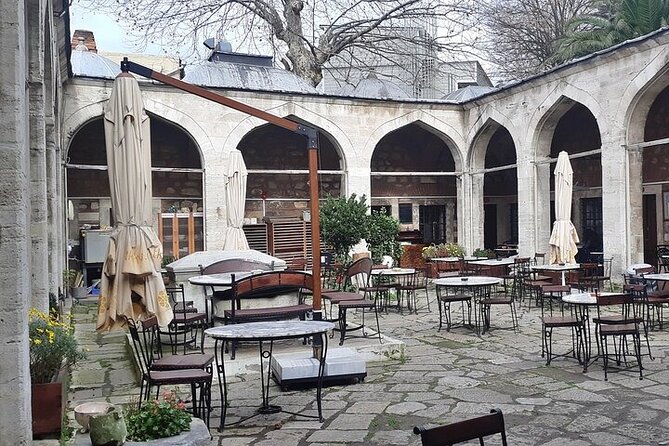
The stop at Caferaga Medresesi lasts about 30 minutes. This is a roughly 300-year-old Muslim school, now used as a center for Turkish handcraft arts. It is also where the group takes a tea break and discusses the prolific Ottoman architect associated with the site.
This is the kind of stop that gives the morning some breathing room. After the open squares and major mosques, you get a chance to sit, have tea, and talk rather than simply move from one landmark to the next. The craft setting can also make Istanbul’s artistic traditions feel more practical and immediate.
The tea stop was singled out as a favorite part of the experience by several people who enjoyed the atmospheric setting. I can see why. A short pause in a former school, surrounded by examples of Turkish handcraft, adds a human scale to a route dominated by imperial buildings.
Keep your expectations reasonable. This is not a long workshop or a dedicated craft lesson. It is a cultural pause, a chance to ask the guide questions, and a place to see examples of local arts. If you prefer a tour that never stops, this section may feel slow. If you appreciate a little quiet between major sights, it is one of the route’s best choices.
Grand Bazaar and the Sunday alternative
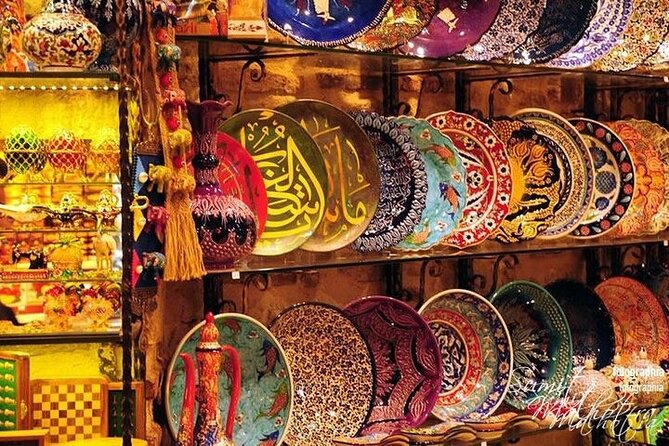
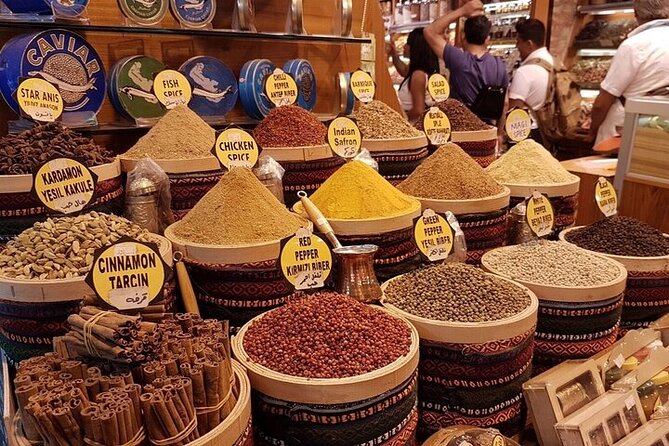
The Grand Bazaar offers about 30 minutes. With more than 500 years of history, 64 streets, 21 gates, and over 4,000 shops, it is far too large to cover in half an hour. The value of this stop is not a complete shopping expedition. It is an introduction to the market’s scale, organization, and atmosphere.
The bazaar is more than a place to buy souvenirs. It has also functioned as a manufacturing center, and its lanes reveal how trade and craft have shaped Istanbul. The guide can help you understand the difference between the main tourist paths and the less obvious corners, as well as offer advice about shopping.
Several accounts of the tour highlight practical help around the markets. Israfil has particular experience with rugs and can offer guidance if you are considering a purchase. That does not mean you must buy anything. In fact, a guide’s warnings about rushing into a purchase can be just as useful as a shop recommendation.
The Grand Bazaar is closed on Sundays. On that day, the tour visits the Spice Market instead. This is an important scheduling detail, especially if the bazaar is your main reason for booking. The Spice Market provides a different market experience, with food and spices at the center, but it is not the same as walking through the Grand Bazaar’s older network of streets and shops.
The advertised endpoint is the Grand Bazaar, while the listed route places the Basilica Cistern as the final stop. Because of that wording, confirm the exact order and ending point when you book. Either way, the route finishes in the central Old City, where you can continue exploring on foot.
The Basilica Cistern: the extra fee is worth considering

The Basilica Cistern is listed for about 25 minutes and requires a separate admission payment of 1,500 Turkish lira per person. The fee is not included in the $47.07 tour price. The instructions specify cash in Turkish lira, so plan for this before the tour begins.
The cistern dates from the sixth century and is a striking example of Roman engineering. Its underground setting gives the morning a welcome change of mood after the bright courtyards, open square, and market lanes. You will see how a water-storage structure can also become one of Istanbul’s most memorable architectural spaces.
The tour advertises skip-the-line access for the Basilica Cistern, which helps make the short 25-minute visit workable. The separate fee is high enough that you should factor it into the real cost of the experience. At the advertised tour price, the combined outlay is not simply $47.07. It is the tour price plus 1,500 Turkish lira for anyone who wants to enter the cistern.
I would still consider the admission worthwhile if you have never seen the site. The visit adds something the above-ground monuments cannot: a sense of Roman infrastructure, shadow, water, and underground scale. If you are trying to keep costs low, you can skip the cistern, but you would lose one of the most distinctive stops on the route.
The guide’s role: context, humor, and practical help

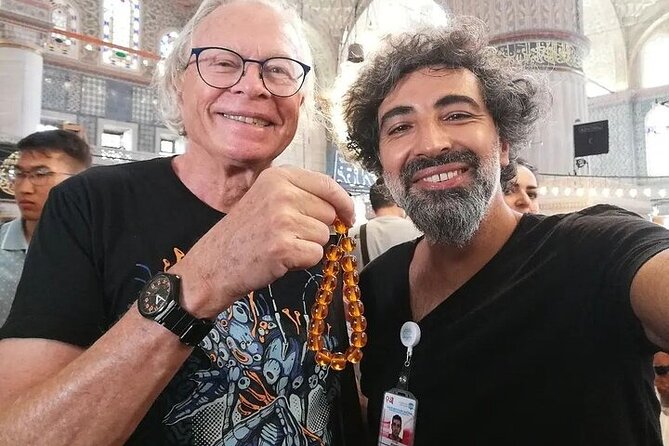
The guide can make or break a history-heavy walking tour, and Israfil is the central strength here. He is described as friendly, approachable, patient, and fluent in English, with a style that mixes historical detail, humor, and conversation.
The most useful quality is his focus on context. Instead of treating the Hippodrome, Blue Mosque, Hagia Sophia, and cistern as separate facts, he can explain how Istanbul developed through Byzantine, Roman, and Ottoman periods. That helps you understand what you are seeing rather than simply collecting names and dates.
His approach also suits mixed groups. He has been praised for answering questions about history, religion, social customs, and daily life, while adjusting to different ages and interests. Families may appreciate that he can engage younger visitors, while solo visitors can use the tour to ask for advice about the rest of their stay.
The practical side matters, too. You can ask about the bazaar, the Spice Market, rugs, local places, and directions after the tour. That sort of help is especially valuable if Istanbul is new to you and you have only a few days.
Of course, the exact experience depends on the guide assigned to your departure. The supplied information centers on Israfil, so if his involvement is important to your decision, confirm that when booking.
Who should book this Istanbul walking tour?
I would recommend it to you if you want a well-organized first look at Sultanahmet without paying for a private guide. It suits solo visitors, couples, families with older children, and anyone who prefers asking questions in a small group.
It is also a good match for visitors who want history explained in plain language. You will hear about empires, architecture, religion, and trade, but the route is not presented as a formal academic course. The tone appears conversational and practical.
You should think twice if your priority is entering Hagia Sophia with a guide. That is not part of this experience. You might also prefer another option if you want long, unhurried visits inside each monument, since the route covers several sites in a short period.
The walk requires reasonable comfort with standing and walking, though most people can participate. It is offered in English, begins at 9:30 a.m., and is generally booked about 25 days ahead, so reserve early if your dates are fixed.
Free cancellation is available up to 24 hours before the start time. Changes made inside that window are not accepted, and poor weather may lead to a different date or a full refund.
Is the $47.07 tour a good buy?
The price is fair if you value explanation, small-group attention, and a carefully linked route. The guiding fee covers the structure of the morning, but you must add the Basilica Cistern admission if you want the complete listed experience.
The strongest value comes from the guide rather than the number of monuments. You could walk past many of these buildings alone, but you would miss much of the political, religious, and architectural connection between them. The tea stop and market advice also give the tour more personality than a simple monument checklist.
For the best value, book it early in your Istanbul stay, carry 1,500 Turkish lira for the cistern, and treat the Grand Bazaar stop as an orientation rather than a full shopping session. If your visit falls on Sunday, expect the Spice Market instead.
Should you book it?
Book this tour if you want a friendly English-speaking guide, a maximum group of 10, and a compact route through Istanbul’s most important Old City sights. Israfil’s storytelling, market advice, and ability to answer questions are major reasons to choose it.
Skip it if you mainly want the inside of Hagia Sophia, a slow museum visit, or a tour with all admissions included. For most first-time visitors with limited time, though, this is a sensible and useful introduction, especially when paired with a separate visit to any site you want to explore at greater length.
FAQ
Where does the tour begin?
The tour begins at the German Fountain on At Meydanı Cd in the Sultanahmet area of Istanbul.
What time does the tour start?
The scheduled start time is 9:30 a.m.
How long does the tour last?
The experience lasts approximately three hours and 30 minutes.
What language is the tour offered in?
The tour is offered in English.
How many people can join the tour?
The group has a maximum of 10 participants.
Is Hagia Sophia visited from inside?
No. The Hagia Sophia portion is an exterior visit only because current regulations do not allow tour guides to give explanations inside.
How much is the Basilica Cistern entrance fee?
The entrance fee is 1,500 Turkish lira per person, and it is not included in the tour price. The instructions request cash in Turkish lira.
Is the Grand Bazaar visited every day?
No. The Grand Bazaar is closed on Sundays. On Sundays, the tour visits the Spice Market instead.
Recently added in Istanbul
- Two (2) Days Istanbul Old City and Two Continents Walking Tour★ 5.0 · 6 reviews
- istanbul old city private tour★ 5.0 · 19 reviews
- Private Guided Tour: Discovering Istanbul★ 4.5 · 9 reviews
- Istanbul Airport (IST) To Hotels Transfer★ 5.0 · 80 reviews
- Best Of İstanbul Europe Side In One Day★ 5.0 · 10 reviews
- historical peninsula walking tour★ 5.0 · 6 reviews
- 2 Days Cappadocia Tour from Istanbul with Optional Balloon★ 5.0 · 10 reviews
- Hagia Sophia Private Skip The Ticket line guided Tour★ 4.5 · 17 reviews
Istanbul Old City Tours, compared.

Private Turkish Bath, Massage, and Spa in Old City
Read our review →

Public, Private or VIP Hammam & Spa in Old City
Read our review →
Istanbul Turkish Mosaic Lamp Workshop in Old Town – All Included
Read our review →
Small Group Full-Day Istanbul: Old City, Bosphorus Cruise & Lunch
Read our review →
Old Town Of Istanbul Orientation – Tip Based Walking Tour
Read our review →Browse the lists this tour appears in