
Reviewed · ISTANBUL WHIRLING DERVISH SHOWS
Istanbul: Whirling Dervishes Ceremony and Mevlevi Sema
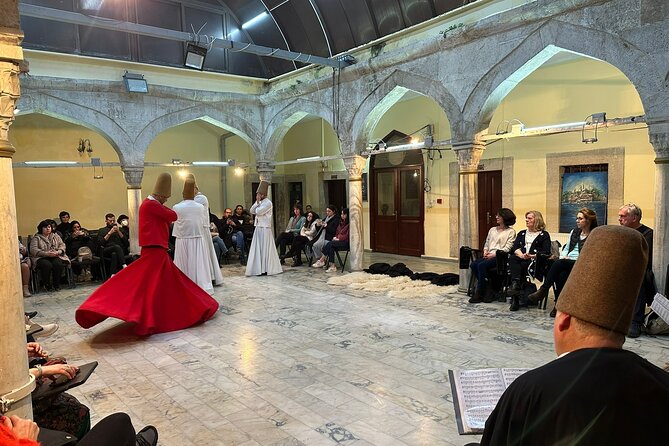
The most striking part of this Istanbul evening is the quiet focus of the dervishes as they turn in slow, controlled circles. The ceremony has roots reaching back about 800 years, and its small setting at Hoca Rüstem Medrese gives it a close, intimate feel.
I like the live music and chanting, which occupy roughly the first half of the hour, and the simple tea service before the ceremony begins. The main drawback is the lack of a spoken introduction. You get an English audio guide, but you should read about the ritual beforehand if you want to understand what you are seeing.
Key points to know before you go
- Arrive early for the best view: The hall has only about two rows of seating, and pillars can block part of the ceremony.
- Expect music before the whirling: Three musicians perform and chant for roughly 20 to 30 minutes before the dervishes enter.
- This is a religious ritual: Quiet attention is more appropriate than applause, cheering, or constant photography.
- Tea is served before the ceremony: It is a small but welcome touch, especially on a cool evening.
- Bring your own listening gear: The English audio guide works through your smartphone, so bring headphones and a charged phone.
- The setting is central and compact: The medrese is in the heart of Istanbul, near the major sights of the historic Fatih and Sultanahmet area.
What happens during the one-hour Mevlevi Sema ceremony
This is a short, focused experience rather than a full evening program. Plan on about one hour inside the hall, with the musicians taking up the opening section and the whirling dervishes following afterward.
The event begins with music, singing, and prayer-like chanting. The sound is central to the mood. You hear traditional instruments played by a small group of musicians, and the performance gradually creates the stillness needed for the ceremony.
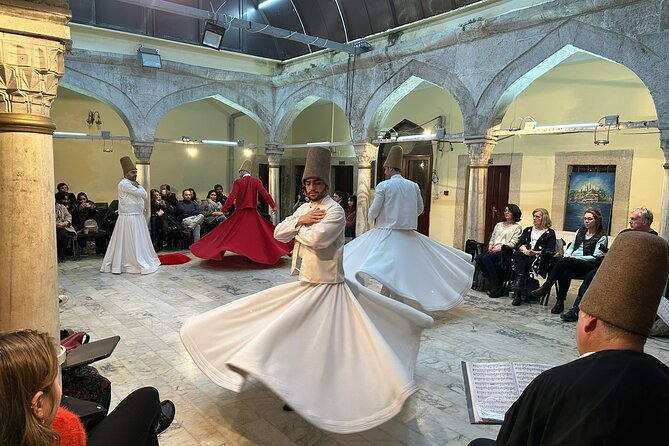
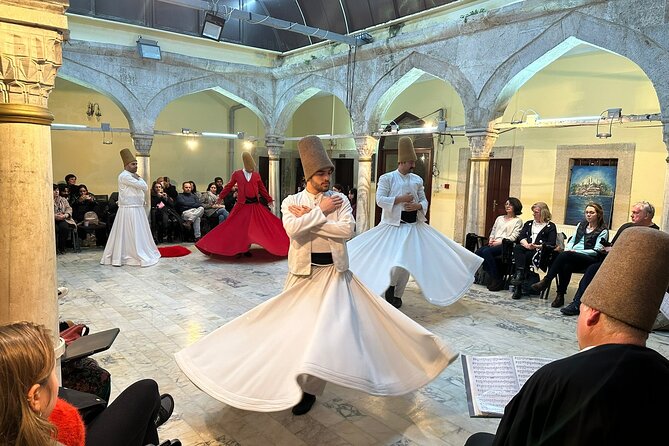
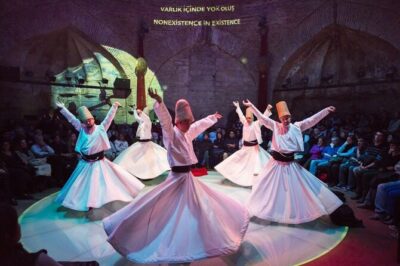
After this opening, the dervishes enter and begin the Sema. They turn with one arm raised toward the sky and the other lowered toward the earth. Their movements are measured and disciplined, not fast tricks designed to impress an audience.
The circular motion represents harmony with creation. In Mevlevi thought, turning is found throughout life and nature: day and night, summer and winter, life and death, and the movement of blood through the body. The ceremony presents the human soul as part of that larger order.
The performance is best watched without trying to follow every movement as if it were a dance lesson. I find the repeated turning most powerful when viewed as a quiet act of devotion. If you spend the hour waiting for a dramatic finale, you may find the pace slow. If you allow the music and repetition to set the rhythm, the hour can feel remarkably still.
More Whirling Dervish Ceremonies:
- Istanbul: Hodjapasha Whirling Dervishes Show & Exhibition
★ 4.4 · 4,790 reviews - Istanbul: Whirling Dervish Ceremony next to Hagia Sophia
★ 4.5 · 906 reviews - Istanbul Hodjapasha Whirling Dervishes Show & Exhibition
★ 4.0 · 503 reviews
Why the robes, hats, and turning matter
A little preparation makes a big difference here. The ceremony can be beautiful on its own, but the symbols give the movements a clearer purpose.
The dervishes first appear in dark cloaks. These represent death or the old self. When the cloaks are removed, the white robes suggest birth or a new spiritual state. The tall felt hats represent tombstones, specifically the burial of the ego.
The raised right hand is associated with receiving divine grace, while the lowered left hand represents passing that grace on to humanity. The turning is not simply a display of balance. It represents the soul moving toward divine love and unity with God.
The name Mevlevi comes from Mevlana Jelaleddin Rumi, the philosopher and poet linked with the order. The tradition grew from a Sufi understanding of love, discipline, and spiritual practice. Its students once had to complete demanding work in the monastery, including cooking, cleaning, and other daily tasks, before they could progress in the order.
This background is not explained in much detail inside the hall. That is the main weakness of the program. You can use the English audio guide on your phone, but the atmosphere is easier to appreciate if you read a short introduction before arriving.
Inside Hoca Rüstem Medrese
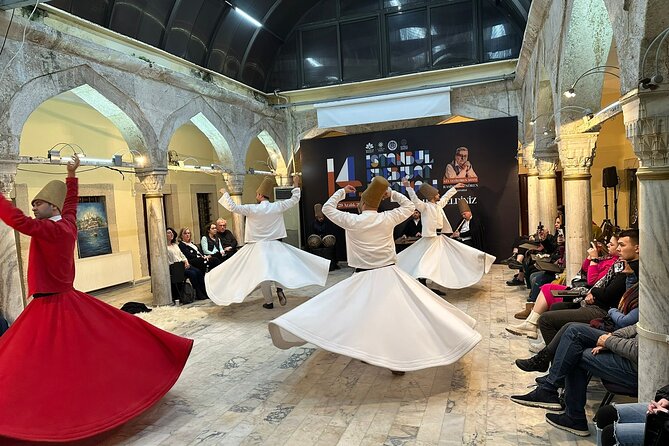
The venue is one of the reasons this experience works. The ceremony takes place in a historic medrese, or religious school, in central Istanbul. The small room feels suited to a private ritual rather than a large theatrical production.
Seating is limited and close to the performance area. Several people have found that arriving 30 to 40 minutes early still does not guarantee the front row, so I would not treat the stated 15-minute arrival time as a target if the view matters to you.
There are only a couple of rows, and a pillar can interfere with your view from some seats. The room is generally comfortable, but it can feel crowded when every place is filled. If you sit at the back, you may have a wider view of the full turning pattern, though you will be farther from the musicians and dervishes.
The venue is easy to combine with sightseeing in the historic center. It is described as being in the heart of Istanbul, in the Fatih and Sultanahmet area, close to major attractions. Still, allow time to locate the entrance. One visitor found the venue difficult to spot in the surrounding streets, while others found the meeting point easy to reach.
Before the ceremony, tea is served to early arrivals. This is not a full hospitality program, but it gives you something warm while you wait and helps create a calm transition from the busy streets outside.
The music is half the experience
It would be a mistake to think of the opening music as filler. The musicians set the tone for the entire Sema.
The program includes traditional instrumental music, singing, and chanting. The opening can last around 20 to 30 minutes, followed by roughly 30 minutes of whirling. The exact timing may vary, but the structure is clear: music first, ceremony second.
The small group of musicians makes the sound feel direct and personal. You are not watching a large concert with elaborate staging. You are sitting close to a handful of performers in a modest historic room.
This also explains why the ceremony may not suit everyone. There are no changing sets, commentary, or theatrical effects. The repetition is part of the purpose. I would choose this for atmosphere, cultural context, and quiet observation, not for fast entertainment.
Photography can be awkward. The dim room and the turning movement make sharp pictures difficult, and side lighting at both ends of the hall can distract from the ceremony. More important, constant phone use can disturb the mood for people around you. Take a few photographs discreetly, then put the phone away.
A different side of Istanbul on the same trip:
- Istanbul: Bosphorus Dinner Cruise & Show with Private Table
★ 4.8 · 44,561 reviews - Istanbul: Daytime or Sunset Sightseeing Cruise & Audio Guide
★ 4.8 · 14,430 reviews - Istanbul: Bosphorus Dinner Cruise with Turkish Night Show
★ 4.8 · 10,127 reviews - Best of Istanbul 1, 2 or 3-Day Private Guided Istanbul Tour
★ 5.0 · 8,922 reviews
A religious ceremony, not a staged dance show
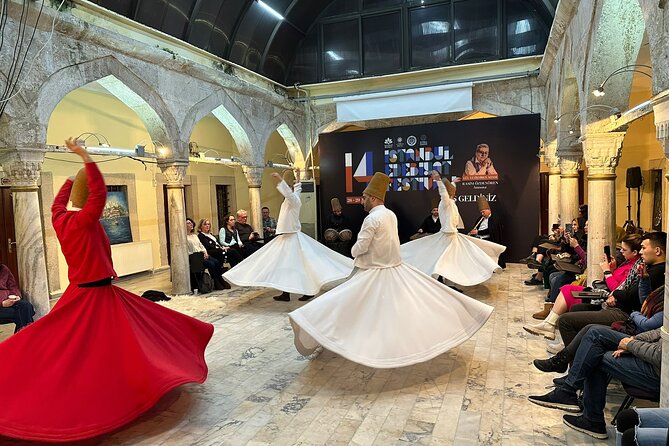
The event is presented for visitors, but its form is based on a Sufi religious practice. That distinction matters.
You may notice applause at the end, but it is best to hold back unless the host clearly invites it. The ceremony calls for quiet attention, and treating it like a standard dance performance can feel out of place.
You do not need to be Muslim or familiar with Sufism to attend. The ceremony is open to anyone interested in Turkish culture and religious heritage. You should simply enter with respect. Dress modestly, keep conversations low, silence your phone, and avoid moving around during the turning.
The dervishes are not there to explain their own movements while they perform. That is why the experience feels genuine to some people and incomplete to others. You receive the ritual itself, but not a detailed lesson from a guide inside the room.
The English audio guide helps fill that gap. It is available through your smartphone, and you should bring headphones so you can listen without disturbing anyone. Since the audio guide is separate from the live ceremony, use it before or after the performance rather than trying to listen while the music is underway.
How to get the best seat and clearest view
Your arrival time has a direct effect on the experience. The formal instruction is to be at the hall 15 minutes before the start, but arriving earlier is the better plan.
Early arrival gives you time to find the entrance, collect yourself, accept tea, and choose a seat. It also reduces the risk of ending up behind a pillar or several rows of people. Some early arrivals still missed the front row, which tells you that the hall is genuinely small and seating is limited.
If you want to study the dervishes’ footwork, sit as close as possible. If you want to see the shape of the entire ceremony, a rear seat can offer a wider view. The room is compact enough that even a less-than-perfect position should let you follow the main action, but your sightline will matter for photography.
The ceremony starts on time, so do not count on a flexible entrance after the music begins. A late arrival would be especially disruptive in such a quiet room.
Is $23 a fair price?
At about $23 per person, this is a reasonably priced cultural activity in central Istanbul. The ticket covers the one-hour ceremony and access to the English audio guide. You also receive tea if you arrive early enough for the service.
The value comes from the setting, the live musicians, and the chance to see the Sema in a compact historic venue. You are not paying for transport, a meal, or a long guided tour. That keeps the price low, but it also means you should not expect hotel pickup, an in-depth lecture, or a large production.
For comparison, the experience makes most sense as a focused evening stop between visits to Istanbul’s historic sights. It is short enough to fit into a busy day, and the central location means you do not lose hours traveling across the city.
Free cancellation is available up to 24 hours before the start time, and you can reserve now and pay later. That is useful if your Istanbul schedule is still changing. The activity is also listed as wheelchair accessible, though the supplied information does not explain the exact seating arrangement or route inside the medrese, so you may want to confirm details when booking.
Who will enjoy this most
I would recommend this ceremony to anyone who wants a quieter cultural experience beyond mosques, palaces, and market streets. It is especially suitable if you are curious about Sufism, Turkish musical traditions, or the symbolic side of religious practice.
It also works well for couples, older family members, and visitors who prefer a short evening activity. The one-hour length is manageable, and the hall provides seating throughout.
You may not enjoy it as much if you want an explanatory tour, a large stage show, or a performance with constant movement. The lack of a spoken introduction is the clearest limitation. You will get more from the ceremony if you read about Rumi, the Mevlevi order, and the meaning of the costumes before you arrive.
Families with older children may find it worthwhile if the children can sit quietly. Very young children may struggle with the slow pace and the expectation of silence, though the short duration helps.
Practical details for a smoother visit
The host or greeter speaks English, and the audio guide is also in English. The ticket includes the ceremony, but not hotel pickup or drop-off, so you must make your own way to Hoca Rüstem Medrese.
Bring:
- A charged smartphone
- Headphones for the audio guide
- Your booking details
- A few extra minutes to find the entrance and choose a seat
The ceremony is held in a small hall, so comfortable seating and a clear view matter more than any elaborate preparation. Tea is offered before the start, especially to people who arrive with time to spare.
The hosts, including Kadir on some occasions, have been helpful with directions and practical advice. Still, the event is not a guided tour. Think of the staff as there to welcome you and keep the program running, rather than to provide a long cultural lecture.
Should you book the Whirling Dervishes ceremony?
Book it if you want to see a traditional Sema ceremony in an intimate Istanbul setting and are willing to prepare yourself with a little reading. The music, small hall, tea service, and controlled turning make this a memorable one-hour addition to a day in the historic center.
Skip it if you want detailed live explanations or a conventional dance performance. You will not receive much commentary inside the hall, and the slow, repeated movements require patience.
For most visitors who approach it respectfully, the $23 price is fair. Arrive well before the required 15 minutes, sit quietly, use the audio guide before or after the performance, and let the ritual unfold at its own pace.
FAQ
How long does the Whirling Dervishes ceremony last?
The ceremony lasts one hour.
Where does the ceremony take place?
It takes place at Hoca Rüstem Medrese in the heart of Istanbul, in the Fatih and Sultanahmet area.
What is included in the ticket?
The ticket includes entry to the Whirling Dervishes ceremony and access to an English audio guide app on your smartphone.
Is hotel pickup included?
No. Hotel pickup and drop-off are not included, so you must travel to the venue yourself.
What should I bring?
Bring headphones and a charged smartphone for the audio guide.
How early should I arrive?
You must be at the hall 15 minutes before the ceremony starts. Arriving earlier is recommended because seating is limited and the best views can fill quickly.
Is the audio guide available in English?
Yes. The audio guide is available in English.
Is the venue wheelchair accessible?
Yes. The activity is listed as wheelchair accessible.
Can I cancel my booking?
Yes. You can cancel up to 24 hours in advance for a full refund. You can also reserve now and pay later.
Recently added in Istanbul
- Two (2) Days Istanbul Old City and Two Continents Walking Tour★ 5.0 · 6 reviews
- istanbul old city private tour★ 5.0 · 19 reviews
- Private Guided Tour: Discovering Istanbul★ 4.5 · 9 reviews
- Istanbul Airport (IST) To Hotels Transfer★ 5.0 · 80 reviews
- Best Of İstanbul Europe Side In One Day★ 5.0 · 10 reviews
- 2 Days Cappadocia Tour from Istanbul with Optional Balloon★ 5.0 · 10 reviews
- Hagia Sophia Private Skip The Ticket line guided Tour★ 4.5 · 17 reviews
- historical peninsula walking tour★ 5.0 · 6 reviews
Istanbul Whirling Dervish Shows, compared.
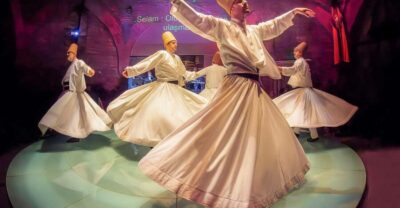
Hodjapasha Whirling Dervishes Show & Exhibition
Read our review →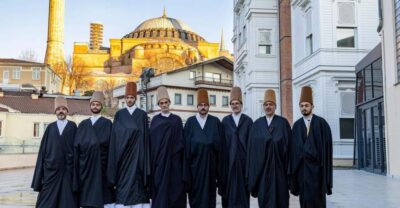
Istanbul Hodjapasha Whirling Dervishes Show & Exhibition
Read our review →
Istanbul Traditional Turkish Dinner and Dervish Experience
Read our review →
Whirling Dervish Ceremony: Go on a Spiritual Journey
Read our review →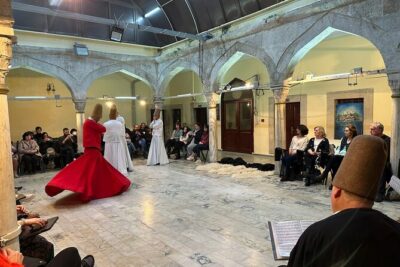
Istanbul Whirling Dervish Ceremony, A Mystical Sufi Experience
Read our review →Traditional Turkish Dinner and Dervish Experience
Read our review →Browse the lists this tour appears in