
Reviewed · ISTANBUL WHIRLING DERVISH SHOWS
Istanbul Hodjapasha Whirling Dervishes Show & Exhibition
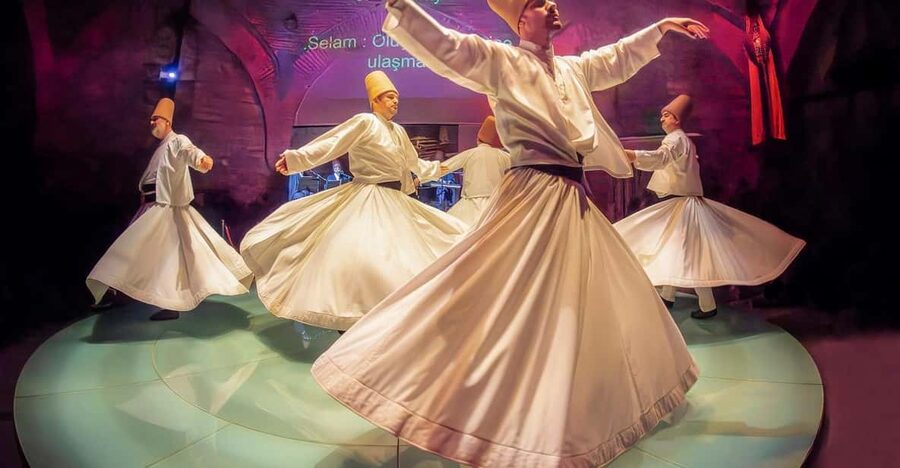
The striking thing about the Hodjapasha Whirling Dervishes experience is that it is a religious ceremony, not a stage dance show. Dervishes perform the slow, disciplined whirling as part of Sufi worship, while music, chanting, bows, and low light create a quiet, focused mood.
I like the small venue, where you sit close enough to see each movement clearly, and I like the exhibition that explains Rumi, Sufism, and the meaning of the ritual. The central location near Istanbul’s restaurants, cafés, Spice Market, and tram line makes this an easy evening plan.
The main caution is simple: the ceremony is repetitive and meditative. If you expect a lively performance with changing choreography, you may find the hour slow, especially with young children.
Key points before you book
- This is a spiritual ceremony, not an entertainment show: Expect prayer, music, bowing, and sustained whirling rather than a varied dance performance.
- Arrive early for the exhibition: The foyer explains Sufi traditions, Rumi poetry, and each stage of the ceremony.
- The venue is small and intimate: Assigned seating puts you close to the performers, though the compact room may feel tight.
- Photography and applause are not allowed: Treat the event as worship observed respectfully, not as a concert.
- The location works well with other sights: Hodjapasha is near the Spice Market, public transport, cafés, and restaurants.
- The $32 price buys more than a seat: Admission includes the exhibition, a multilingual booklet, and bottled water, with free cancellation up to 24 hours before the start.
What the Hodjapasha ceremony really is
The word show can set the wrong expectation. At Hodjapasha, you are watching a staged public presentation of a Sufi religious ceremony, but the tone is solemn and devotional rather than theatrical.
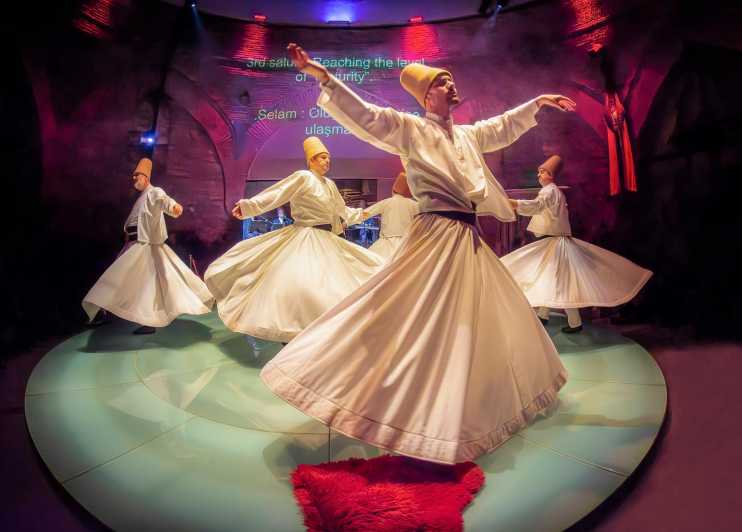
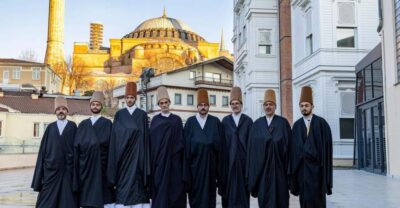
The whirling dervishes, also called Mevlevi dervishes, turn in a controlled pattern with one hand raised and the other lowered. The movement represents spiritual focus and devotion, but you do not need to share the faith to appreciate the concentration involved.
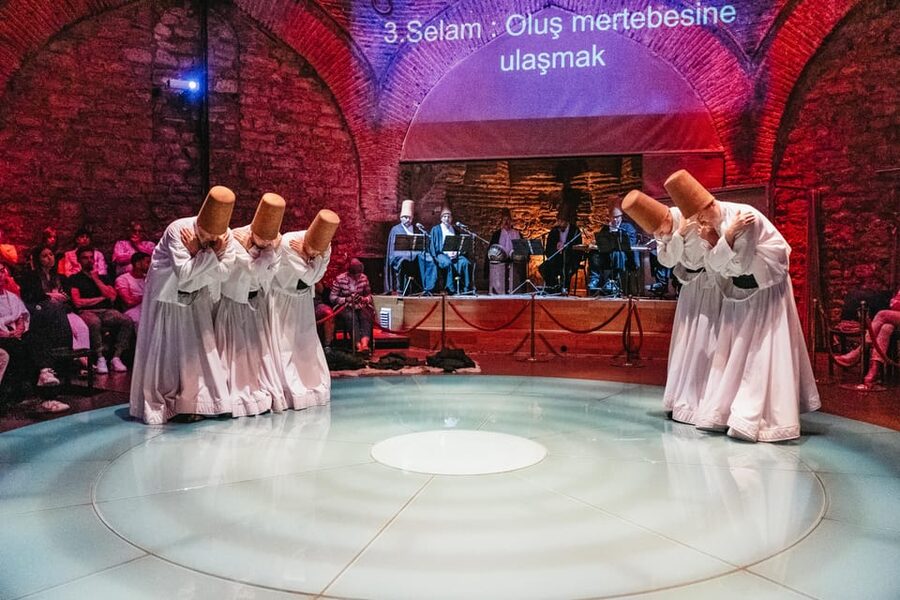
The ceremony includes traditional music and singing, along with repeated bows and periods before the whirling begins. Some of the hour may pass before the main turning starts, so settle in rather than expecting constant movement from the opening minute.
I found the best way to approach this is as a cultural and religious encounter. You are not being asked to clap along or react loudly. You are being asked to watch carefully, listen, and allow the quiet pace to make sense.
That distinction explains the divided response to the experience. People who enjoy stillness, ritual, and cross-cultural learning often find it moving. People looking for a fast, colorful evening performance may find it tedious.
More Whirling Dervish Ceremonies:
- Istanbul: Hodjapasha Whirling Dervishes Show & Exhibition
★ 4.4 · 4,790 reviews - Istanbul: Whirling Dervishes Ceremony and Mevlevi Sema
★ 4.3 · 1,694 reviews - Istanbul: Whirling Dervish Ceremony next to Hagia Sophia
★ 4.5 · 906 reviews
Entering the old Hodjapasha venue
The performance takes place at the Hodjapasha Cultural Centre in the Hoca Paşa area of Fatih. The address is Hoca Paşa Mahallesi Ankara Caddesi, Hoca Paşa, Hocapaşa Hamamı Sokak No. 3, and the venue is close to public transportation.
The building sits in a central part of Istanbul with restaurants and cafés nearby. The Spice Market is also close, so you can combine the ceremony with an early meal, a market visit, or a walk through the surrounding streets.
Finding the entrance can take a little care. The venue is on a smaller alley rather than directly on the main street, and a taxi may stop on Ankara Caddesi instead of at the door. I would use the full address, allow extra time, and avoid arriving at the last moment.
The area is well suited to an evening outing. After the ceremony, you can step back into a lively food district, or walk toward the Spice Market and tram connections. You do not need to build a separate day around this one-hour activity.
Start with the exhibition, not the seats
The foyer exhibition is one of the most useful parts of the visit. It introduces Sufi traditions, Rumi poetry, and the background of the whirling dervishes before you enter the ceremony space.
I recommend spending at least 20 minutes here if you can. The displays give you a basic framework for the bows, music, clothing, and whirling, so the ceremony feels less like a sequence of unexplained movements.
Information about the ritual is also presented through projected slides and illuminated explanations during the ceremony. That helps you follow the different stages without turning the event into a spoken tour.
The exhibition matters because the ceremony is not self-explanatory. Without context, you may see men turning in circles for a long time. With some preparation, you can recognize a structured form of prayer and understand why repetition is central.
A multilingual booklet is included with admission. It is useful if you want something brief to read before or after the presentation, though the displays are the main source of background information at the venue.
The one-hour performance, step by step
The ceremony begins in a restrained manner, with traditional music, singing, and formal movement. You may see bows and other gestures before the whirling begins, so do not judge the experience during the first few minutes.
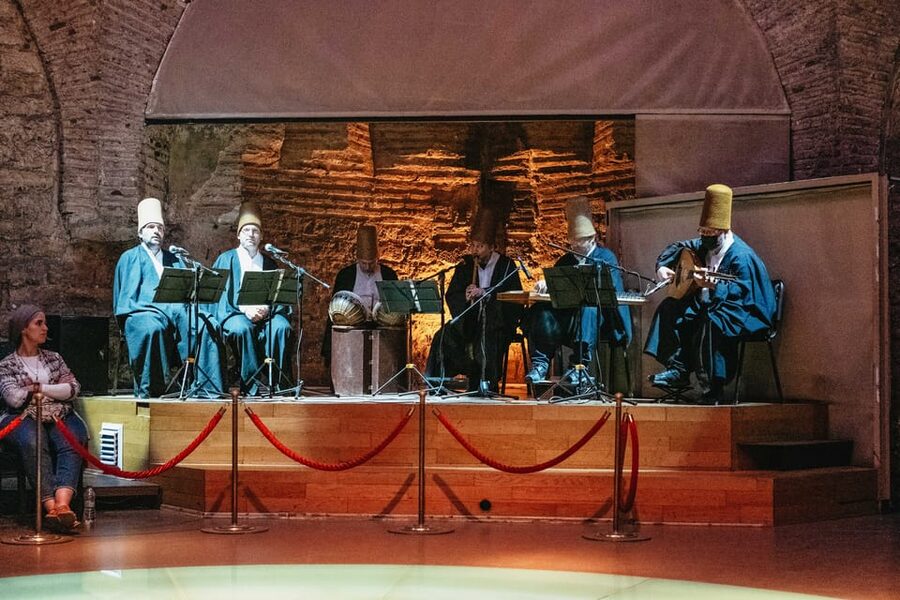
The musicians and singers are an important part of the atmosphere. The sound is soft and traditional, with a calm quality that supports the meditative pace. The lighting is designed for concentration rather than spectacle.
When the dervishes begin to turn, the effect is unusual. The movement is repetitive, but the discipline is impressive. They maintain a steady rotation and posture for an extended period, creating a scene that can feel peaceful, solemn, or almost dreamlike.
You sit close to the performance area, and assigned seating means you do not need to compete for a good place once you are inside. The intimate room also lets you see small details in the performers’ expressions and movements.
The presentation lasts about one hour. That is long enough to understand the ceremony, but it can feel long if you prefer changing scenes or active narration. Some people may find the low light, gentle music, and steady motion soothing enough to become sleepy.
There is no need to applaud at the end. The request for silence reinforces the fact that this is not a conventional dance program. It also gives you a chance to leave without breaking the reflective mood.
More Museums in Istanbul:
- Istanbul: Hagia Sophia Skip-the-Line Ticket & Museum Option
★ 3.7 · 4,958 reviews - Istanbul: Topkapi Palace & Harem Museum Ticket & Audio Guide
★ 4.1 · 3,977 reviews - Istanbul: Topkapi Palace and Harem Museum Tour with Ticket
★ 4.7 · 247 reviews - Istanbul: Hagia Sophia Mosque and Museum Skip-The-Line Combo
★ 4.5 · 136 reviews
Why the repetition matters
The main physical act is repeated whirling, and that repetition is not a flaw in the ceremony. It is central to the practice. The focus, balance, and endurance required to continue turning make the performance more about discipline than variety.
I would compare it less with a folk dance and more with watching a formal prayer or meditation. You are not waiting for a dramatic climax. You are watching a process unfold at a measured pace.
That may sound abstract, so here is the practical test: if you can spend an hour observing a single ritual without needing constant explanation, you are likely to appreciate the experience. If you need jokes, storytelling, or frequent changes in movement, choose a more conventional cultural performance.
The ceremony can work for people of many religious backgrounds. You do not have to be Muslim, or religious at all, to respect what you are seeing. The value comes from observing another form of devotion and learning how movement, music, and poetry can work together.
A small venue with close assigned seating
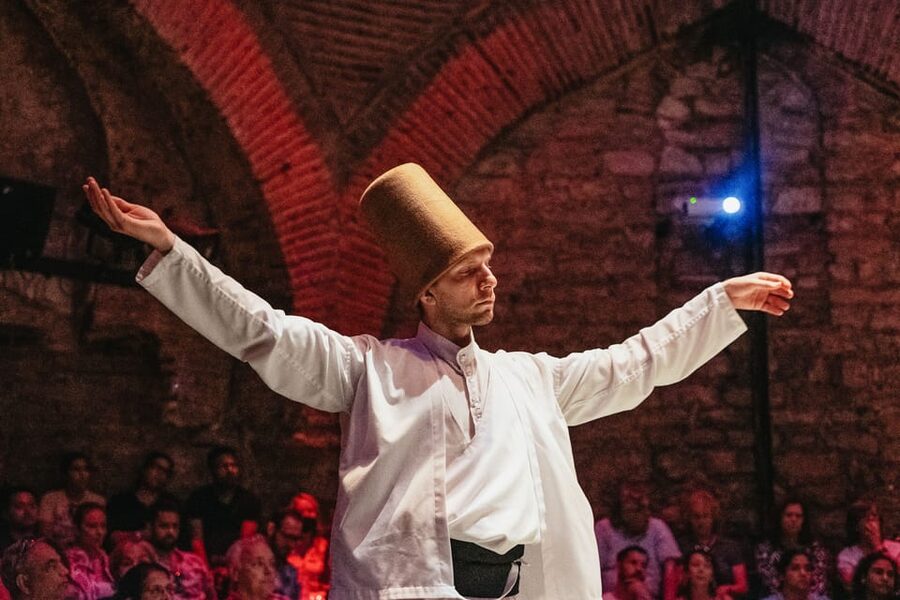
Hodjapasha is not a large auditorium. The space feels compact and intimate, with seating close to the performance area. That is a plus if you want to observe the ritual clearly, but it may feel crowded if you prefer extra room.
Assigned seating removes one common source of stress. You can arrive, find your place, and focus on the exhibition or ceremony without rushing to claim a particular chair.
The size also affects the atmosphere. You are not watching from a distant balcony or through a large production setup. The performers feel nearby, and the room’s low light and quiet sound make the event feel private despite the public audience.
The venue can hold up to 170 people, though the actual room may feel smaller depending on the arrangement. If you are sensitive to tight seating, keep the compact layout in mind before booking.
Children aged seven and older may attend, and most people can participate. Still, I would be selective with younger family members. The slow rhythm, no-applause rule, and repeated turning may not hold the attention of children who expect a lively show.
The no-camera rule is part of the experience
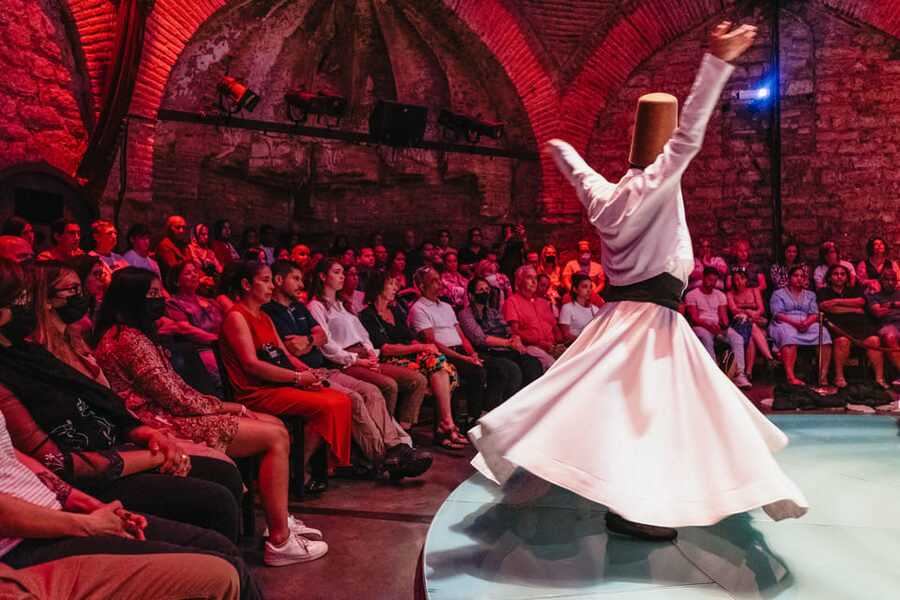
Photography and video are not allowed during the ceremony, and applause is also discouraged. These rules are not minor technical restrictions. They protect the quiet setting and show respect for the devotional nature of the event.
You may want a photograph as a souvenir, but you will need to leave your phone alone once the ceremony starts. That can feel restrictive at first, yet it also removes the usual pressure to record every moment.
I like the way this changes your attention. Instead of watching through a screen, you can notice the music, the pace of the bows, and the steady movement of the performers.
The rule also helps explain why this experience feels different from a tourist dance performance. The audience is present, but the ritual is not built around audience reaction.
Is $32 a fair price?
At $32 per person, this is not the cheapest way to spend an hour in Istanbul, but the price is reasonable if you value cultural context. Admission includes the ceremony, the foyer exhibition, a multilingual booklet, and bottled water.
The exhibition adds real value. Without it, you would be paying mainly for a seat at a one-hour performance. With it, you receive an introduction to Sufi traditions and Rumi poetry that helps explain what you see.
The central location also saves time and transport costs. You can pair the event with the Spice Market, nearby cafés, or dinner in the Hoca Paşa area rather than crossing the city just for a short presentation.
I would not pay $32 expecting a polished theatrical production. The lighting and sound are organized, but the appeal comes from the ritual rather than elaborate staging, costumes, or dramatic set pieces.
The cost makes the most sense for a first-time introduction to whirling dervishes, especially if you have limited time in Istanbul and want a convenient cultural experience. If you have already attended a similar ceremony or dislike slow religious presentations, the value is weaker.
How to plan your evening
Book in advance if you want a particular date. Admission is confirmed at booking, and the experience is commonly reserved about 17 days ahead, so waiting until the last day may not be wise during a busy visit.
Use public transportation or walk from nearby sights when possible. The venue is near transit, but taxi access can be awkward because vehicles may stop on the main road rather than in the small alley by the entrance.
Plan to arrive early enough to find the doorway and read the exhibition. I would allow at least 20 minutes for the displays, plus extra time for the address and alley entrance.
Do not plan a large meal inside the venue. Food is not included, but that is easy to solve because the surrounding area has many restaurants and cafés. Bottled water is included.
The activity begins and ends at Hodjapasha. There is no hotel pickup or drop-off, so you are responsible for reaching the centre and returning to your hotel afterward.
Free cancellation is available if you cancel at least 24 hours before the start time. Changes or cancellations made inside that 24-hour window are not accepted for a refund, and the cut-off follows local Istanbul time.
Who will enjoy this most?
I would recommend Hodjapasha to you if you like:
- Religious ceremonies and cultural traditions
- Rumi, Sufi thought, or Turkish history
- Live traditional music
- Quiet, reflective performances
- Small venues with close views
- Cultural activities that do not depend on spoken English
The experience is offered in English, but it is not a guided lecture. Much of the learning comes from the exhibition, booklet, projected explanations, and the ritual itself.
I would be cautious about booking it for restless children, anyone expecting an energetic dance show, or anyone who dislikes repetitive movement. The one-hour length is manageable, but the pace never turns into a fast entertainment program.
The ceremony also suits a mixed group. One person can approach it as religious observation, another as cultural history, and another as music and movement. You do not need identical reasons for attending.
Should you book the Hodjapasha Whirling Dervishes experience?
Book it if you want to understand the spiritual side of Istanbul rather than simply watch another dance performance. Arrive early for the exhibition, read enough about Sufism and Rumi to follow the ceremony, and treat the hour with quiet respect.
Skip it if you want comedy, storytelling, changing choreography, or audience participation. The strongest reason to attend is not excitement. It is the chance to sit close to a solemn ritual and observe the focus behind an unusual form of prayer.
For many people, this becomes one of Istanbul’s most memorable cultural stops. For others, it is simply a box to check. At $32, the best way to make it worthwhile is to know exactly what you are booking: a carefully presented spiritual ceremony, supported by live music and useful context, not a theatrical whirl of nonstop action.
FAQ
How long does the Hodjapasha Whirling Dervishes experience last?
The ceremony lasts approximately one hour. The foyer exhibition is available before the performance, and you should allow extra time to read the displays.
Where does the ceremony take place?
It takes place at Hodjapasha Cultural Centre, Hoca Paşa Mahallesi Ankara Caddesi, Hoca Paşa, Hocapaşa Hamamı Sokak No. 3, in Istanbul’s Fatih district.
Is hotel pickup included?
No. Hotel pickup and drop-off are not included. You must make your own way to the meeting point, and the activity ends there.
Are children allowed?
The minimum age is seven. Most people can participate, but the slow and repetitive format may not suit children who need an active performance.
Can I take photos or videos?
No. Photography and video are not allowed during the ceremony, and applause is also discouraged because the presentation is treated as a spiritual experience.
Is food included?
No food is included. Bottled water and a multilingual booklet are included with admission.
Can I cancel for a refund?
Yes, you can cancel for a full refund if you do so at least 24 hours before the experience begins. Cancellations or changes made less than 24 hours before the start time are not accepted for a refund.
More Shows and Performances in Istanbul
- Istanbul: Bosphorus Dinner Cruise & Show with Private Table
★ 4.8 · 44,561 reviews - Istanbul: Bosphorus Dinner Cruise with Turkish Night Show
★ 4.8 · 10,127 reviews - Istanbul: Bosphorus Cruise with Dinner Show
★ 4.4 · 2,181 reviews - Bosphorus Dinner Cruise with Show and Private Table
★ 4.5 · 2,021 reviews
Recently added in Istanbul
- Two (2) Days Istanbul Old City and Two Continents Walking Tour★ 5.0 · 6 reviews
- istanbul old city private tour★ 5.0 · 19 reviews
- Private Guided Tour: Discovering Istanbul★ 4.5 · 9 reviews
- Istanbul Airport (IST) To Hotels Transfer★ 5.0 · 80 reviews
- Best Of İstanbul Europe Side In One Day★ 5.0 · 10 reviews
- 2 Days Cappadocia Tour from Istanbul with Optional Balloon★ 5.0 · 10 reviews
- Hagia Sophia Private Skip The Ticket line guided Tour★ 4.5 · 17 reviews
- historical peninsula walking tour★ 5.0 · 6 reviews
Istanbul Whirling Dervish Shows, compared.
Hodjapasha Whirling Dervishes Show & Exhibition
Read our review →
Istanbul Traditional Turkish Dinner and Dervish Experience
Read our review →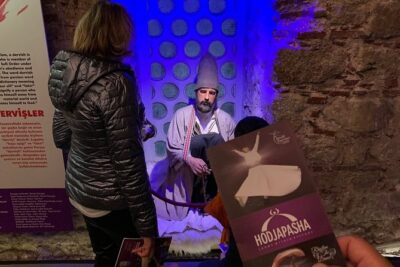
Whirling Dervish Ceremony: Go on a Spiritual Journey
Read our review →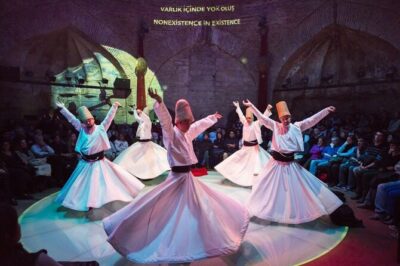
Istanbul Whirling Dervish Ceremony, A Mystical Sufi Experience
Read our review →Traditional Turkish Dinner and Dervish Experience
Read our review →Browse the lists this tour appears in