
Reviewed · ISTANBUL WHIRLING DERVISH SHOWS
Istanbul: Hodjapasha Whirling Dervishes Show & Exhibition
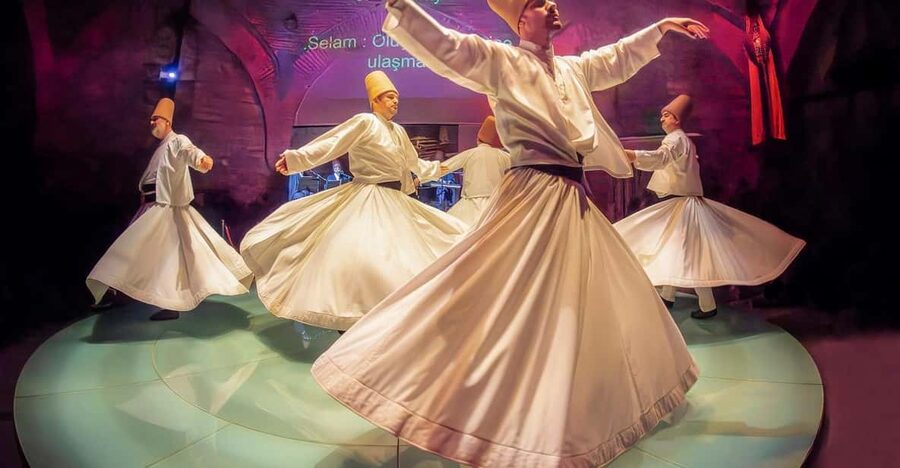
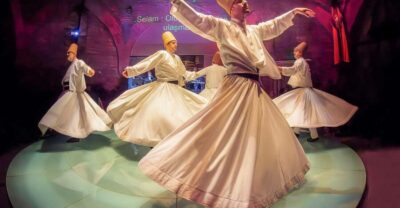
The most striking thing here is that the whirling dervishes are performing a religious ceremony, not a theatrical dance built for applause. In the old HodjaPasha bathhouse, live ney flute, oud, kanun, percussion, and voices echo through the domed room while the dervishes turn in carefully controlled circles.
I like two things right away: the historic setting gives the hour a real sense of place, and the music is a major part of the experience rather than background noise. The small exhibition and booklet also help you understand the Sufi ideas behind the movements.
The main drawback is simple: an hour can feel expensive at $32 if you want a full lecture or a large-scale performance. Seating is close together, some chairs are uncomfortable, and the ceremony requires silence, no photographs, and no applause.
Key points to know before booking
- A ceremony, not a stage spectacle: The Mevlevi Sema follows a spiritual sequence connected with the soul’s journey toward divine love.
- A 550-year-old venue: The HodjaPasha Culture Center occupies a restored Ottoman Turkish bath near Sirkeci.
- Live traditional music: Expect vocals, ney, oud, kanun, and Ottoman-era percussion before and during the Sema.
- Arrive early: The foyer exhibition explains the ritual, and late arrivals can distract people once the ceremony begins.
- Seats are assigned by booking order: Booking early may help, but it does not guarantee a particular row.
- Strict house rules: No photography, talking, or applause is allowed inside during the performance.
Why the Mevlevi Sema feels different from a dance show
I would set your expectations before you go. The word show appears in many booking descriptions, but this is better understood as a compact presentation of a religious ritual. The whirling is the part most people picture, yet the ceremony also includes prayer, chanting, music, formal entrances, and pauses.
The Mevlevi order grew from the teachings associated with Jalal al-Din Rumi, the celebrated 13th-century Persian poet and Sufi mystic. The ceremony represents humanity’s spiritual ascent through thought and love. You do not need to know Sufi theology to appreciate it, but a little context changes what you see.
The dervishes do not simply spin for entertainment. Their turning has a formal meaning, and every part of the ceremony has a place. The calm faces, flowing white garments, and controlled movement create a quiet mood that can feel almost meditative.
That mood is also why you must not treat the event like a normal dance performance. No applause breaks the music. Phones should be off, voices should be silent, and cameras must stay away. I see the no-photo rule as a benefit, even if you may wish for one picture afterward. It keeps the room focused.
More Whirling Dervish Ceremonies:
- Istanbul: Whirling Dervishes Ceremony and Mevlevi Sema
★ 4.3 · 1,694 reviews - Istanbul: Whirling Dervish Ceremony next to Hagia Sophia
★ 4.5 · 906 reviews - Istanbul Hodjapasha Whirling Dervishes Show & Exhibition
★ 4.0 · 503 reviews
Entering the old HodjaPasha bathhouse
The venue is about 100 meters from the Sirkeci Tram Stop, making it easy to reach from the central historic district. You enter the HodjaPasha Culture Center and climb to the performance area. One useful warning: the venue has many steps, so it is not suitable for wheelchair users.
The building itself is part of the reason to book. This is a restored 550-year-old Ottoman Turkish bath, with a central domed space that gives the music a soft, lingering echo. The room is intimate rather than grand. You are close enough to see the dervishes’ footwork and the musicians’ instruments.
Before taking your seat, spend time with the small exhibition in the foyer. Panels and artifacts explain the Mevlevi tradition, the meaning of the Sema, and some of the ceremony’s symbols. The program booklet adds more background, though it is not a substitute for a live guide or detailed talk.
If you arrive only a few minutes before the start, you may have to choose between reading the exhibition and getting seated. I recommend arriving early. It gives you time to understand the setting, find the room without rushing, and settle into the silence before the musicians begin.
The opening Turkish music concert
The program begins with classical Turkish music. This is not a throwaway introduction while people find their chairs. The musicians set the tone for everything that follows.
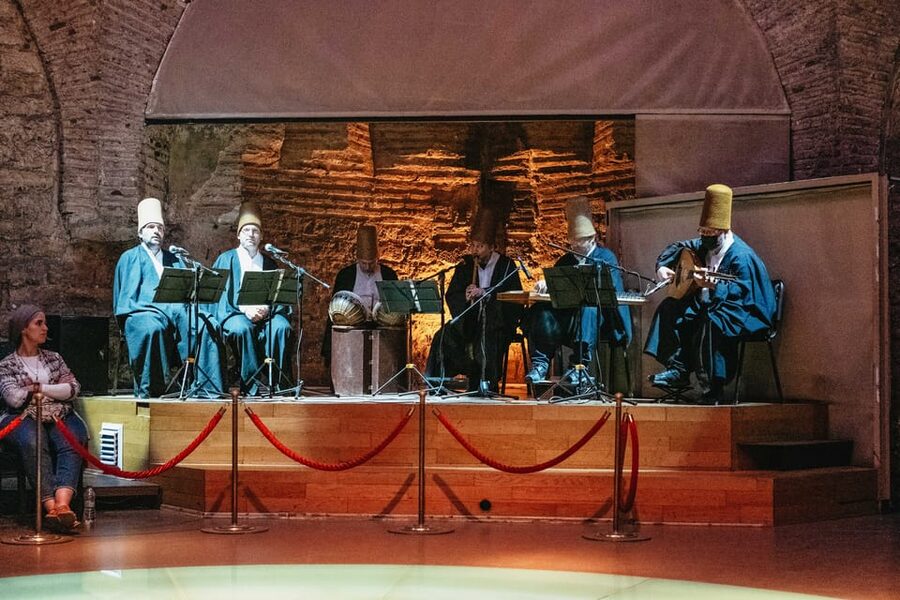
The ensemble can include two vocalists, a traditional drummer, ney, oud, and kanun. The ney is especially important to the atmosphere. Its breathy, plaintive sound carries through the stone room, and the acoustics give each phrase room to linger.
You may also hear improvisational passages and traditional maqam-based music. The music is subtle, with ornamented melodies rather than the quick beats of a dance performance. If you enjoy instrumental music, this first section may be one of the strongest parts of the hour.
This is also where the $32 price starts to make more sense. You are not paying only for several people spinning in white skirts. You are getting live music in a historic room, along with a short cultural exhibition and a complete ceremonial sequence.
Still, value depends on your interests. If you want a narrated lesson, a large production, or frequent visual changes, the opening music may feel too quiet. If you enjoy traditional instruments and patient listening, it gives the ceremony a proper foundation.
The dervishes take their places
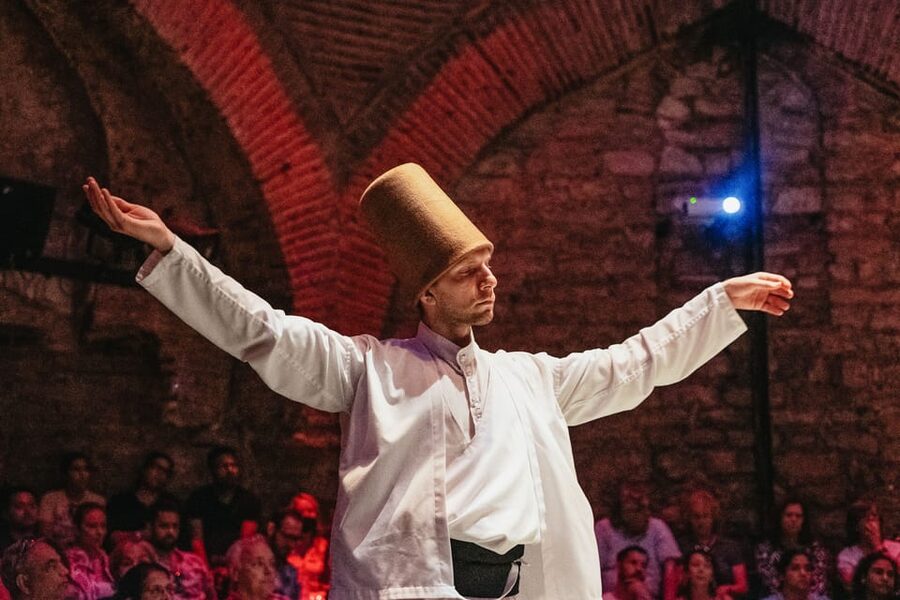
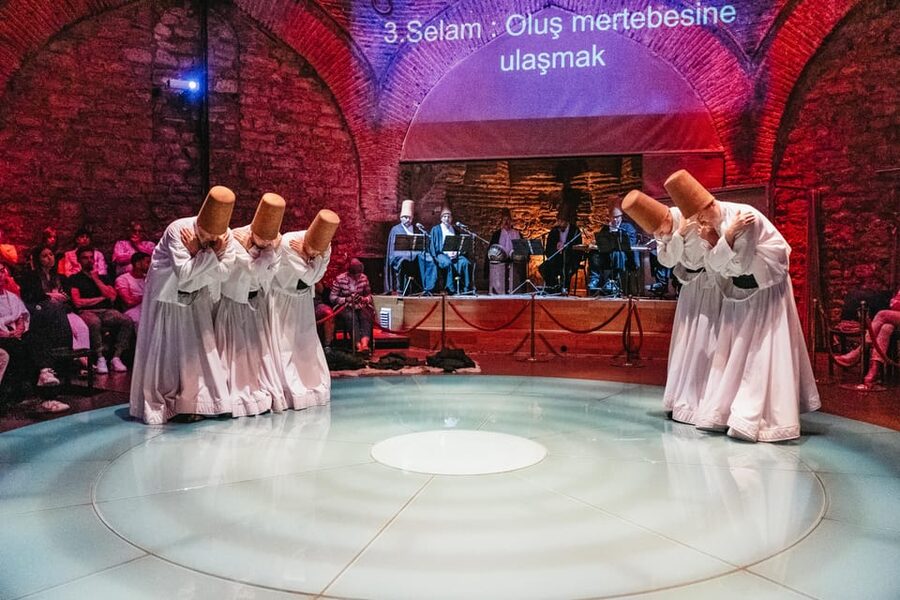
After the musical opening, the dervishes and the sheikh enter and take their positions. The ceremony includes praise for the Prophet Mohammed, followed by chanting and instrumental passages.
The formality matters. You will see deliberate movements rather than casual preparation. The performers do not chat, acknowledge the audience, or play to the room. That restraint helps you understand that the ritual has its own purpose.
The ceremony’s spiritual character is easy to miss if you are waiting only for the spinning. Watch the transitions. Notice how the music, recitation, walking, and turning fit together. The changes are measured, and the room grows quieter as the main part begins.
The atmosphere can be powerful, but it is not guaranteed to affect everyone in the same way. Some people find the silence calming and the ritual moving. Others may find the sequence repetitive, especially if they came expecting a conventional dance show. I would choose this experience for cultural interest and reflection, not for fast entertainment.
More Museums in Istanbul:
- Istanbul: Hagia Sophia Skip-the-Line Ticket & Museum Option
★ 3.7 · 4,958 reviews - Istanbul: Topkapi Palace & Harem Museum Ticket & Audio Guide
★ 4.1 · 3,977 reviews - Istanbul: Topkapi Palace and Harem Museum Tour with Ticket
★ 4.7 · 247 reviews - Istanbul: Hagia Sophia Mosque and Museum Skip-The-Line Combo
★ 4.5 · 136 reviews
The seven-part Sema and the meaning of the turning
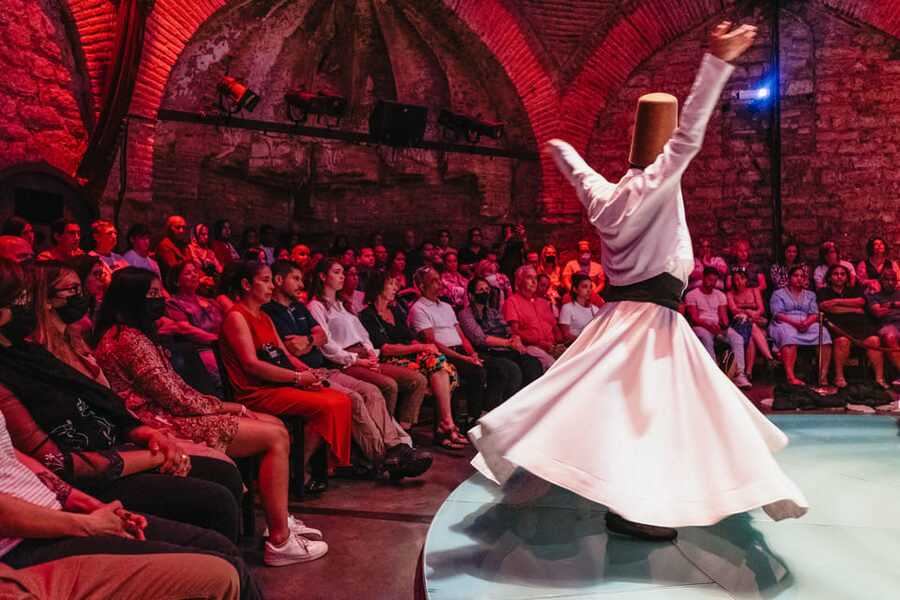
The central ritual is a seven-part Sema ceremony. Its stages represent the birth of humanity and the spiritual path from worldly thought toward love and union with the divine.
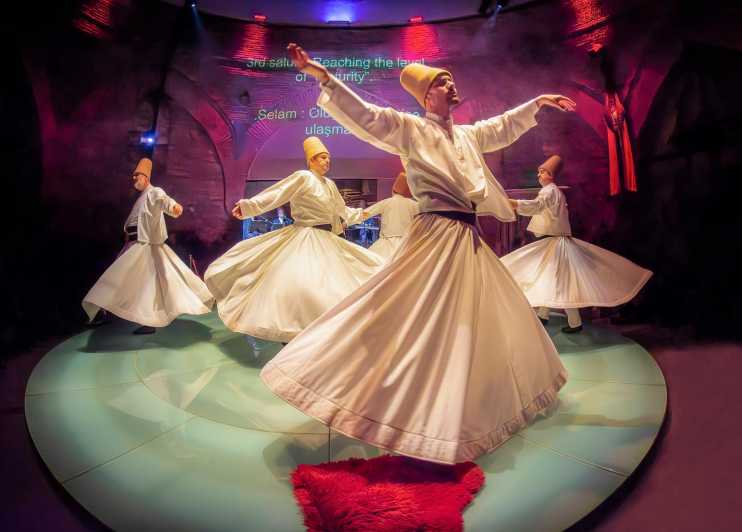
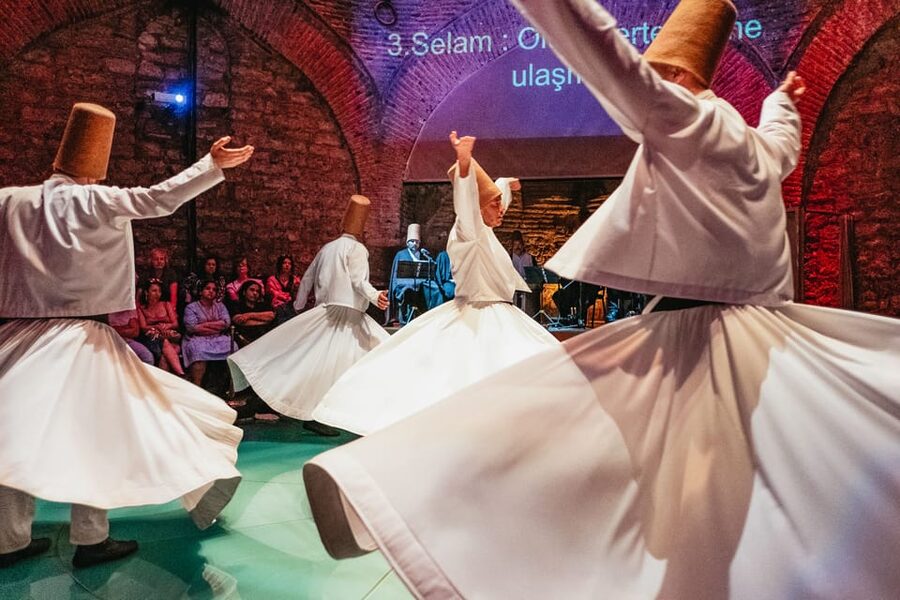
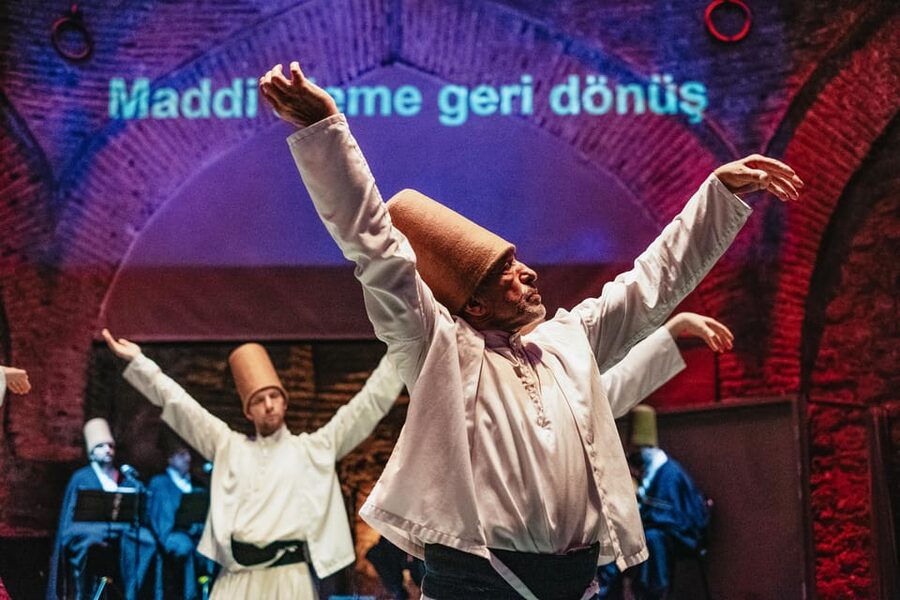
The dervishes begin with formal movements before the turning develops. As they spin, one hand is raised and the other lowered, a gesture often understood as receiving from above and giving to the world below. The white garments and wide skirts make the movement visible, but the religious meaning is more important than the visual effect.
The spinning is remarkably controlled. The dervishes turn around their own axis while moving around a larger circle, creating a layered pattern across the floor. They can stop suddenly and precisely, without the loose stumble you might expect after so much rotation.
You will see several dervishes performing together, with the sheikh and musicians maintaining the structure of the ceremony. The turning can last for a substantial part of the hour, but it is broken into stages rather than presented as one uninterrupted display.
For me, the best way to watch is to stop trying to measure the skill alone. Certainly, the physical control is impressive. Yet the ceremony becomes more interesting when you notice the link between the music, the gestures, and the spiritual idea behind them.
The room’s acoustics add to the effect. The air seems to move as the skirts pass, and the music reverberates against the old stone and dome. You may find your attention narrowing in a pleasant way. You may also find your mind wandering. That is normal. This is a quiet ritual, not a performance designed to hold your attention through constant action.
The closing prayer and final moments
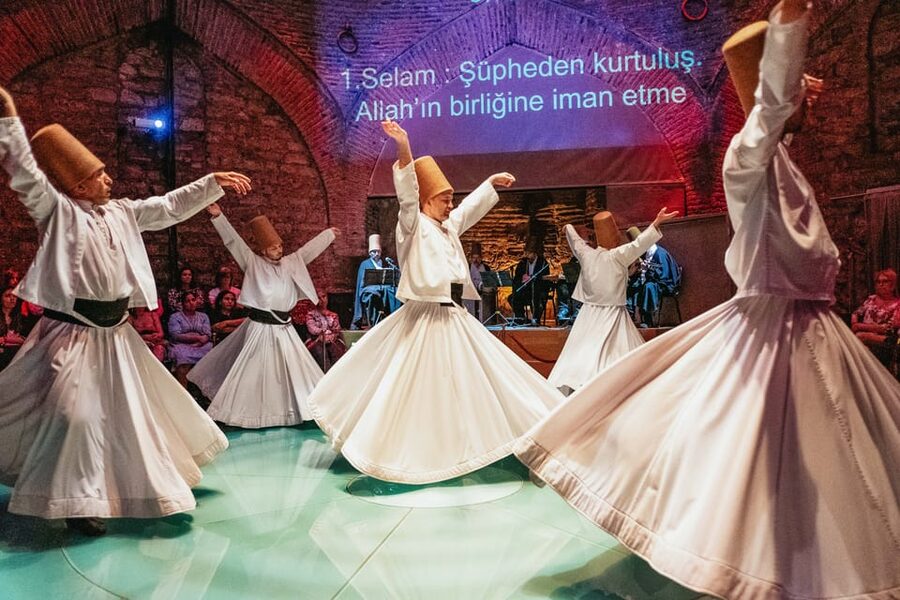
The Sema ends with a Fâtiha for the souls of prophets, martyrs, and believers, followed by a prayer for the salvation of the country. The closing section brings the ceremony back from the turning to prayer and stillness.
Do not expect a curtain call. There is no applause, and the room does not shift into a normal theater mood. The lack of a conventional ending can feel unusual, but it is appropriate to the ceremony’s religious character.
This is also why the no-photography policy deserves respect. A phone screen or camera shutter would break the concentration of the room. You might be disappointed not to document the dervishes, but you will see the ritual more clearly without everyone reaching for a device.
The complete program lasts about one hour. That is long enough to give you a real introduction without taking over an entire evening. You can pair it with dinner or another Sultanahmet and Sirkeci sight, though I would avoid scheduling something noisy immediately afterward if you want to keep the calm mood.
Seating, timing, and practical comfort
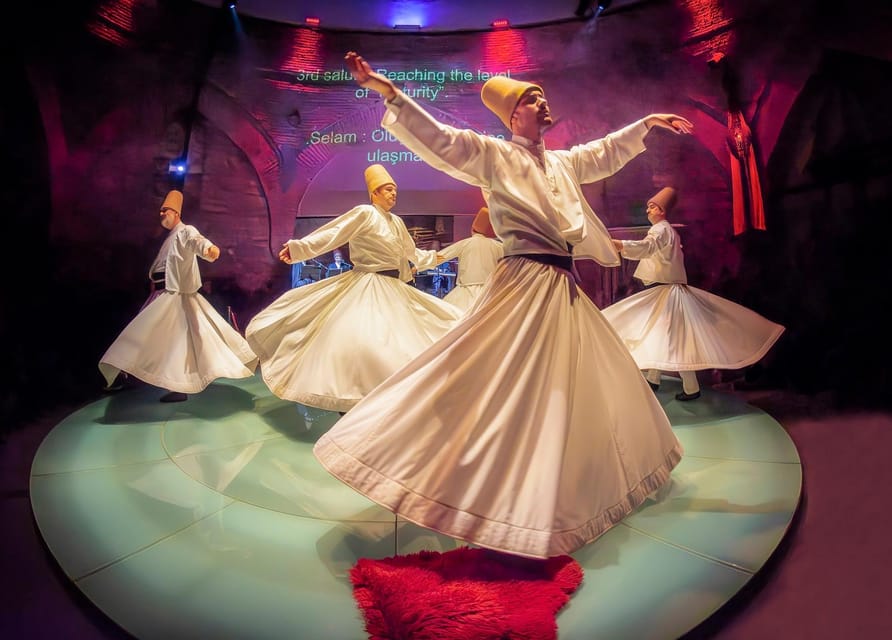
Seats are allocated based on booking order. Booking early may improve your chances of receiving a better position, but the system does not mean you can select any chair you want. One early booking can still result in a less desirable seat, so it is best not to assume that paying in advance guarantees the front row.
The seating can be close together, with limited personal space between chairs. Some people find the seats uncomfortable during the full ceremony. If you are tall or dislike tight seating, this is worth considering before you book.
Arrive early for three reasons:
- You can read the exhibition before the room fills.
- You can find your assigned seat without interrupting the ritual.
- You avoid becoming one of the late arrivals walking in after the ceremony has begun.
Late entry is especially distracting here because the audience is expected to remain completely quiet. The venue is intimate, so even a few people arriving 10 or 15 minutes late can pull attention away from the dervishes.
Children under seven are not permitted. The experience is also not suitable for wheelchair users because of the steps. Bottled water is included, and complimentary drinks are available during the event, but avoid making noise with bottles or wrappers once the ceremony begins.
Is $32 good value for one hour?
At $32 per person, this is not the cheapest cultural activity in Istanbul. It is also not an unreasonable price when you consider what is included: the Mevlevi Sema ceremony, live musicians, the historic building, the exhibition, a program booklet, and bottled water.
The real question is what kind of evening you want. If you judge it as a one-hour dance show, you may feel the price is high. If you see it as a cultural and religious presentation in a restored Ottoman building, the cost is easier to justify.
The venue does much of the work. A modern theater would make the performance feel more distant. Here, the dome and stone surfaces give the music character, while the small scale lets you watch the performers closely.
I would also count the exhibition as part of the value, but only if you give yourself time to see it. The panels help explain why the ceremony is structured as it is. Without that background, the turning can seem like a beautiful but repetitive visual display.
Free cancellation up to 24 hours before the activity and a reserve-now, pay-later option make it easier to fit into a changing Istanbul schedule. Check the available starting times when you book, since the one-hour program runs at set times.
Who will appreciate this Istanbul experience most?
I would recommend it to you if you enjoy:
- Religious traditions presented with care
- Live Turkish classical music
- Historic buildings and small museums
- Quiet, contemplative cultural activities
- Learning how movement can express spiritual ideas
- Unusual experiences that are different from Istanbul’s major monuments
It suits couples, solo visitors, and adults who want a slower evening. It can also work well after a day of mosques and museums because it adds a different view of Turkish culture.
I would hesitate to recommend it if you need constant explanation, dislike silence, have difficulty sitting in close chairs, or want a lively stage performance. The ceremony is solemn, and the whirling can feel repetitive if you are not interested in its spiritual meaning.
The exhibition helps, but there is no guide named in the activity details and no promise of a personal question-and-answer session. If you have detailed questions about Sufism, read before you go or use the booklet and display panels as a starting point.
Should you book the HodjaPasha Sema ceremony?
Yes, if you understand what you are booking. This is a quiet religious ritual with live music, not a tourist dance number with applause and photo opportunities.
Book it early if seating matters to you, arrive with enough time to read the exhibition, and turn off your phone before entering the room. At $32, it offers solid value for an hour of music, ceremony, and history in a remarkable old building, though the close seating and limited explanation may not suit everyone.
I would choose this experience for one evening in Istanbul when you want to slow down and see a part of Turkish culture that cannot be reduced to a postcard image of spinning figures. If that sounds appealing, the HodjaPasha Culture Center is a strong choice.
FAQ
How long does the HodjaPasha Whirling Dervishes experience last?
The Mevlevi Sema ceremony lasts one hour. The activity includes time at the venue’s exhibition, so arrive early if you want to read the information before the performance.
Where is the meeting point?
The activity begins at the Hocapaşa Culture Center, about 100 meters from the Sirkeci Tram Stop in central Istanbul.
Are photographs allowed during the ceremony?
No. Photography is not allowed inside, and talking and applause are also prohibited during the performance.
Are children allowed to attend?
Children under seven are not permitted.
Is the venue accessible to wheelchair users?
No. The experience is not suitable for wheelchair users, and the venue has steps leading to the performance area.
What is included in the ticket?
The ticket includes the Mevlevi Sema ceremony, a program booklet, and bottled drinking water. Complimentary drinks are also available during the show.
More Shows and Performances in Istanbul
- Istanbul: Bosphorus Dinner Cruise & Show with Private Table
★ 4.8 · 44,561 reviews - Istanbul: Bosphorus Dinner Cruise with Turkish Night Show
★ 4.8 · 10,127 reviews - Istanbul: Bosphorus Cruise with Dinner Show
★ 4.4 · 2,181 reviews - Bosphorus Dinner Cruise with Show and Private Table
★ 4.5 · 2,021 reviews
Recently added in Istanbul
- Two (2) Days Istanbul Old City and Two Continents Walking Tour★ 5.0 · 6 reviews
- istanbul old city private tour★ 5.0 · 19 reviews
- Private Guided Tour: Discovering Istanbul★ 4.5 · 9 reviews
- Istanbul Airport (IST) To Hotels Transfer★ 5.0 · 80 reviews
- Best Of İstanbul Europe Side In One Day★ 5.0 · 10 reviews
- 2 Days Cappadocia Tour from Istanbul with Optional Balloon★ 5.0 · 10 reviews
- Hagia Sophia Private Skip The Ticket line guided Tour★ 4.5 · 17 reviews
- historical peninsula walking tour★ 5.0 · 6 reviews
Istanbul Whirling Dervish Shows, compared.
Istanbul Hodjapasha Whirling Dervishes Show & Exhibition
Read our review →
Istanbul Traditional Turkish Dinner and Dervish Experience
Read our review →
Whirling Dervish Ceremony: Go on a Spiritual Journey
Read our review →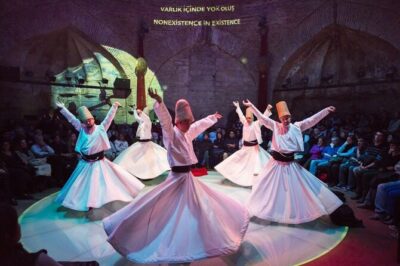
Istanbul Whirling Dervish Ceremony, A Mystical Sufi Experience
Read our review →Traditional Turkish Dinner and Dervish Experience
Read our review →Browse the lists this tour appears in